Artwork
The Harbor, Quebec, Canada
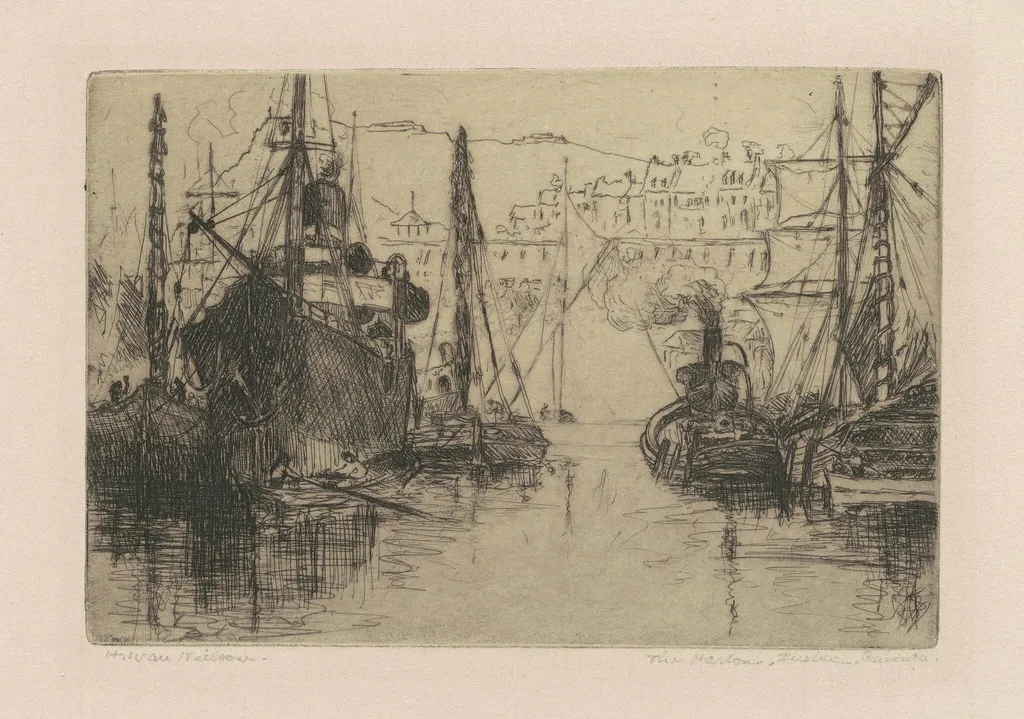
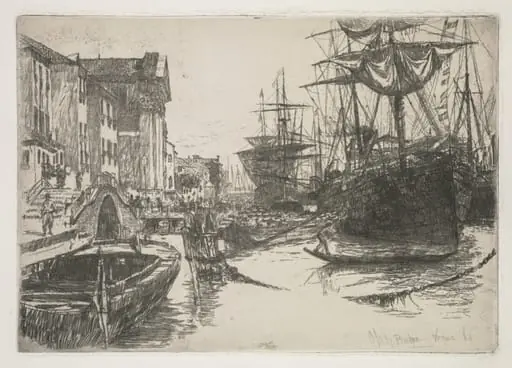
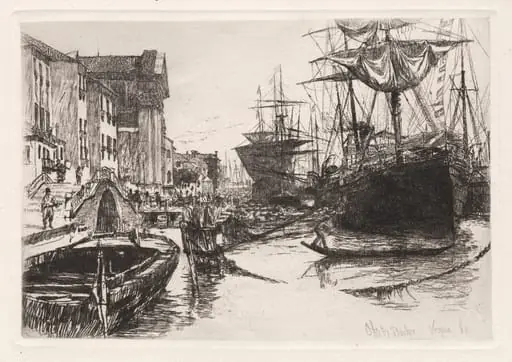
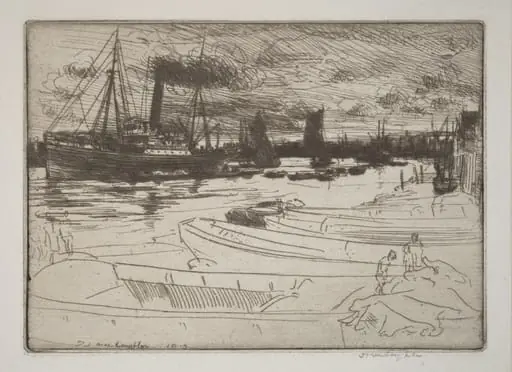
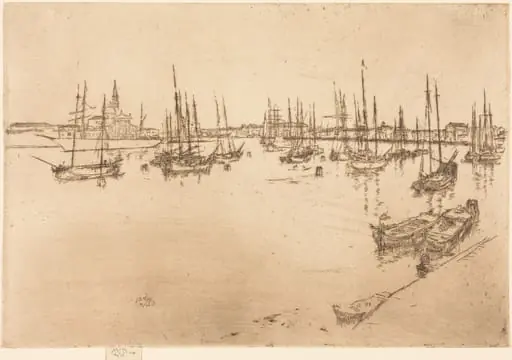
The Harbor, Quebec, Canada is an ink print by H. Ivan Neilson. It dates from 1910 and is held in the collection of the National Gallery of Art. Created around 1910, this etching by H.
About this work
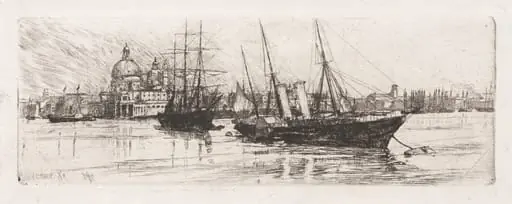
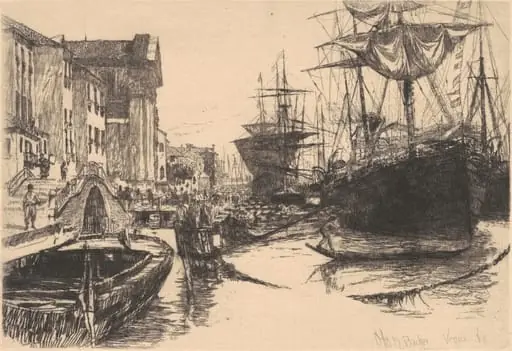
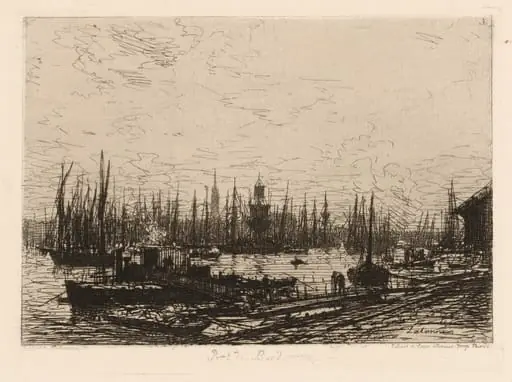
This etching shows a quiet Quebec harbor at dusk. Boats line the water. A few buildings sit along the shore. Dark trees frame the scene.
Neilson made this during a 1910 visit. He used three etching tools to carve lines into metal. Then he pressed damp paper onto the plate to print it.
Try printing your own version at home using drypoint.
Overview
Executed in black ink with chine collé on wove paper, the work belongs to the printmaking tradition of the early 20th century.
Created around 1910, this etching by H. Ivan Neilson captures the quiet atmosphere of Quebec’s harbor at twilight. Executed in black ink with chine collé on wove paper, the work belongs to the printmaking tradition of the early 20th century. Neilson produced it during a brief visit to the region, translating his observations into a restrained, tonal composition that emphasizes stillness and spatial depth.
Subject & Meaning
The scene depicts a calm harbor lined with moored vessels, their forms softened by the fading light. Low buildings hug the shoreline, while dense trees enclose the view on either side, suggesting a secluded, intimate setting. No human figures appear, reinforcing a sense of solitude and temporal pause, as if the harbor holds its breath between day and night.
Technique & Style
Neilson employed three distinct etching tools to incise fine lines into a metal plate, creating varied textures for water, wood, and foliage. The use of chine collé—affixing thin paper to the print—enhanced tonal subtlety. The composition favors atmospheric perspective over detail, with muted contrasts and delicate line work that evoke the hushed quality of dusk.
History & Provenance
The print was made during Neilson’s 1910 trip to Quebec, part of a broader pattern of North American travel by artists seeking local subjects. No record of its early ownership exists, but its technique aligns with the private printmaking circles of the era, where artists often produced small editions for collectors and peers rather than public exhibition.
Context
In the early 1900s, etching experienced a revival among North American artists drawn to its intimacy and manual process. Neilson’s work reflects this trend, contrasting with the boldness of contemporary oil paintings. His focus on quiet, everyday landscapes mirrored a growing interest in regional identity and the poetic potential of ordinary scenes.
Legacy
Though not widely exhibited, The Harbor, Quebec, Canada exemplifies the quiet, observational approach of early 20th-century printmakers. Its modest scale and technical restraint have influenced later artists interested in the expressive limits of line and tone. The work remains a quiet testament to the value of stillness in urban and coastal landscapes.
Artist & collection