Artwork
Peisaj
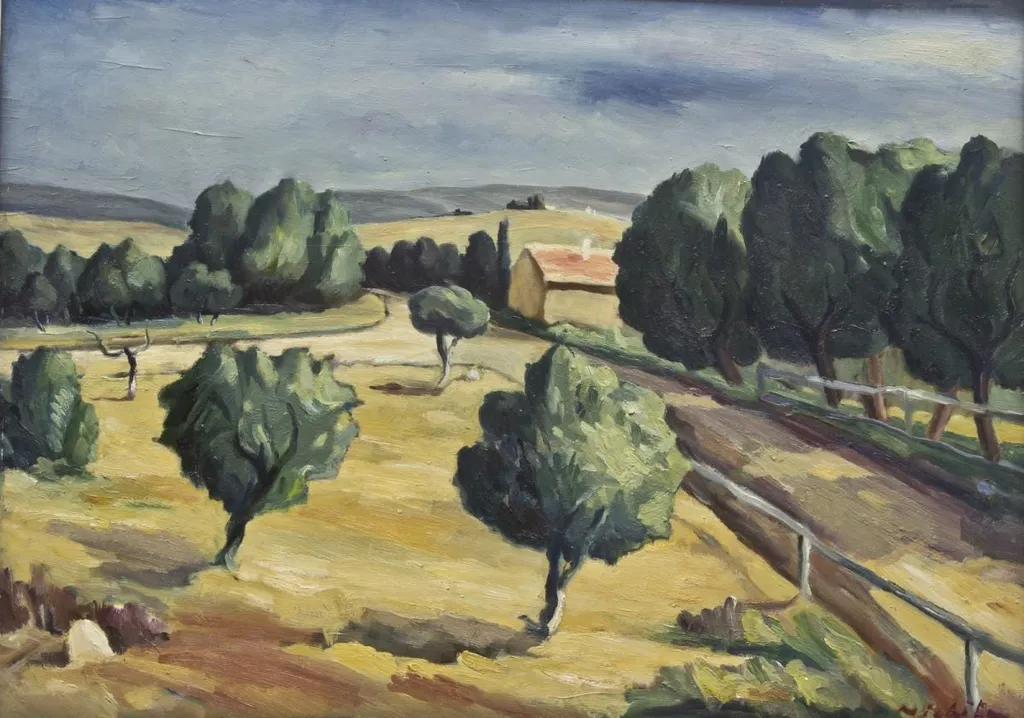
Peisaj is a print by George Nichita. It dates from 1943 and is held in the collection of the National Museum of Art of Romania.
About this work
Overview
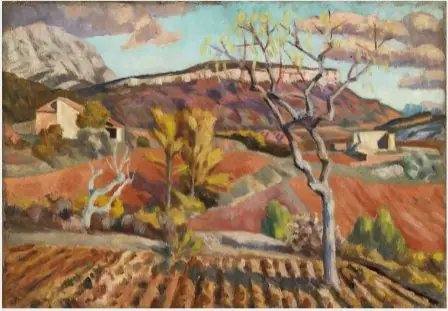
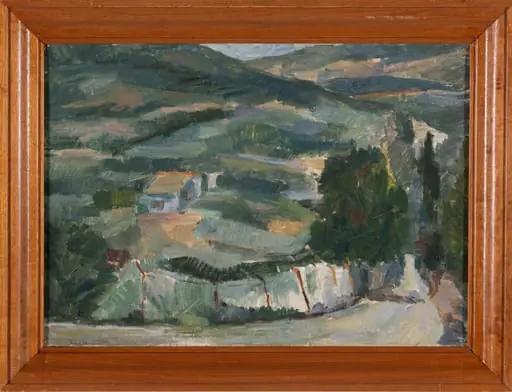
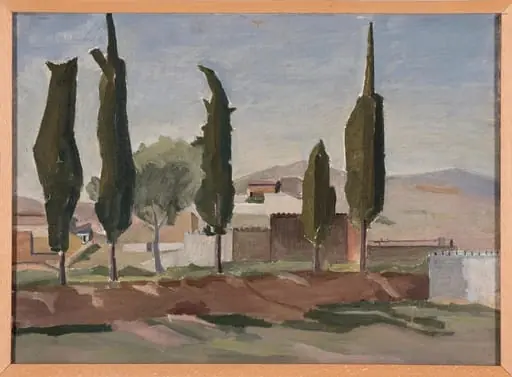
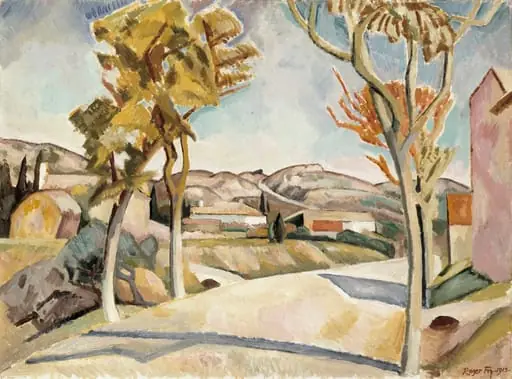
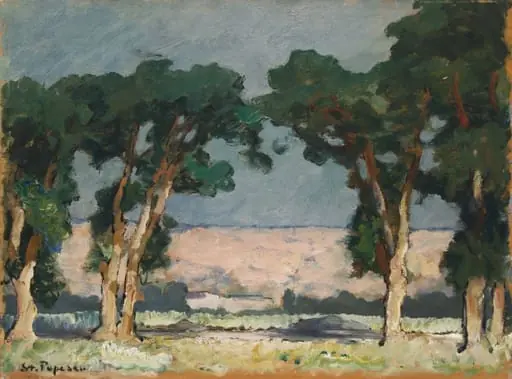
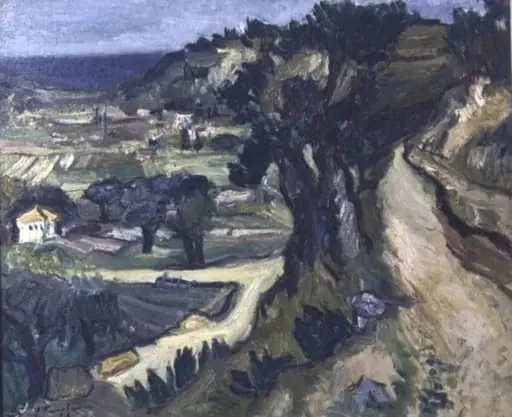
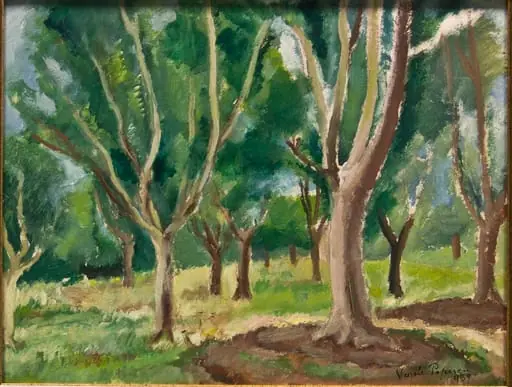
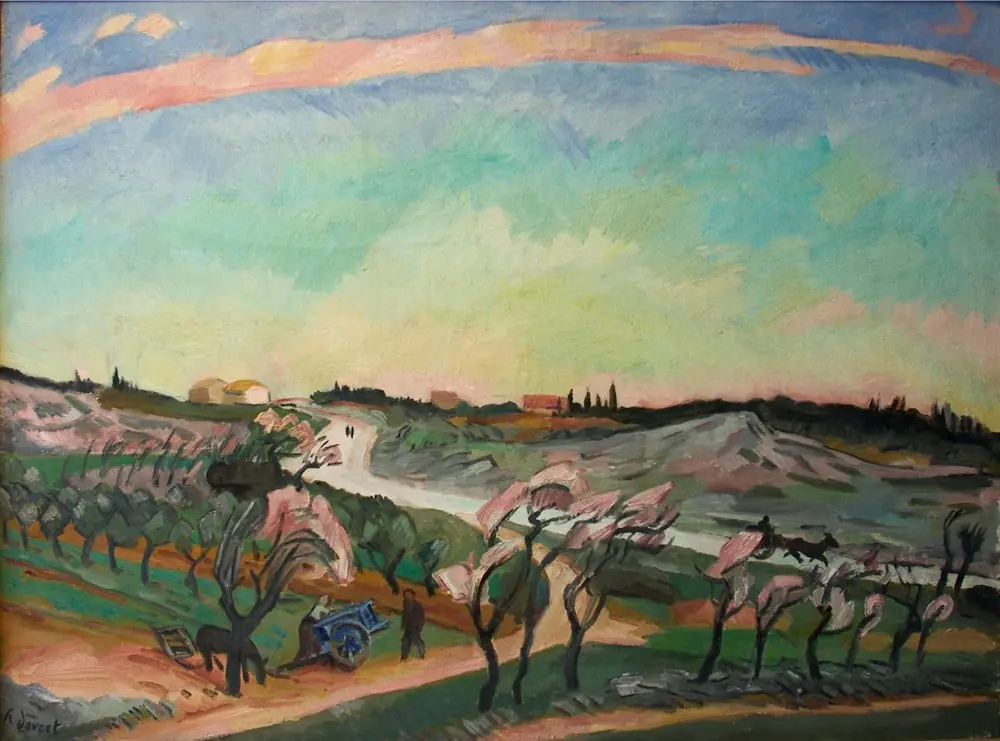
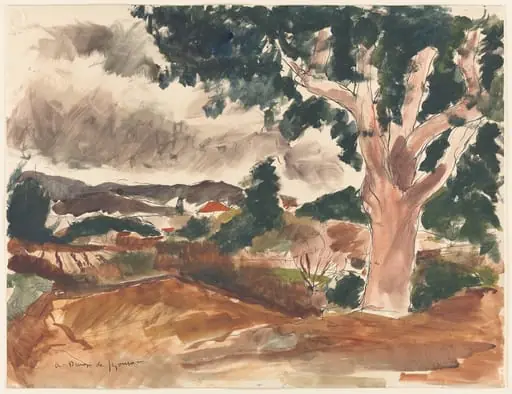
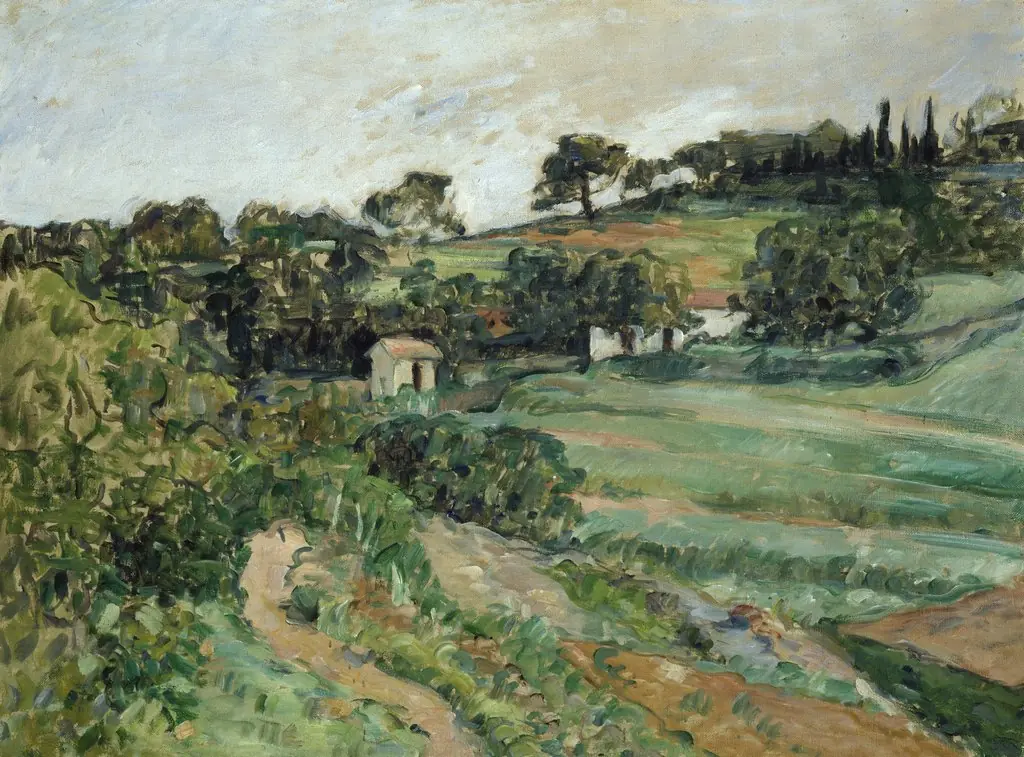
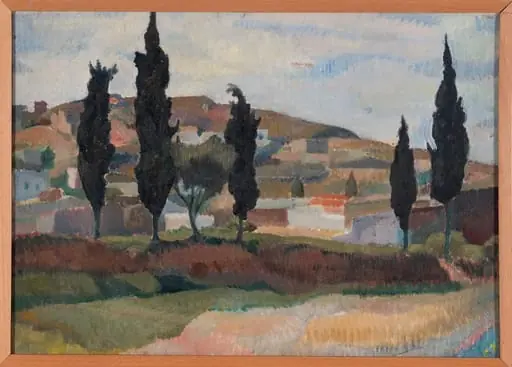
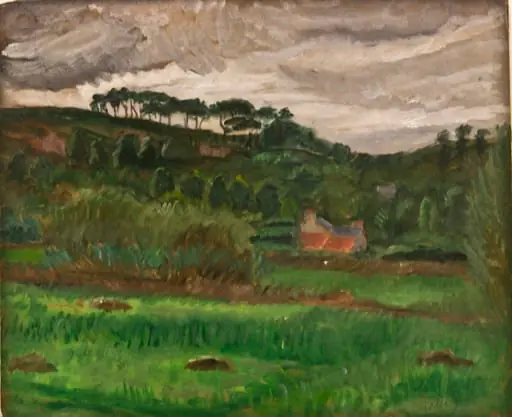
Painted in 1943 by George Nichita, this landscape captures a tranquil rural setting in Romania. The composition centers on a narrow path meandering through a field of tall, sun-bleached grass, flanked by clusters of trees and a solitary dwelling. The atmosphere is calm and unembellished, reflecting a quiet moment in the countryside without overt narrative or drama.
Subject & Meaning
The scene presents an unidealized view of rural life, emphasizing solitude and natural rhythm. The modest house, barely noticeable beside the road, suggests quiet habitation rather than domestic grandeur. The absence of people or movement reinforces a sense of stillness, inviting contemplation of the land itself rather than human activity within it.
Technique & Style
Nichita employed thick, textured brushwork to render the grass and foliage, using impasto to build physical depth in the paint. The trees are defined by bold, directional strokes, while the sky is rendered with softer, thinner applications. This contrast between heavy and light application enhances the tactile quality of the landscape, grounding the viewer in its material presence.
History & Provenance
Created during World War II, the painting reflects a period of national upheaval in Romania, yet its subject avoids political or wartime references. It was likely made in the artist’s home region, where he often drew inspiration from local scenery. The work remained in private collections in Romania until entering institutional hands decades later.
Context
Nichita worked within a Romanian tradition of landscape painting that valued emotional resonance over realism. While European modernism influenced his brushwork, his focus on rural life aligned with national artistic currents seeking identity through regional themes. This piece stands apart from urban or heroic subjects common in state-sponsored art of the era.
Legacy
The painting is recognized for its restrained emotional tone and tactile surface, distinguishing it from more dramatic or idealized landscapes of the time. It contributes to the understanding of mid-20th century Romanian art as introspective and grounded in place, influencing later generations who valued quiet observation over spectacle.
Artist & collection
Artist
George Nichita painted city corners and landscapes in a quiet, unhurried style. Two of his known works are the oil *Colț (la) Piața Amzei* and the print *Peisaj*. The first shows a modest Bucharest square, its buildings…