Artwork
Lady Margaret Douglas, Countess of Lennox
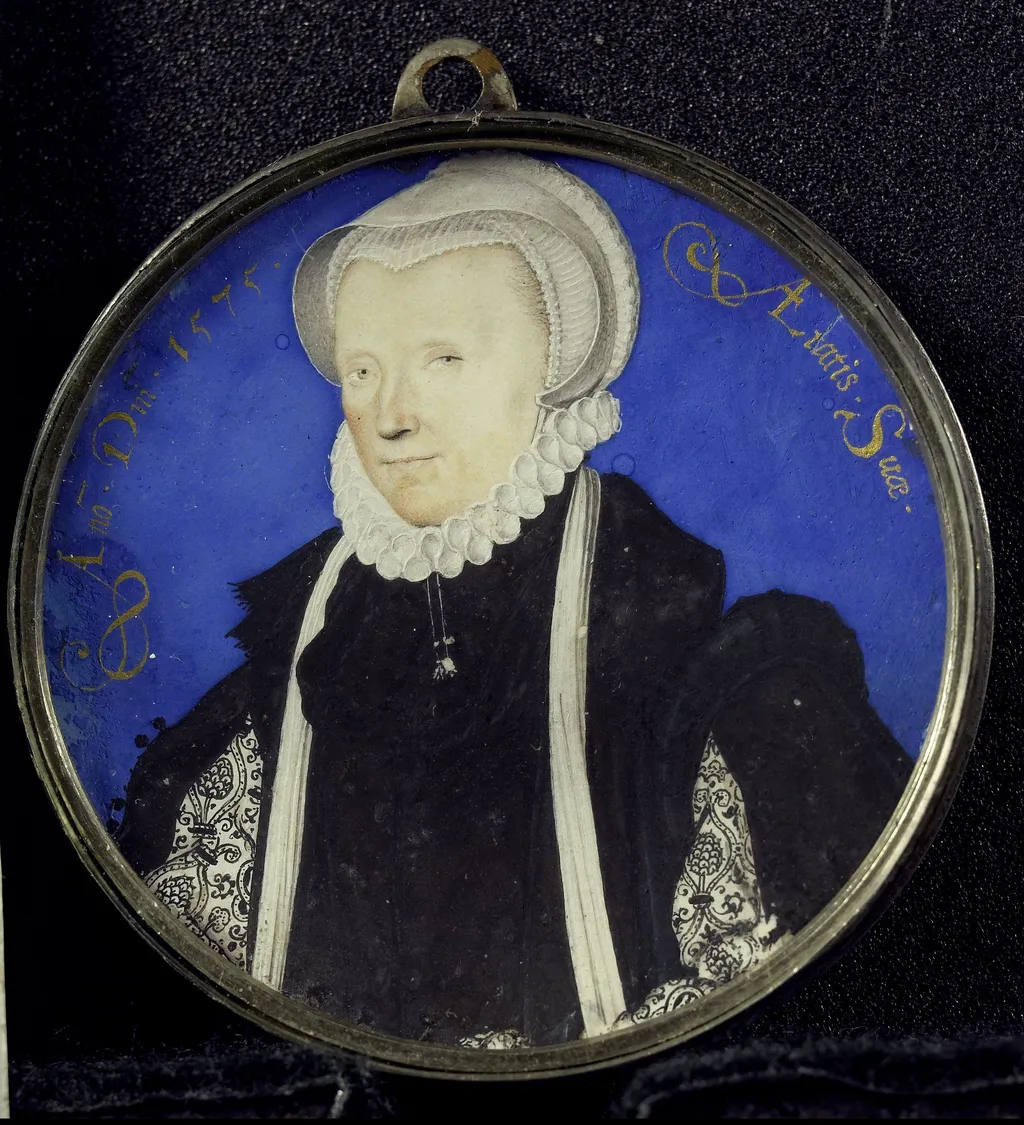
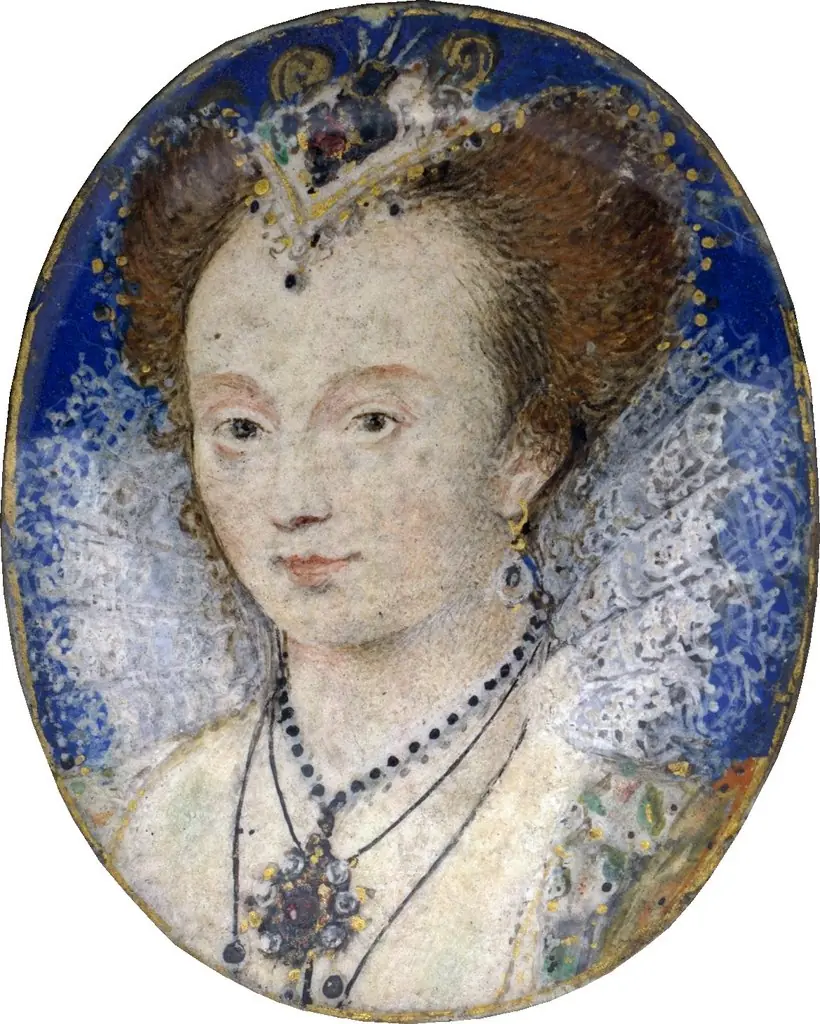
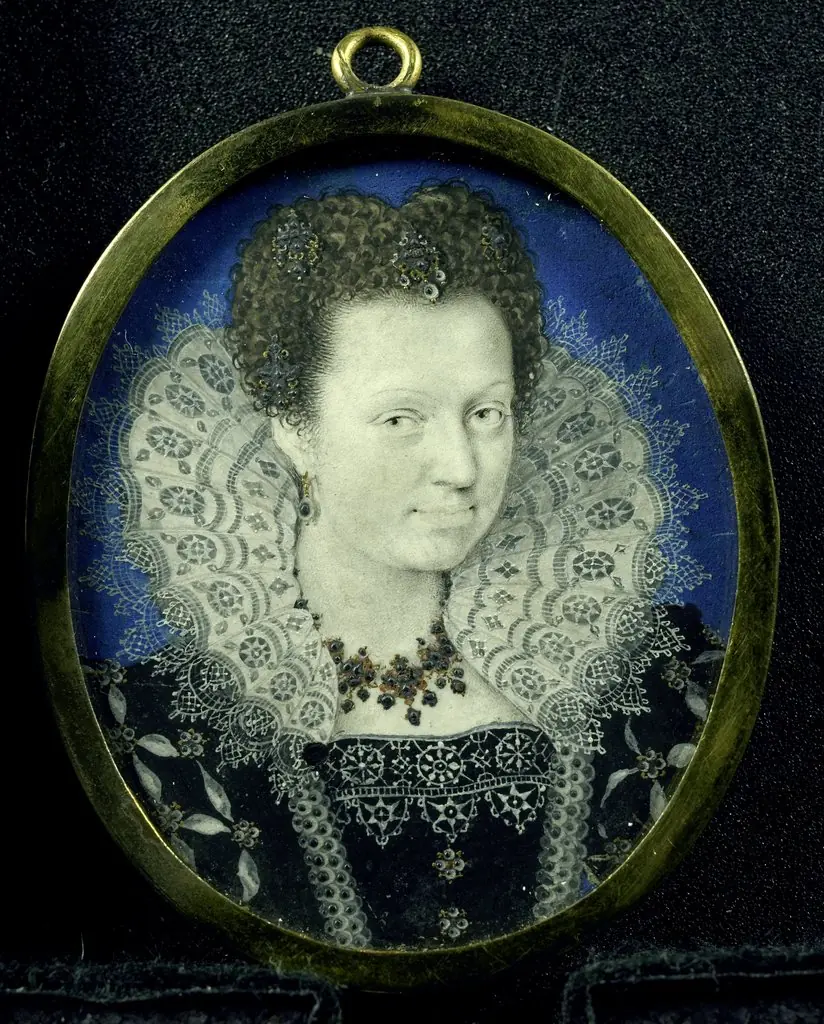
Lady Margaret Douglas, Countess of Lennox is an unspecified painting by the Early Baroque Italian artist Nicholas Hilliard. It dates from 1575 and is held in the collection of the Rijksmuseum. Created in 1575, this miniature portrait presents Margaret Douglas, Countess of Lennox, on a round sheet of vellum.
About this work
Overview
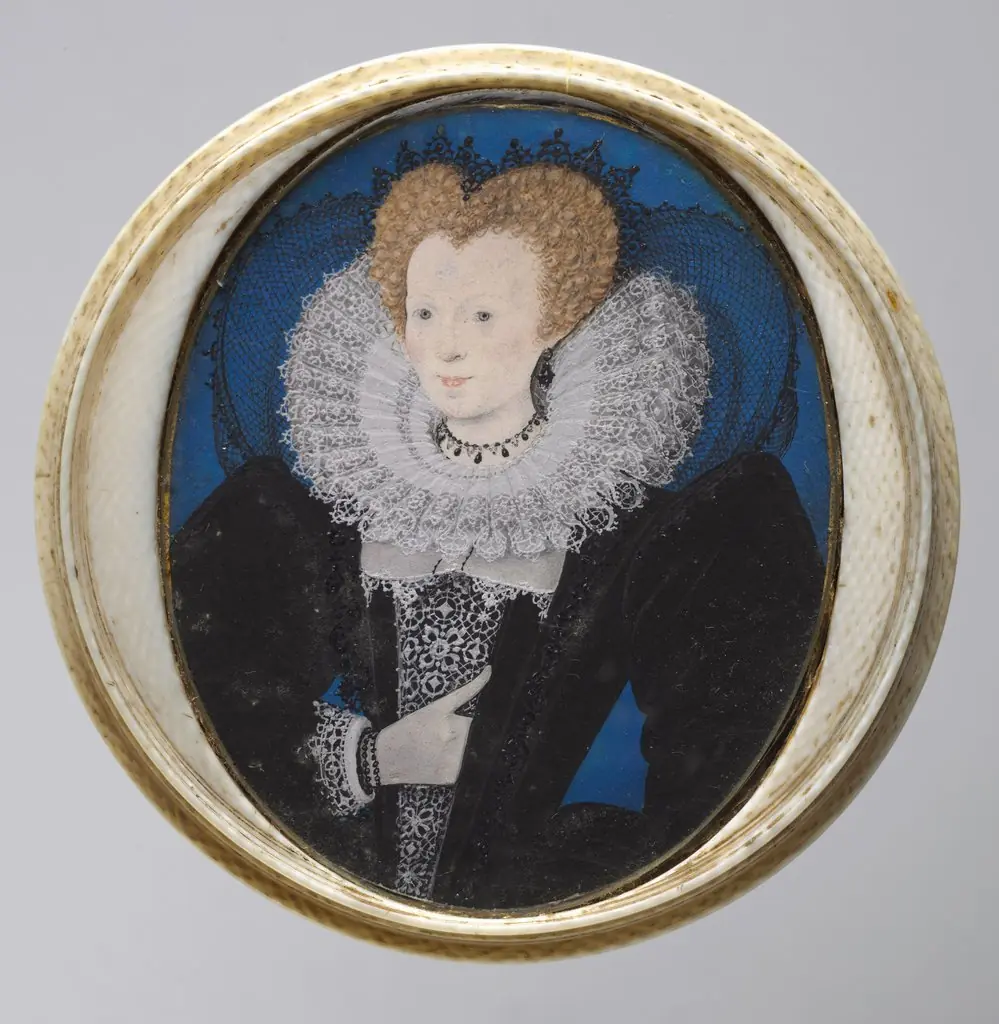
Created in 1575, this miniature portrait presents Margaret Douglas, Countess of Lennox, on a round sheet of vellum. The work measures only a few inches across, with a delicate metal rim framing the painted surface. A muted blue background supports the sitter’s black dress, white collar, and lace‑trimmed sleeves, while a faint gold inscription encircles the edge, likely naming the subject.
Subject & Meaning
Margaret Douglas, a prominent member of the Tudor court and sister to the future Earl of Moray, is shown in a dignified pose that emphasizes her status and connections to the English monarchy. The restrained composition and emphasis on facial expression reflect the period’s interest in conveying personal virtue and noble lineage through intimate portraiture.
Technique & Style
The miniature was executed with fine water‑based pigments applied in thin, controlled layers, a hallmark of Nicholas Hilliard’s practice.
The miniature was executed with fine water‑based pigments applied in thin, controlled layers, a hallmark of Nicholas Hilliard’s practice. The use of vellum provides a smooth, luminous ground, while the precise brushwork captures subtle details of fabric, lace, and skin. Though rooted in English portraiture, the piece shows influence from early Baroque trends emerging in Italy, evident in its compositional balance and restrained color palette.
History & Provenance
Nicholas Hilliard, a goldsmith‑turned limner, produced the portrait for a courtly patron, likely as a personal keepsake. The work remained in private collections for centuries before entering a museum holding of English Renaissance miniatures in the late twentieth century, where it has been conserved and displayed as an exemplar of Hilliard’s oeuvre.
Context
The portrait belongs to a flourishing tradition of miniature painting that served diplomatic and sentimental purposes in Elizabethan and early Jacobean England. Such works were portable, often exchanged as tokens of alliance or affection, and they documented the visual culture of the court at a time when portraiture was a primary means of asserting identity and rank.
Artist & collection
Artist
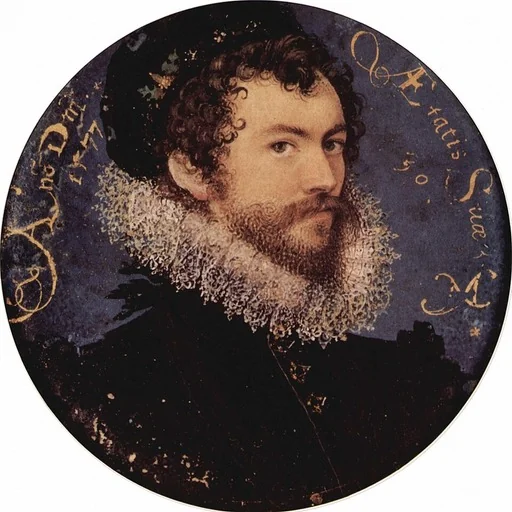
Nicholas Hilliard (c. 1547 – before 7 January 1619) was an English goldsmith and limner best known for his portrait miniatures of members of the courts of Elizabeth I and James I of England. He mostly painted small oval…