Artwork
Abstract composition
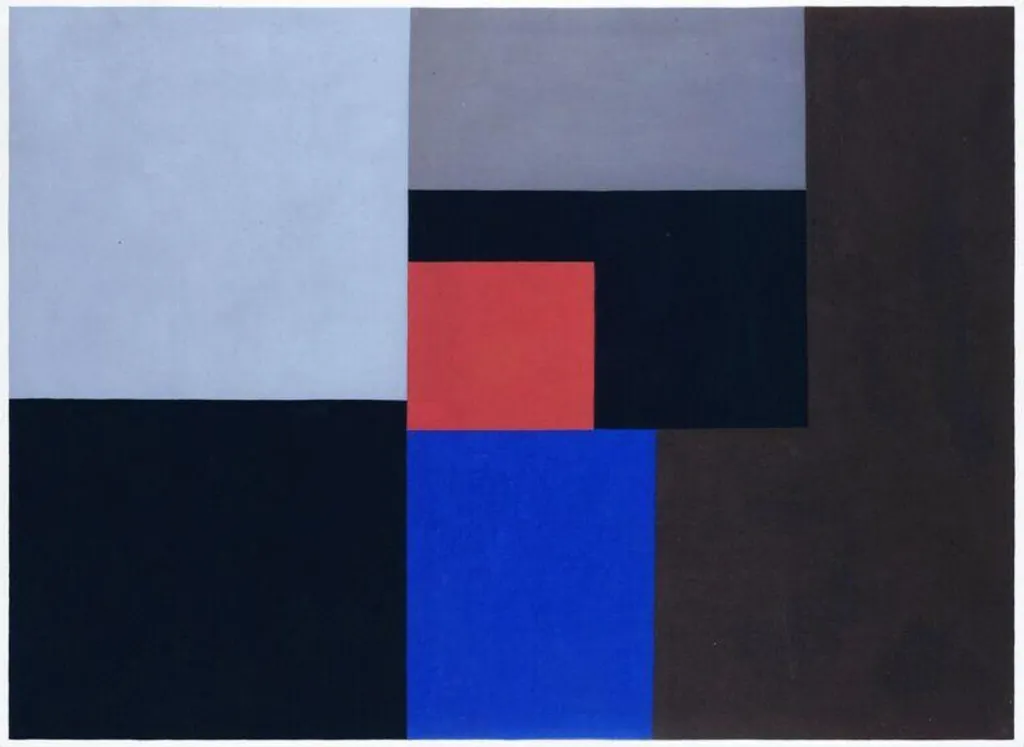
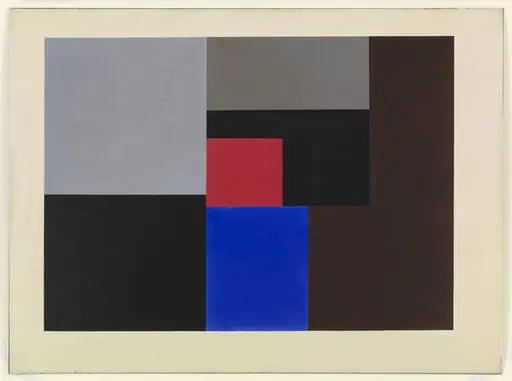
Abstract composition is a watercolor work on paper by the Abstract Expressionist artist Ben Nicholson. It dates from 1936 and is held in the collection of the Victoria and Albert Museum.
About this work
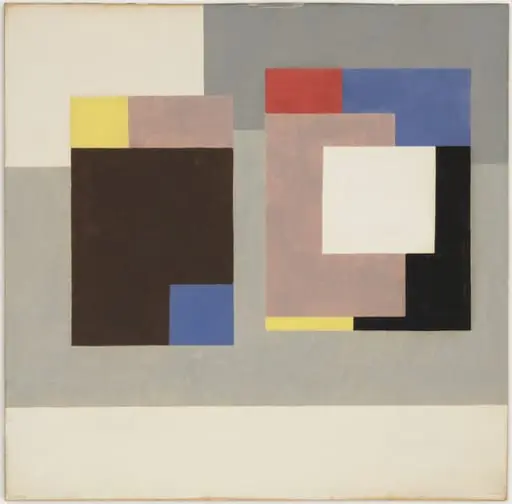
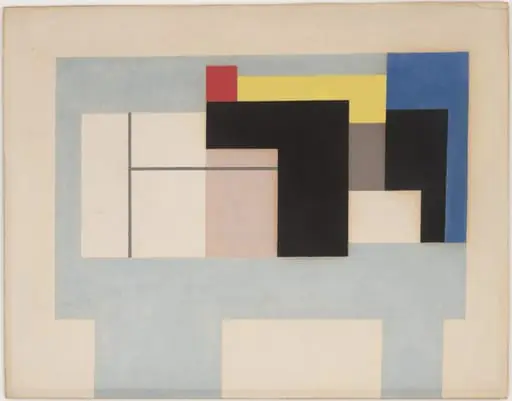
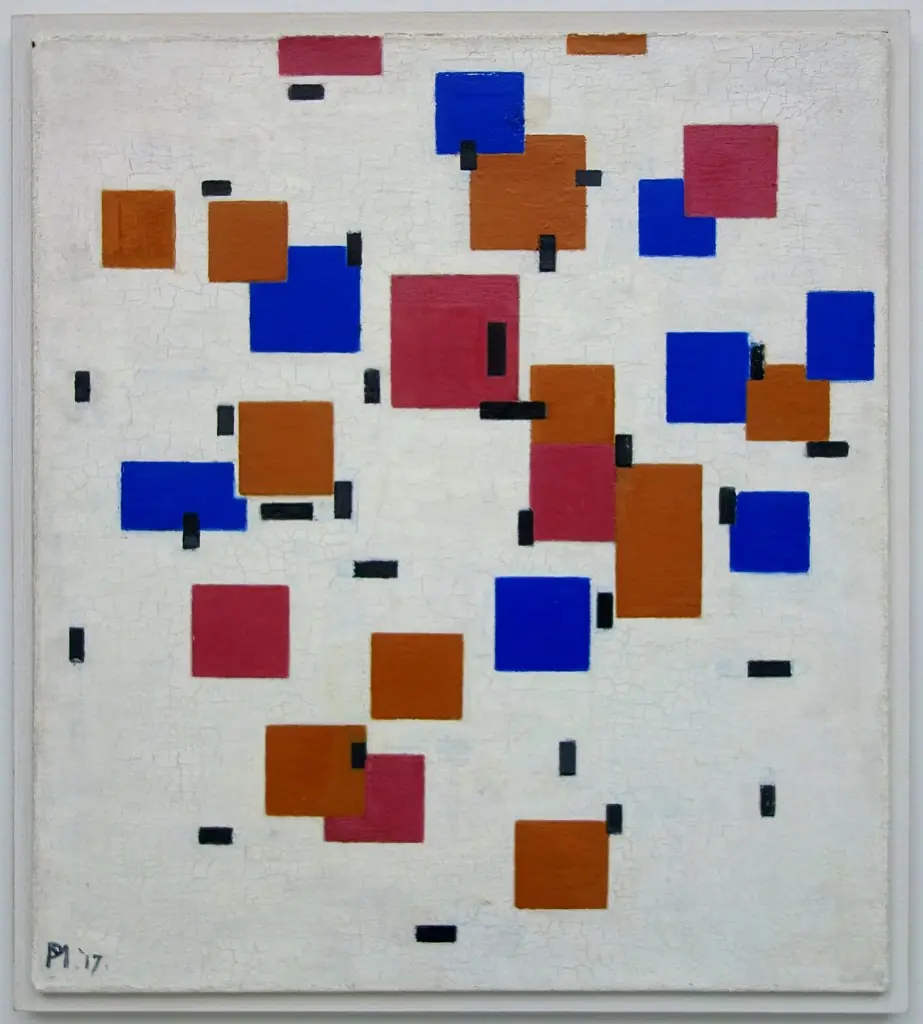
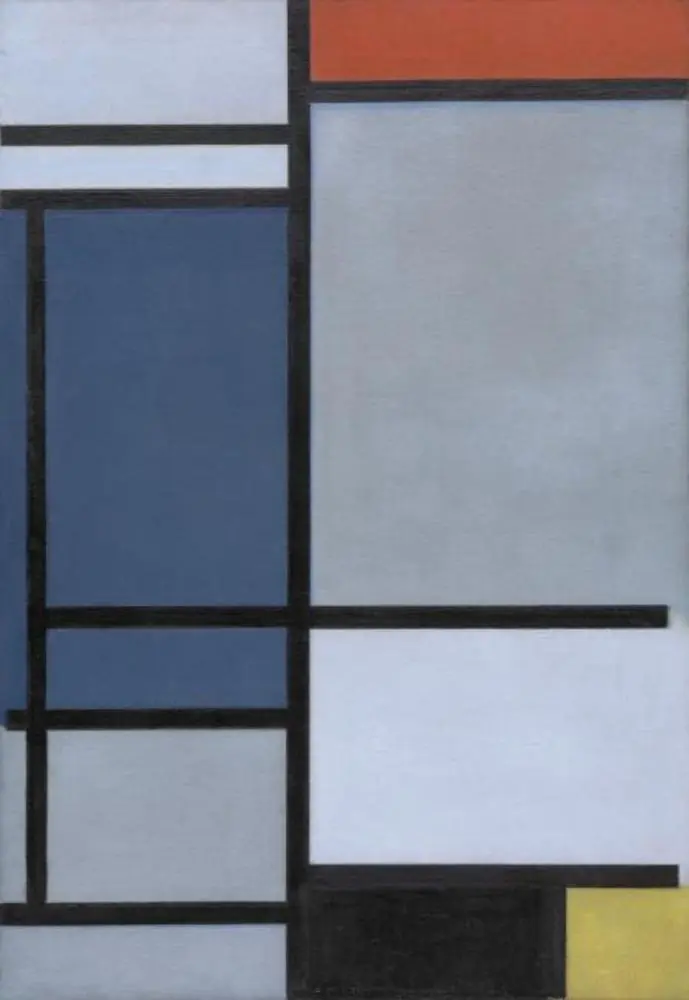
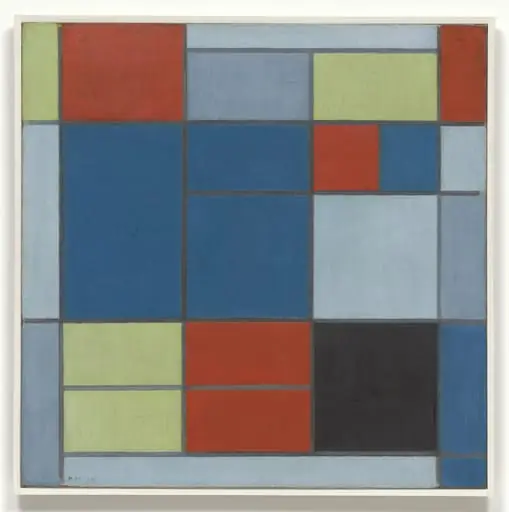
This painting is just big blocks of color. Four squares line up: white on top, then a dark gray, a bright red, and a deep blue. The sides are black and brown. No shapes look real—just flat, clean colors.
The artist used watercolor, so the edges are soft. The red square stands out because it’s the only warm color.
Look up Nicholson, Ben next—he made this in 1936.
Overview
This 1936 watercolour by Ben Nicholson is an abstract arrangement of rectangular shapes in a limited palette.
Subject & Meaning
The composition features four horizontal rectangles in white, dark gray, bright red, and deep blue, framed by black and brown borders. The geometric forms are abstracted from representational elements, reflecting Nicholson's ongoing exploration of simplified planes.
Technique & Style
Executed in watercolour, the painting exhibits soft edges characteristic of the medium. The bold, flat colours create a striking visual effect, with the warm red rectangle providing a focal point amidst the predominantly cool tones.
History & Provenance
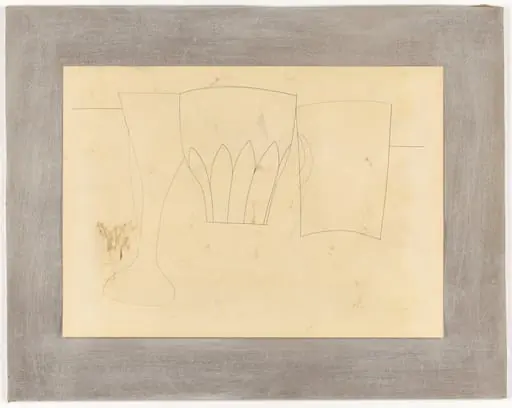
Created in 1936, this work represents a stage in Nicholson's artistic development, building on his earlier experiments with geometric abstraction, such as a 1924 still-life painting.
Artist & collection
Artist
Benjamin Lauder Nicholson, OM (10 April 1894 – 6 February 1982) was an English painter of abstract compositions (sometimes in low relief), landscapes, and still-life. He was one of the leading promoters of abstract art in England.