Artwork
Near Breukelen on the Vecht
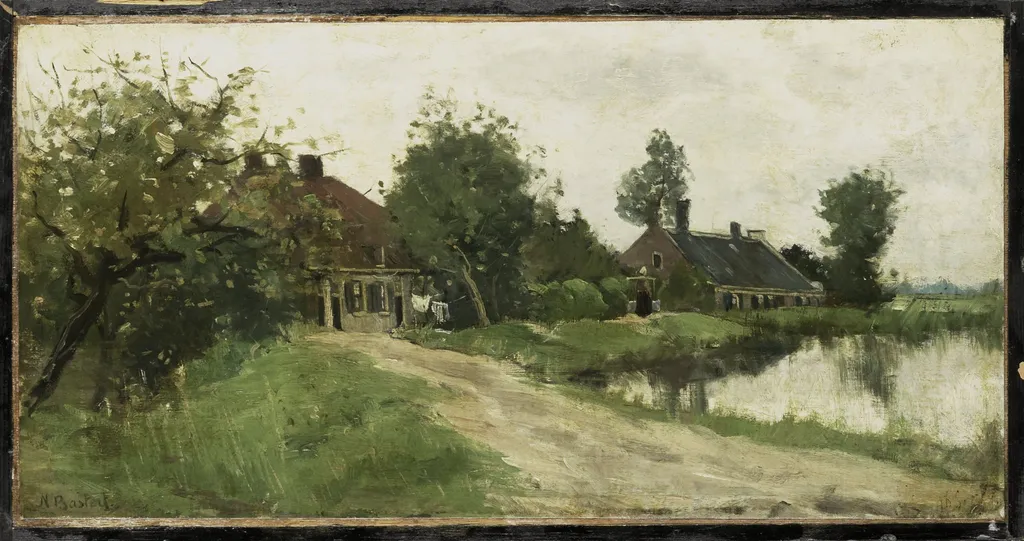
Near Breukelen on the Vecht is an oil painting by the Impressionist artist Nicolaas Bastert. It dates from 1898 and is held in the collection of the Rijksmuseum.
About this work
Overview
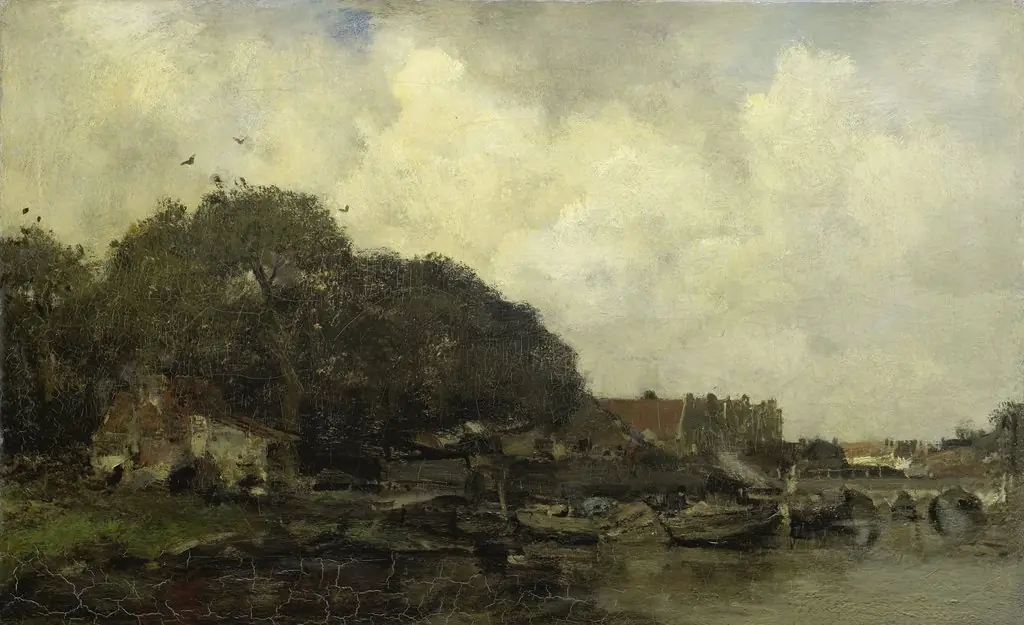
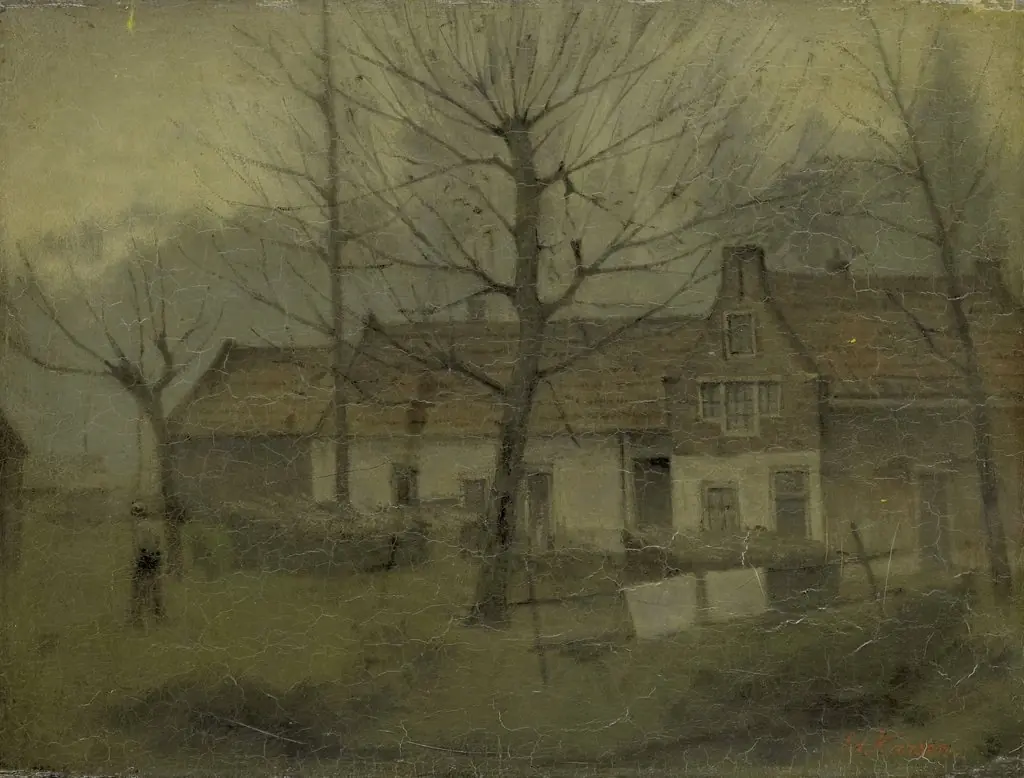
Created in 1898, *Near Breukelen on the Vecht* is an oil painting by Dutch landscape artist Nicolaas Bastert. The work portrays a tranquil rural setting along the Vecht river, featuring a modest dwelling, a solitary tree, and a winding dirt track beside a small pool of water. The composition is dominated by muted greens, browns and grays that convey a subdued, overcast atmosphere.
Subject & Meaning
The scene captures a moment of everyday countryside life, with a simple house displaying a clothesline and a cluster of trees framing the vista. The quiet path and still water suggest a pause in daily activity, inviting contemplation of the landscape’s modest beauty rather than dramatic narrative.
Technique & Style
Bastert applies an impressionistic sensibility, using loose brushwork and selective impasto to give texture to foliage and grass. Thick layers of paint on the trees and ground catch the light, while smoother areas render the water and sky, creating a balanced contrast between tactile surface and atmospheric softness.
History & Provenance
The painting entered the Rijksmuseum’s collection, where it remains part of the institution’s holdings of 19th‑century Dutch art. Its acquisition reflects the museum’s interest in documenting the later phase of the Hague School and its regional landscape traditions.
Context
Nicolaas Bastert belonged to the second generation of the Hague School, a group known for sober, naturalistic depictions of the Dutch environment. By the late 1890s, he had turned increasingly toward the Vecht river, employing a softer, more impressionistic palette that distinguishes this work from the earlier, darker tones of his peers.
Artist & collection
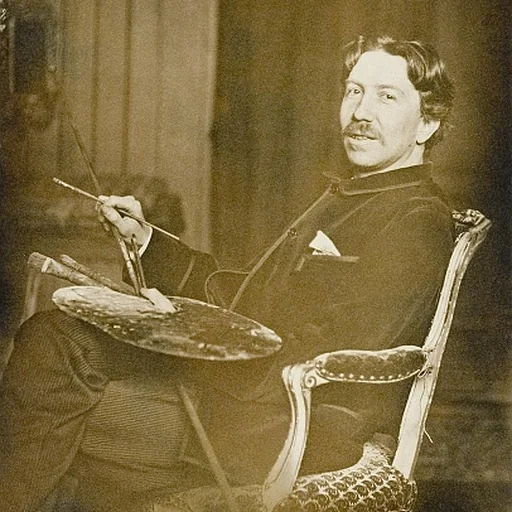
Artist
Syvert Nicolaas Bastert (7 January 1854 – 18 April 1939), was a 19th-century Dutch landscape painter, best known for his scenes along the river Vecht. He is counted among the "second generation" of the Hague School.