Artwork
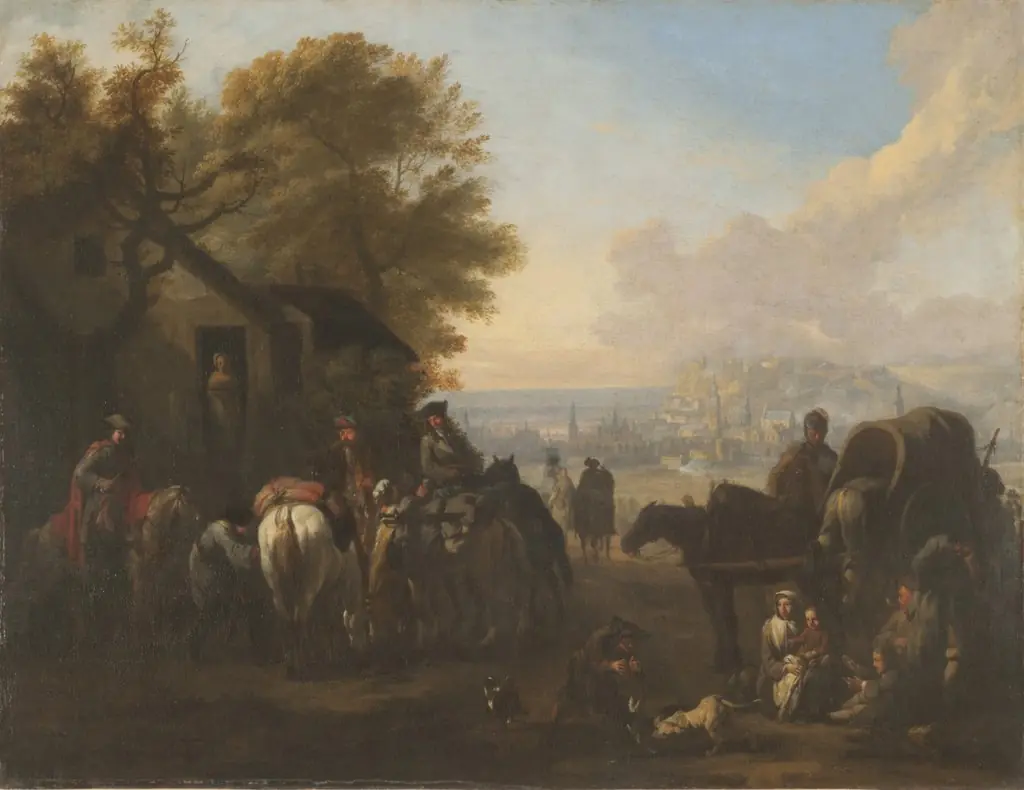
Landscape with a Wagon and Horses at an Inn Door
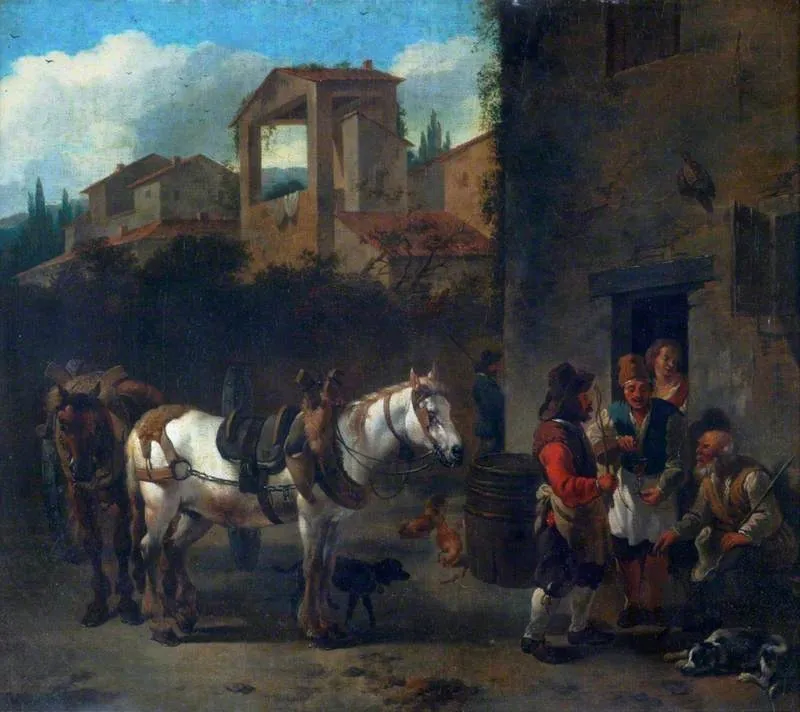
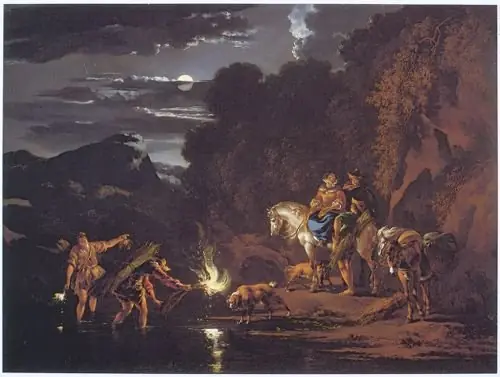
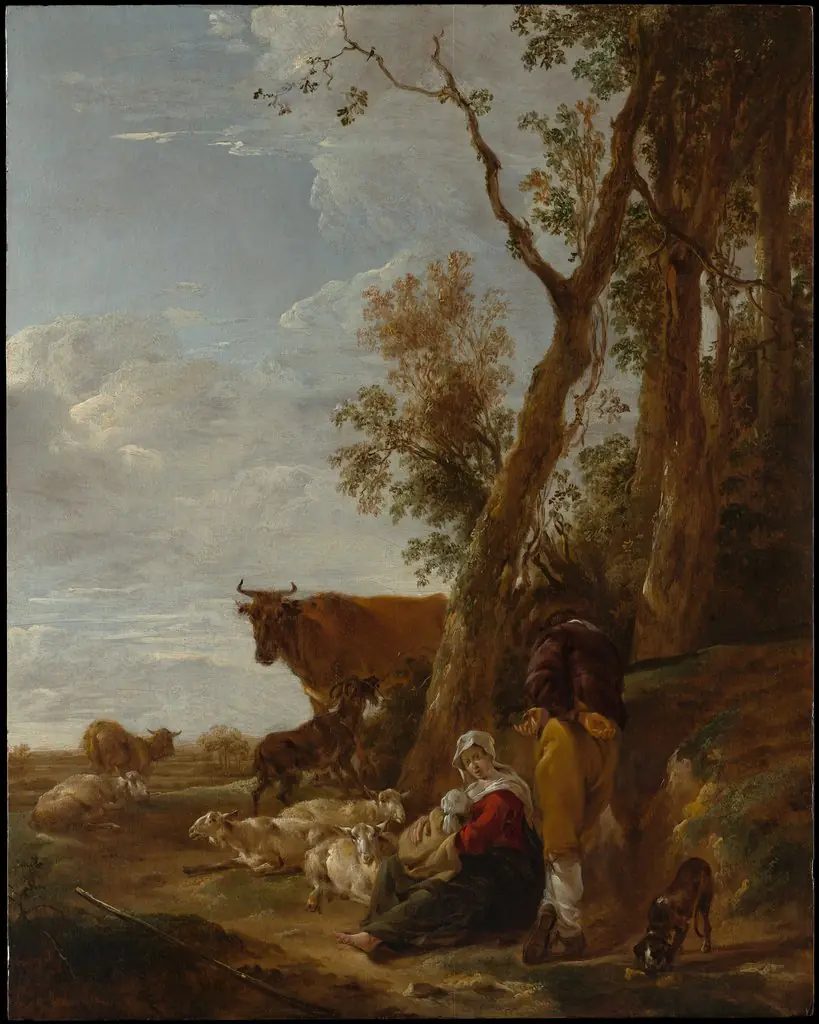
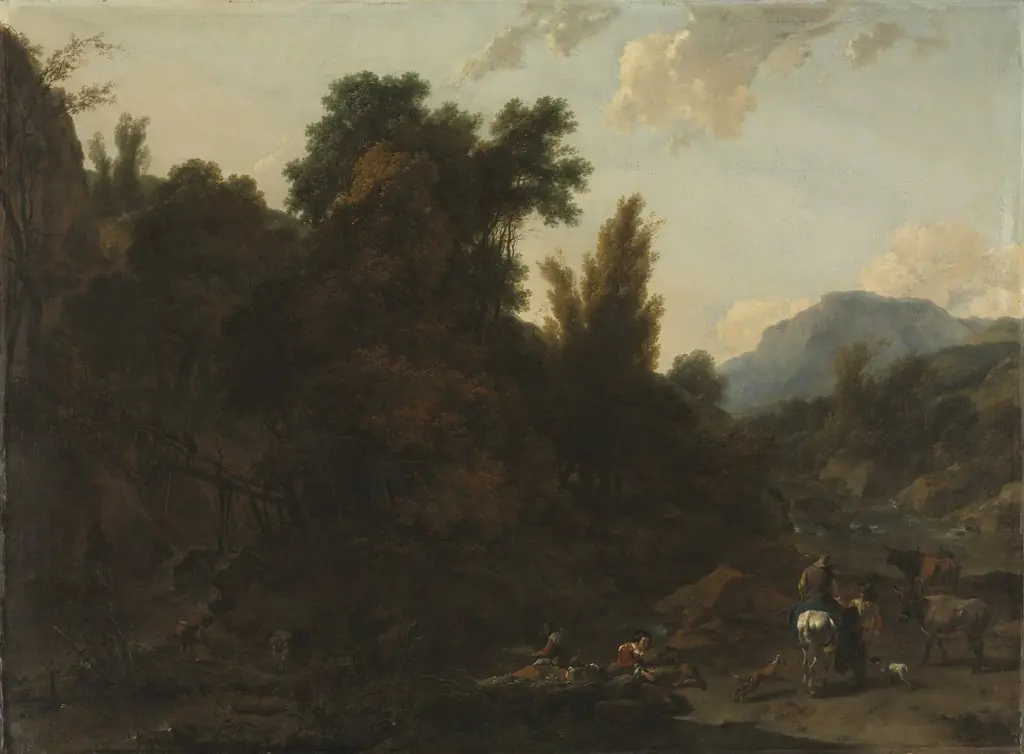
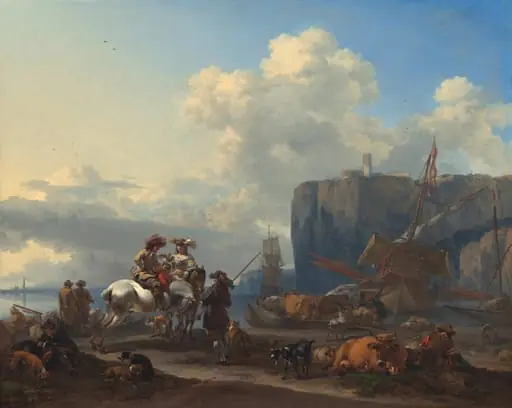
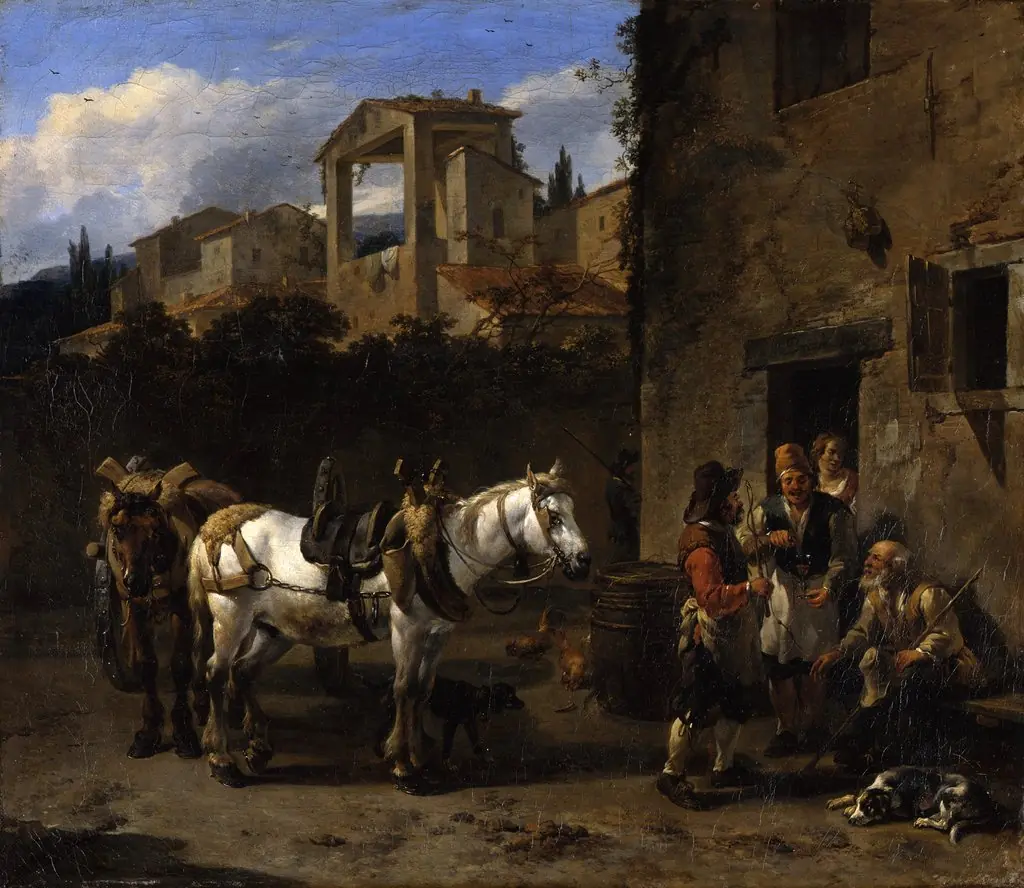
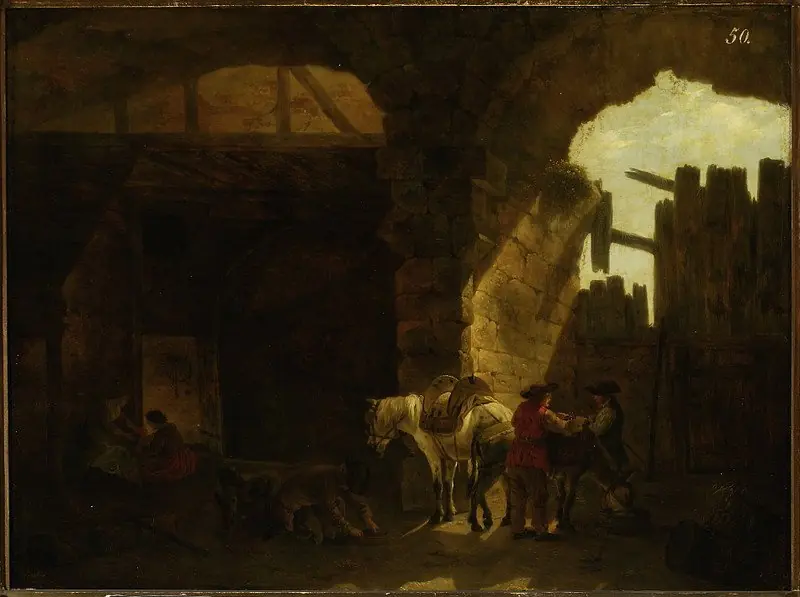
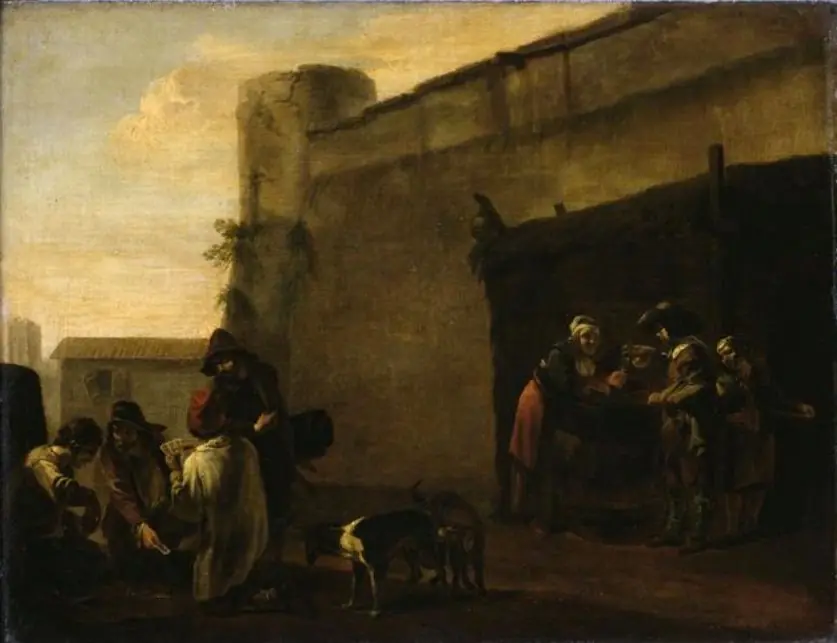
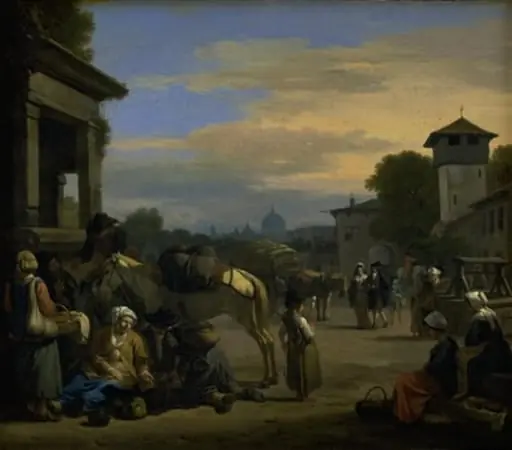
Landscape with a Wagon and Horses at an Inn Door is an oil painting by the Dutch Golden Age artist Nicolaes Pieterszoon Berchem. It dates from 1662 and is held in the collection of the Victoria and Albert Museum.
About this work
Overview
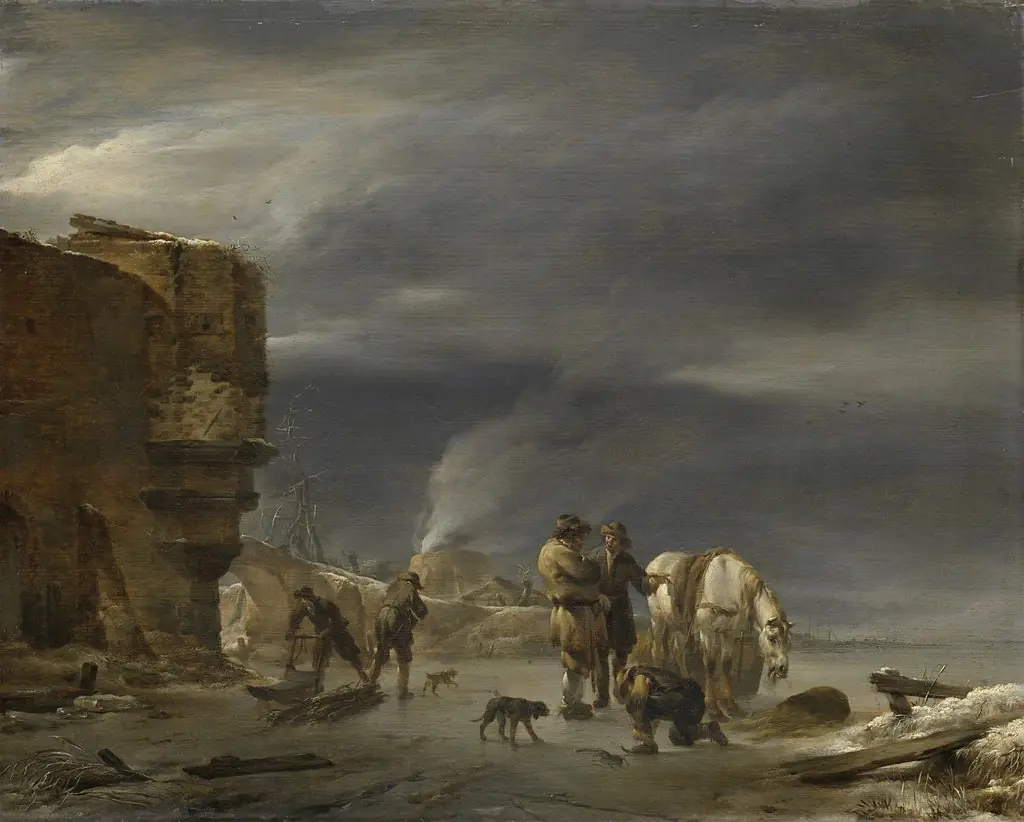
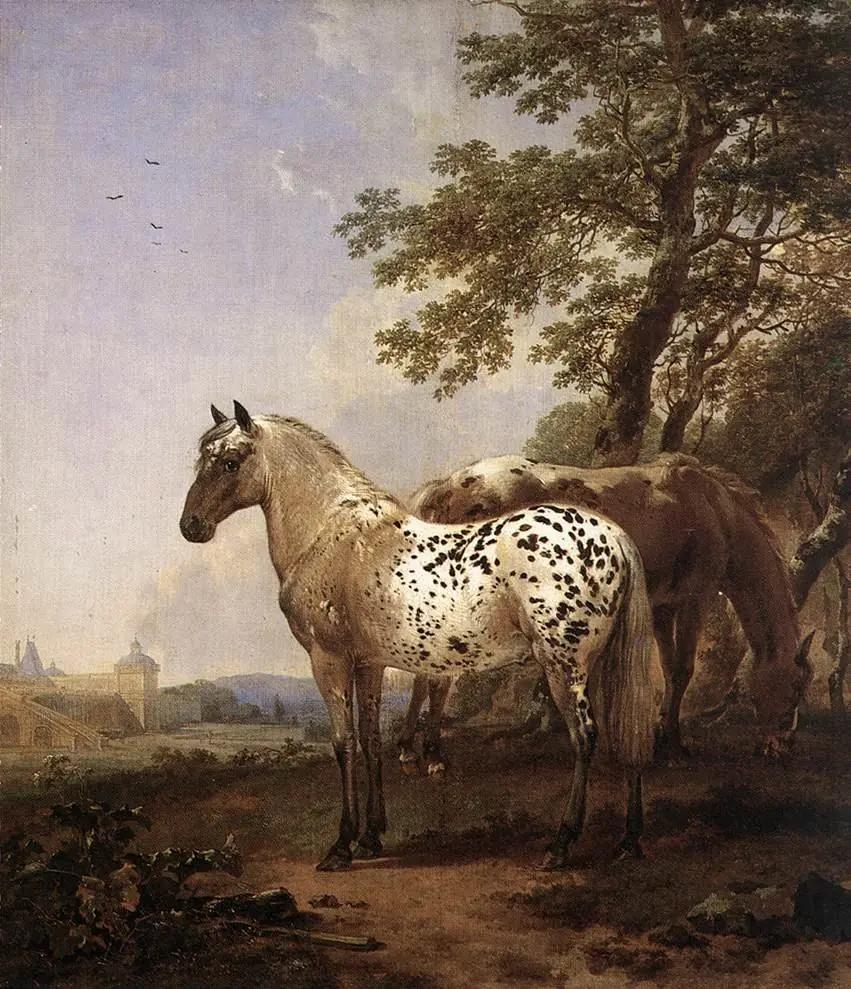
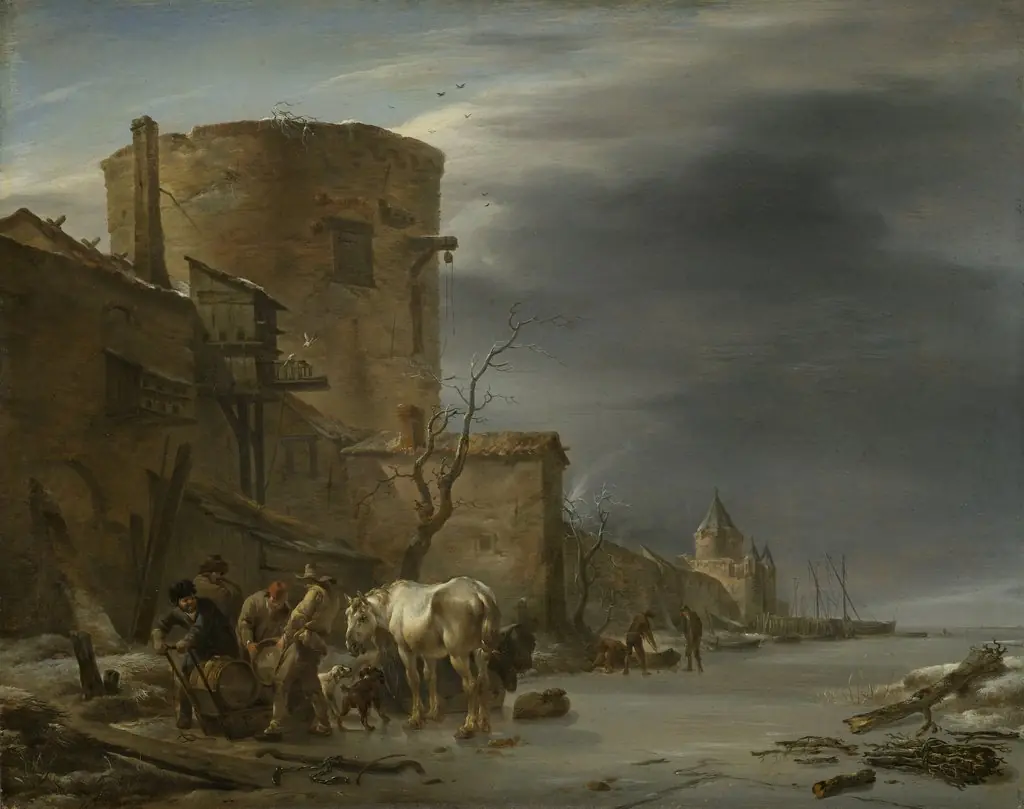
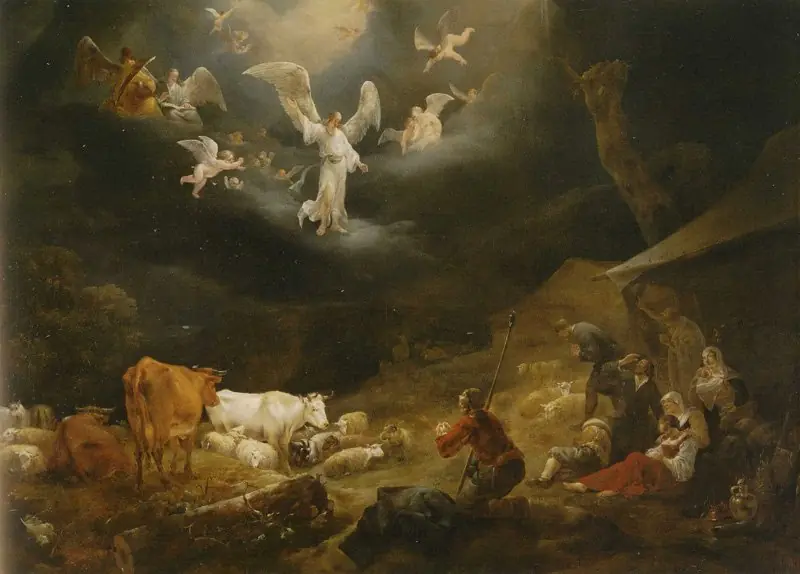
Painted around 1662 by Nicolaes Pieterszoon Berchem, this oil-on-canvas work depicts a quiet moment at a rural inn in an idealized Italianate setting.
Painted around 1662 by Nicolaes Pieterszoon Berchem, this oil-on-canvas work depicts a quiet moment at a rural inn in an idealized Italianate setting. Though Berchem was Dutch, his landscapes evoke the southern countryside, blending observed detail with imagined topography. The scene centers on a wagon and horses outside a modest stone building, with figures and animals arranged in a naturalistic, unforced composition that invites quiet contemplation.
Subject & Meaning
The painting portrays everyday rural activity—horses resting, travelers pausing, dogs lounging—without overt narrative or symbolism. It reflects the Dutch fascination with tranquil, harmonious outdoor life, filtered through a romanticized lens of the Italian countryside. The absence of mythological or biblical elements suggests a shift toward secular, observational genre scenes, emphasizing atmosphere over allegory.
Technique & Style
Berchem employed soft, diffused lighting to model forms and create spatial depth, with warm tones in the foreground giving way to cooler hues in the distance. The textures of horsehide, weathered stone, and foliage are rendered with careful brushwork, though not with hyperrealism. His style merges Dutch precision with the luminous atmosphere of Italianate landscape traditions, resulting in a balanced, poetic realism.
History & Provenance
The painting entered the collection of the Victoria and Albert Museum in the 19th century, likely through one of the museum’s early acquisitions of Dutch Golden Age works. While its exact provenance before that is undocumented, it aligns with the taste of British collectors who favored Italianate landscapes during the Victorian era for their serene, picturesque qualities.
Context
Berchem was part of a generation of Dutch artists who never traveled to Italy but absorbed its visual language through prints, travelogues, and the works of earlier painters. His landscapes responded to urban Dutch audiences’ longing for idealized rural escapes. The inn setting, common in his oeuvre, served as a neutral stage for human and animal interaction within a timeless, harmonious environment.
Legacy
Berchem’s influence extended to later landscape painters in the Netherlands and beyond, particularly in the treatment of light and the integration of animals into naturalistic settings. Though less celebrated today than contemporaries like Rembrandt, his work remains a quiet testament to the Dutch ability to transform ordinary scenes into enduring visual poetry through restraint and observation.
Artist & collection
Artist
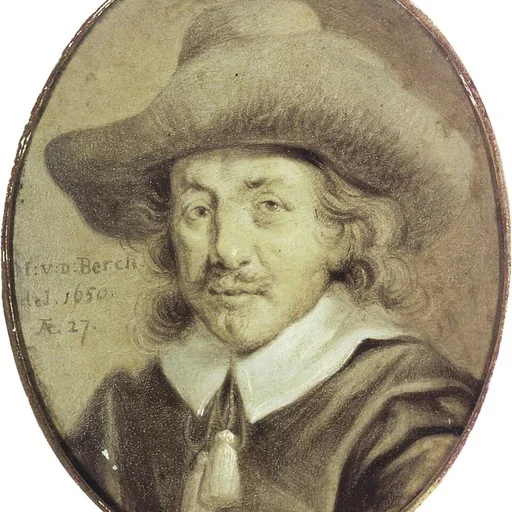
Nicolaes Pieterszoon Berchem (1 October 1620 – 18 February 1683) was a highly esteemed and prolific Dutch Golden Age painter of pastoral landscapes, populated with mythological or biblical figures, but also of a number of allegories and…