Artwork
Țărănci la umbră
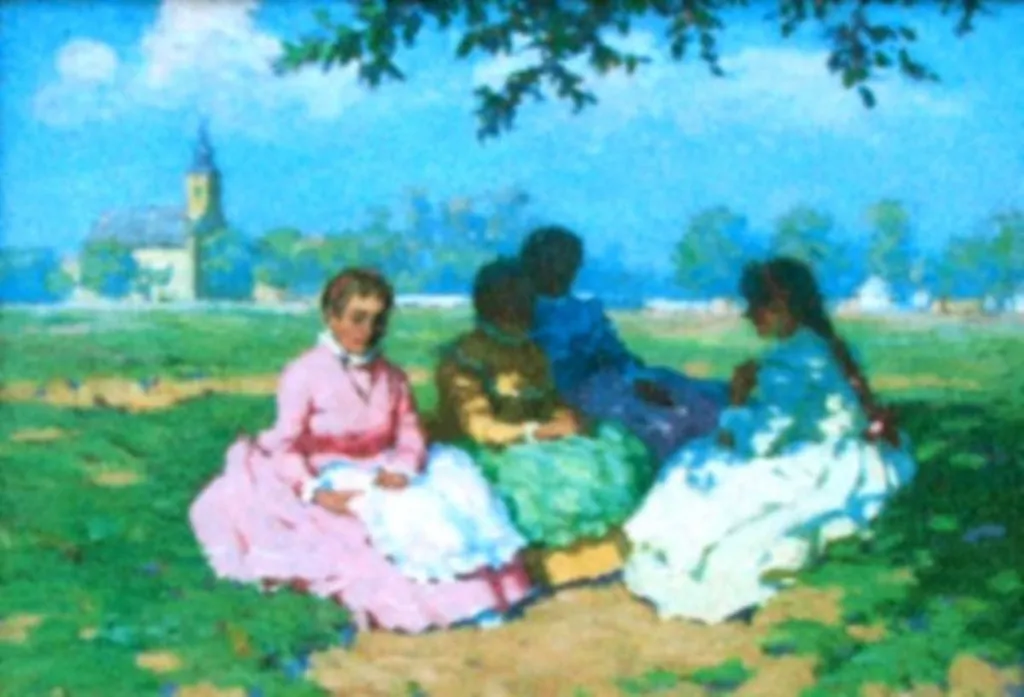
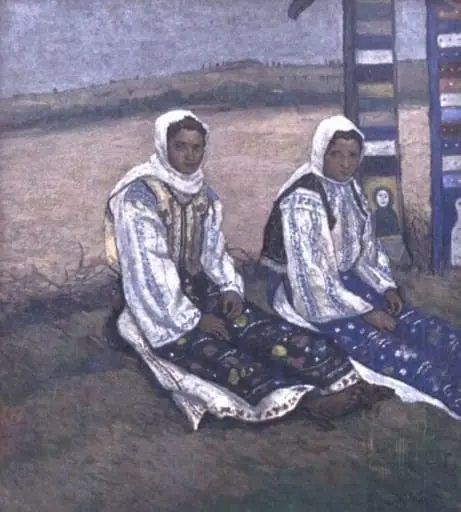
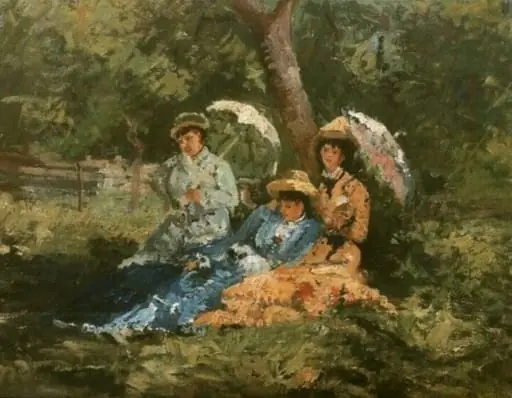
Țărănci la umbră is a print by Sándor Nyilasy. It is held in the collection of the Colecție particulară - Arad. This print depicts three women resting beneath a tree on a gentle slope, their postures relaxed and their surroundings calm.
About this work
Overview
A distant church steeple anchors the scene in a rural setting, while a yellow blanket and green grass ground the figures in a tangible, everyday moment.
This print depicts three women resting beneath a tree on a gentle slope, their postures relaxed and their surroundings calm. The bright sky and soft hues of the landscape suggest a quiet afternoon. A distant church steeple anchors the scene in a rural setting, while a yellow blanket and green grass ground the figures in a tangible, everyday moment. The composition emphasizes stillness and shared space.
Subject & Meaning
The three figures, dressed in modest, regionally distinct clothing, appear to be engaged in a pause during daily labor. The pink-dressed woman holds a small, indistinct object, possibly a tool or personal item, hinting at interrupted activity. Their proximity and uniform stillness suggest camaraderie or familial ties. The scene avoids narrative drama, instead honoring the quiet dignity of rural rest.
Technique & Style
The artist employs muted, warm tones to convey a sense of natural light and soft atmosphere. Lines are gentle, with no sharp contours, allowing forms to blend into the landscape. The patterned fabrics and textured grass are rendered with subtle detail, avoiding ornamentation. The overall approach is observational, prioritizing atmosphere over dramatic emphasis.
History & Provenance
The work originates from a tradition of documenting rural life in Eastern Europe, likely produced in the late 19th or early 20th century. Its preservation in institutional collections suggests it was valued for its ethnographic clarity. The Museum of Ethnography holds related works, indicating a broader effort to record regional dress and daily customs during a period of social change.
Context
This image reflects a time when rural communities maintained distinct dress codes and rhythms of labor. The presence of a church steeple underscores the centrality of religious life in village settings. Such depictions were often created by artists or collectors seeking to preserve cultural practices before industrialization altered traditional ways of life.
Legacy
The print contributes to a visual archive of rural women’s lives, offering insight into clothing, posture, and communal behavior in pre-industrial settings. It remains a quiet reference point for scholars studying regional identity and the representation of everyday labor. Its endurance in museum collections reflects its value as a documentary record rather than a decorative object.
Artist & collection
Artist