Artwork
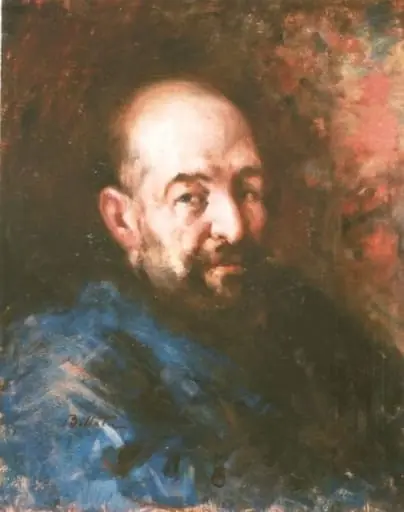
Portret de bătrân
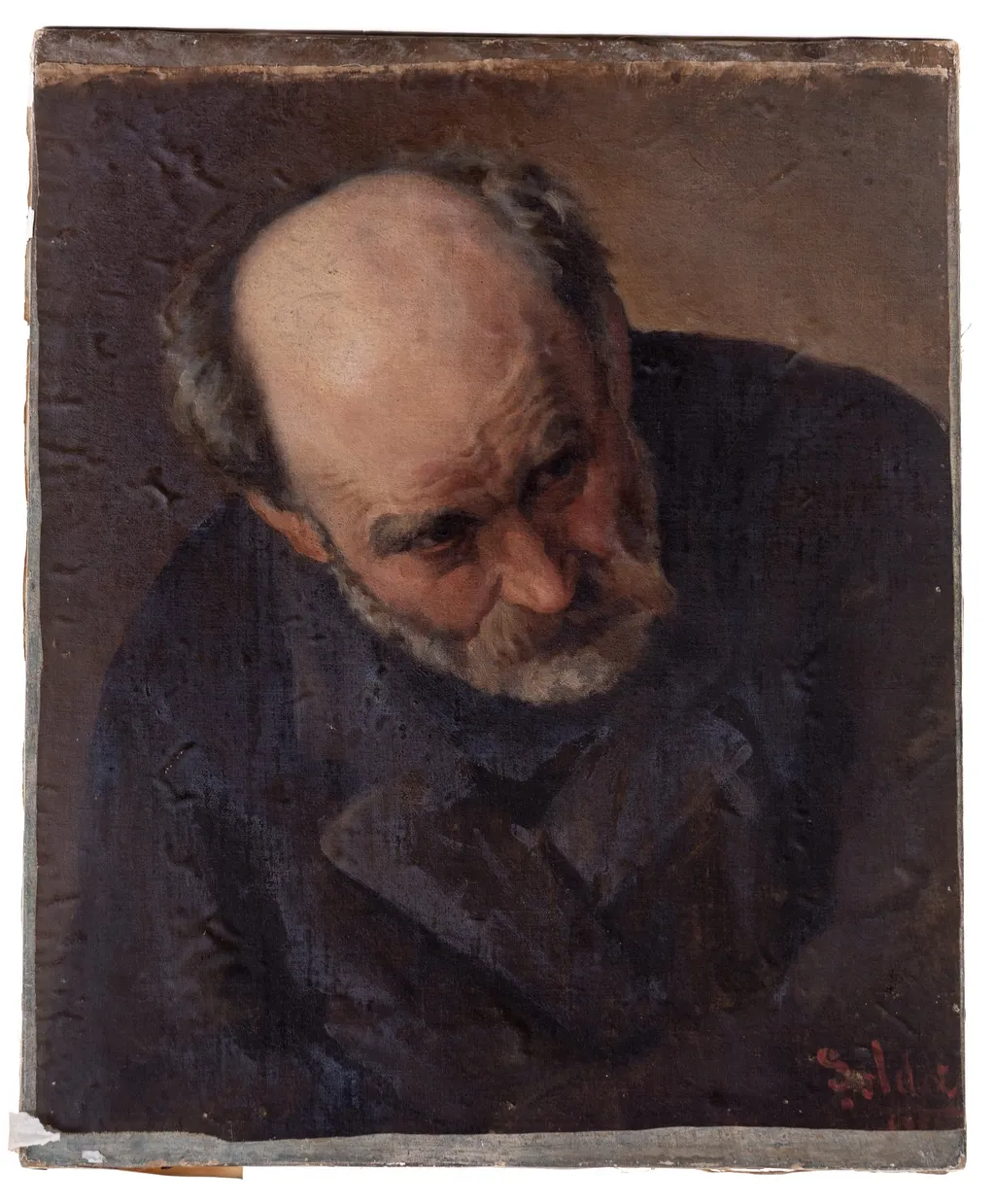
Portret de bătrân is an unspecified painting by Ștefan Șoldănescu. It dates from 1850 and is held in the collection of the Moldova National Museum Complex.
About this work
Overview
The composition isolates the figure against a deep, unmodulated background, emphasizing his presence through focused lighting and tactile brushwork.
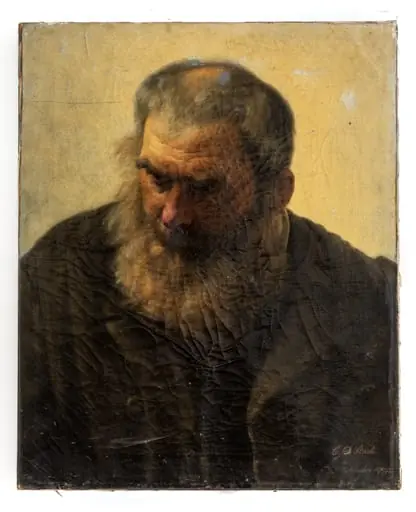
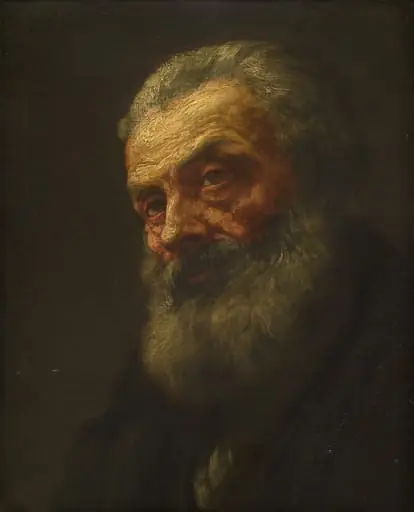
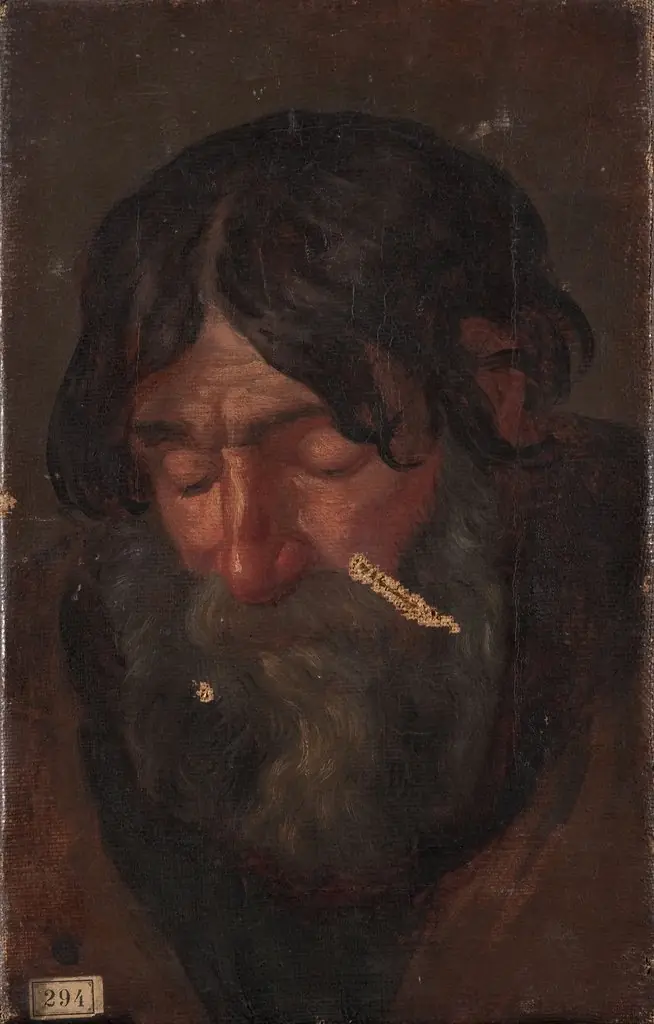
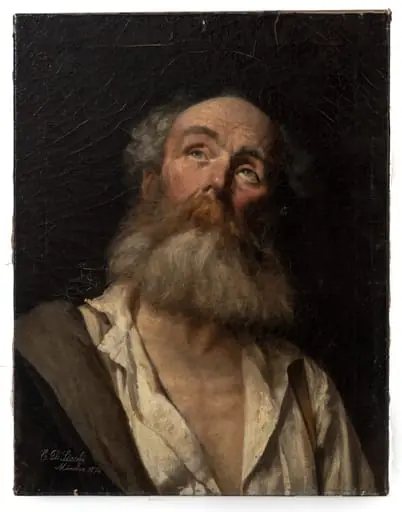
Painted around 1850 by Ștefan Șoldănescu, this portrait captures an elderly man in intimate close-up. The composition isolates the figure against a deep, unmodulated background, emphasizing his presence through focused lighting and tactile brushwork. The work belongs to a tradition of character studies common in 19th-century Romanian art, where psychological depth was sought through direct observation rather than idealization.
Subject & Meaning
The subject is an aging man, his bald scalp and thick white beard marking the passage of time. His expression is quiet, neither overtly emotional nor detached, inviting contemplation rather than narrative. The absence of context or attire suggests a focus on human endurance and the dignity of age, rendered without ornament or social status indicators.
Technique & Style
Thick, deliberate brushstrokes build the texture of skin and beard, particularly around the neck and jawline, creating a sense of physicality. Light falls sharply from above, modeling the face in warm tones while the surrounding darkness absorbs detail. This contrast, rooted in chiaroscuro, enhances the three-dimensionality of the figure and directs attention solely to his features.
History & Provenance
The painting’s early ownership is undocumented, but it has remained within Romanian collections since the 19th century. It was likely produced during Șoldănescu’s formative years, before his later academic commissions. Its survival as a private study rather than a public portrait suggests it was valued for its artistic honesty over formal prestige.
Context
In mid-19th century Romania, portraiture was shifting from aristocratic commissions toward depictions of ordinary individuals. Șoldănescu, trained in Vienna and influenced by German realism, contributed to this trend. This work reflects a broader European interest in the human face as a vessel of lived experience, distinct from Romantic idealism.
Legacy
Though not widely exhibited, the portrait is recognized in Romanian art history as an early example of psychological realism. Its unadorned approach influenced later generations of local painters who sought to portray rural and elderly subjects with empathy and technical sincerity, moving beyond ceremonial representation.
Artist & collection
Artist
A Romanian artist who painted portraits and figure studies in the late 19th century, Ștefan Șoldănescu left behind works like *Un băiat italian* (1893) and *Nud de bărbat*.