Artwork
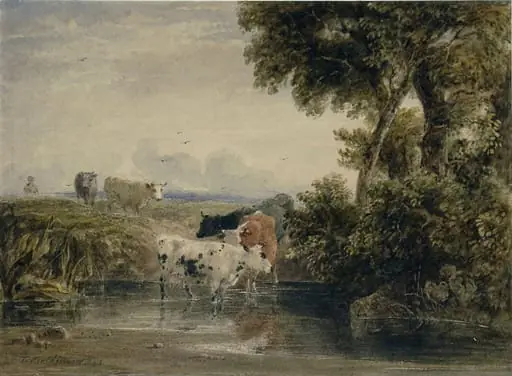
Landscape with cattle drinking
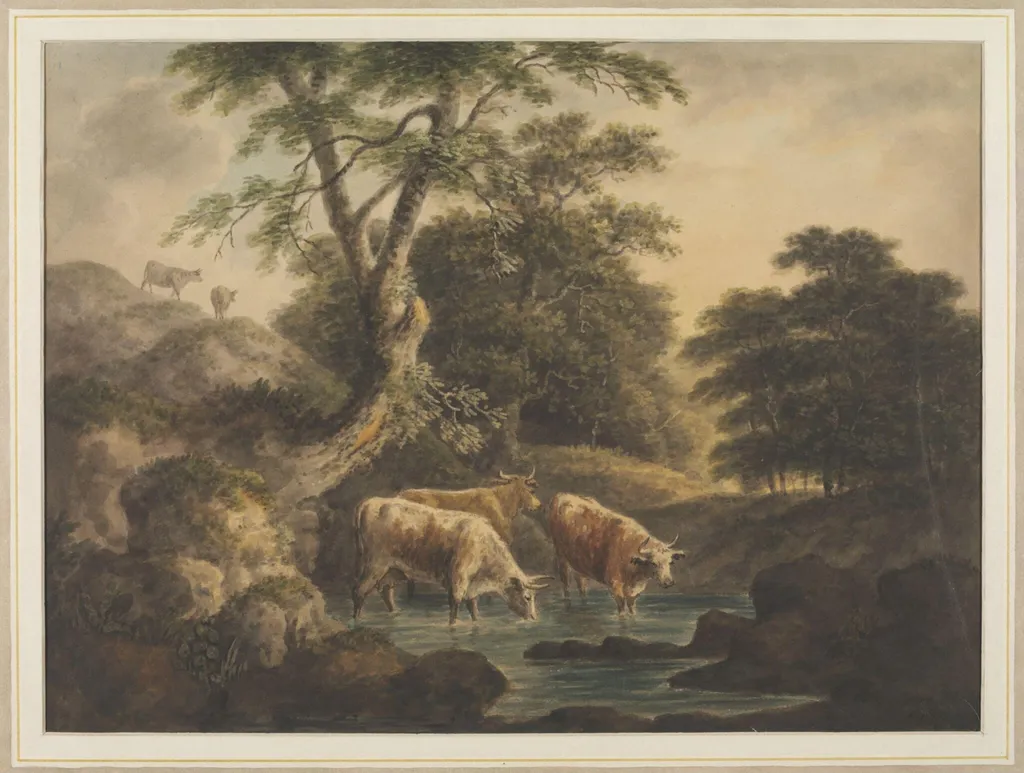
Landscape with cattle drinking is a watercolor work on paper by the British Romanticist artist Edith Palmer. It dates from 1820 and is held in the collection of the Victoria and Albert Museum.
About this work
Overview
Painted in 1820, this watercolour by Edith Palmer captures a quiet rural scene where cattle gather at a water's edge.
Painted in 1820, this watercolour by Edith Palmer captures a quiet rural scene where cattle gather at a water's edge. The work is inscribed with its date on the reverse, a common practice for private works of the period. Executed in transparent washes, it reflects the intimate, observational style favored by amateur artists in early 19th-century Britain, particularly women who worked within domestic artistic circles.
Subject & Meaning
The painting presents a modest, unidealized moment of pastoral life: animals drinking calmly beside a stream, surrounded by dense vegetation and a distant rise of land. There is no human presence, emphasizing nature’s quiet autonomy. The scene avoids narrative or symbolism, instead offering a contemplative view of rural equilibrium — a quiet affirmation of the natural world’s rhythms, resonant with Romantic sensibilities but without overt drama.
Technique & Style
Palmer employs delicate watercolour washes to suggest texture and light. The foliage is rendered with loose, layered strokes, allowing the paper’s white to hint at sunlit leaves. Dappled shadows on the ground are achieved through subtle tonal variations, creating depth without hard outlines. The composition is uncluttered, with horizontal bands of water, grass, and hill guiding the eye gently into the distance, reflecting a restrained, observational approach.
History & Provenance
The work’s origin lies in private, domestic practice rather than public exhibition. Its date on the reverse suggests it was intended for personal or familial use, possibly as a keepsake or study. No record of public display or sale exists from the period, and its survival likely stems from preservation within the artist’s circle. Its current location reflects later acquisition by a collector or institution interested in overlooked female artists of the era.
Context
In early 19th-century Britain, watercolour was a popular medium among amateur artists, especially women, who were often excluded from formal academies. Landscape painting, particularly pastoral scenes, offered a socially acceptable subject. Palmer’s work aligns with a broader trend of quiet, nature-focused watercolours produced outside the institutional art world, reflecting a growing cultural appreciation for the English countryside.
Legacy
Though not widely known during her lifetime, Edith Palmer’s watercolour contributes to a growing recognition of women artists who worked in private spheres. Her careful rendering of light and atmosphere, while modest in scale, exemplifies the quiet skill present in non-professional art of the period. Today, such works help broaden the historical narrative of British landscape art beyond the canonical figures.
Own this work as a print
Artist & collection
Artist
Edith Palmer painted small, precise watercolors of rural scenes in the early 1800s.

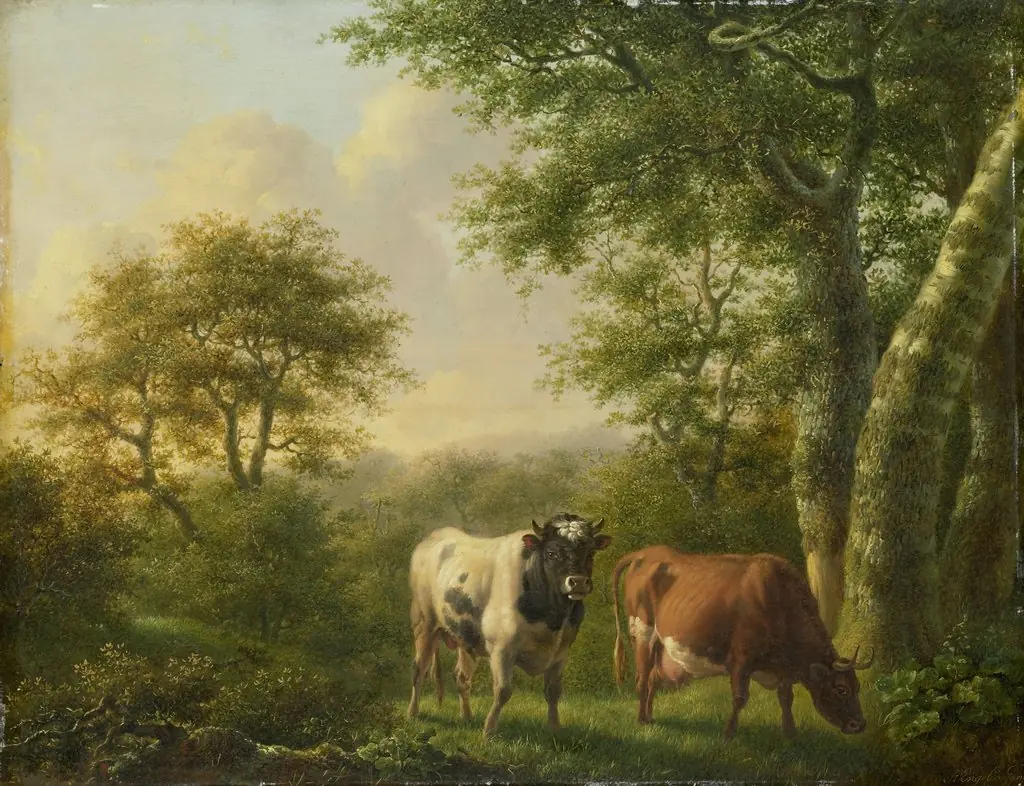 Landscape with Cows
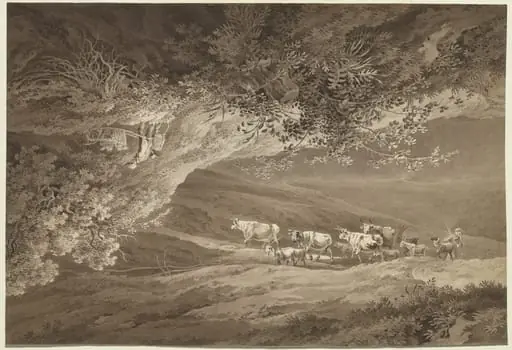 A Landscape with a Herd of Cows and Goats, Surmounted by Another Landscape, Upside-down, with a Man Pushing a Wheelbarrow
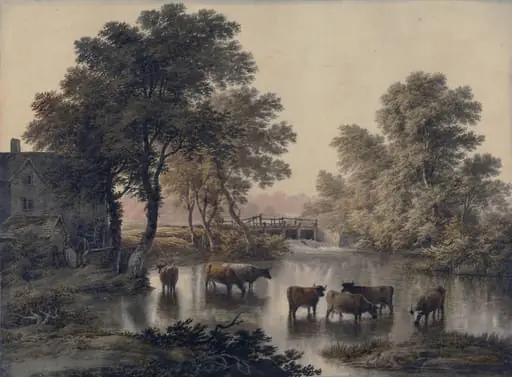 Evening, Shenstone Mill, near Lichfield
 Landscape with cattle
 Untitled
 Trees and cattle
 Cows and sheep
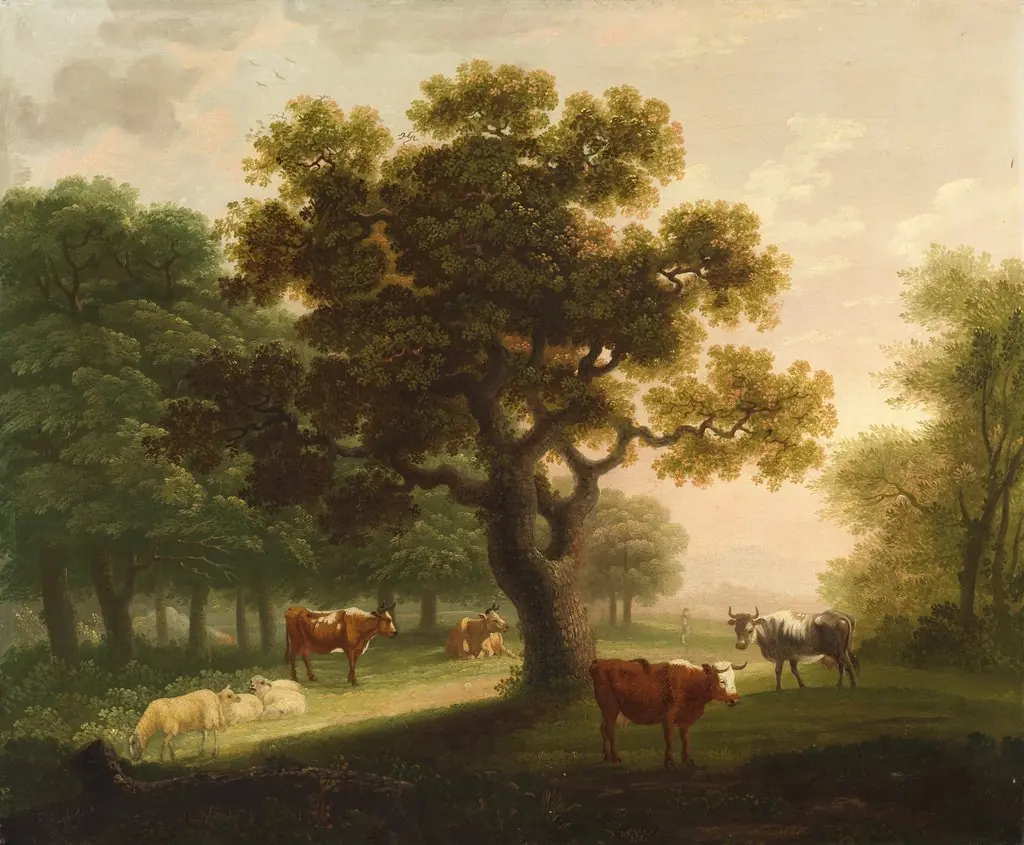 Landscape with Cattle, Sheep and Distant Figure
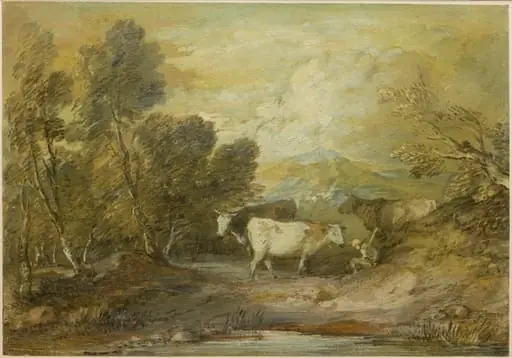 A Herdsman with Three Cows by an Upland Pool
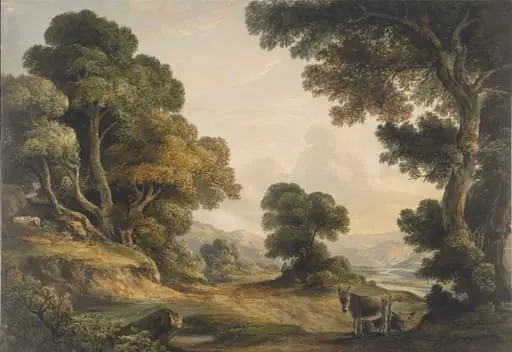 Mountain Landscape