Artwork
Χωρίς τίτλο
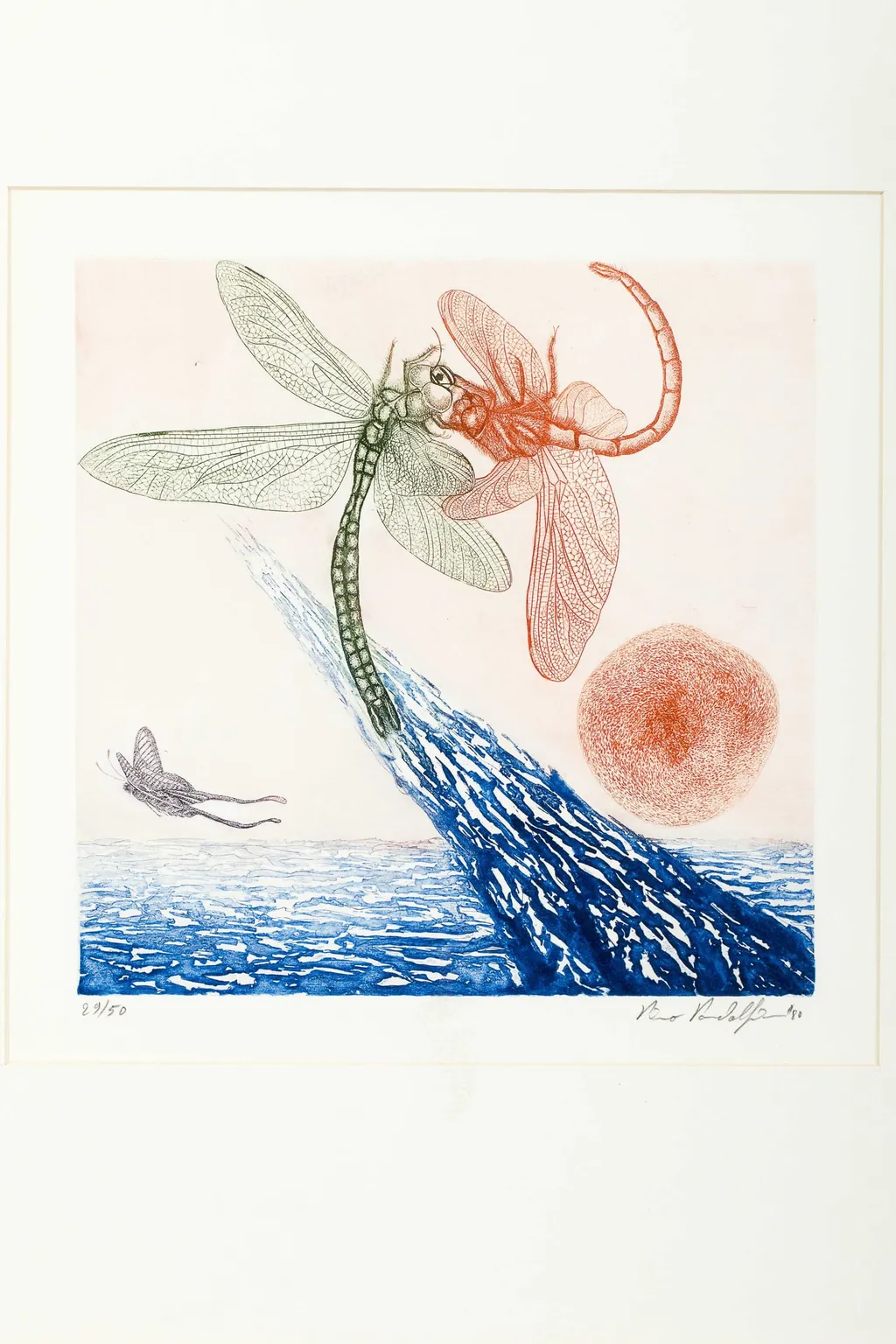
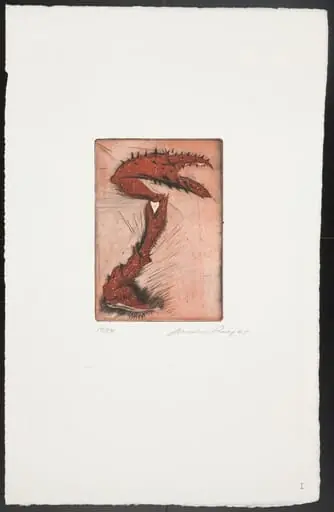
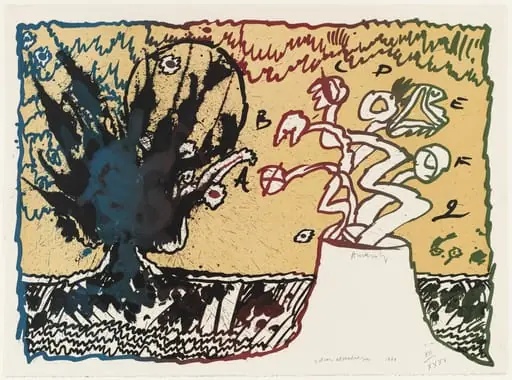
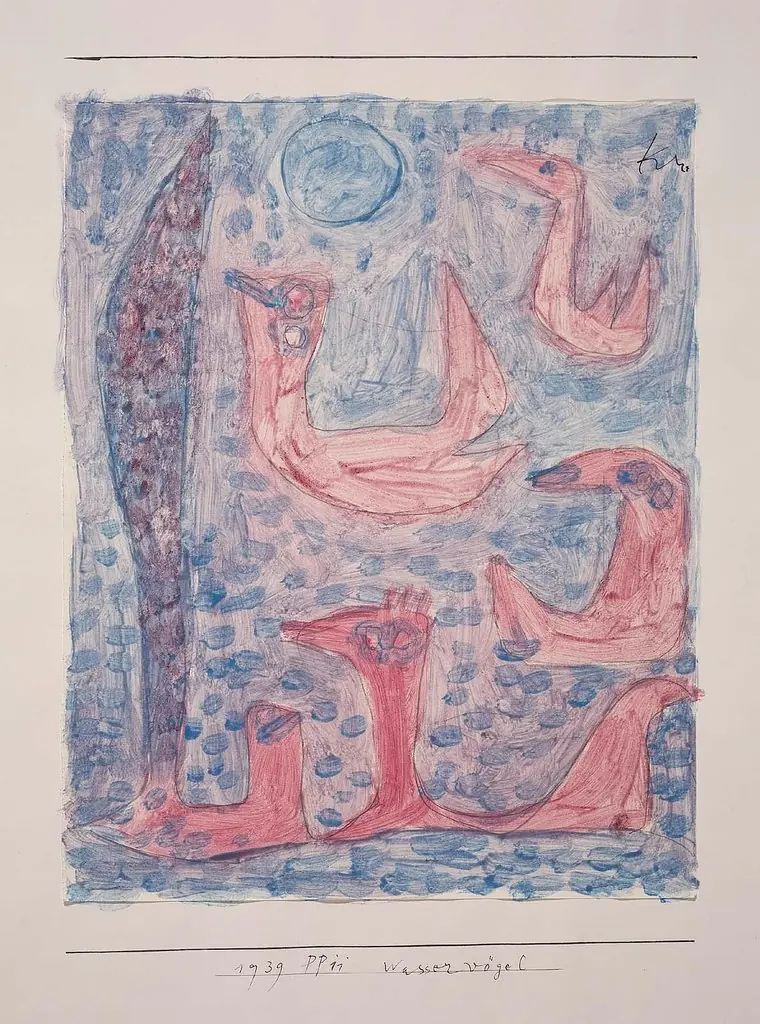
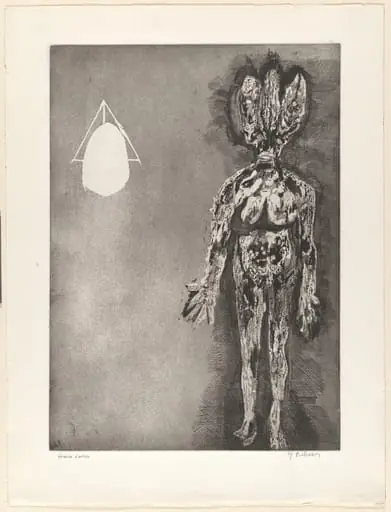
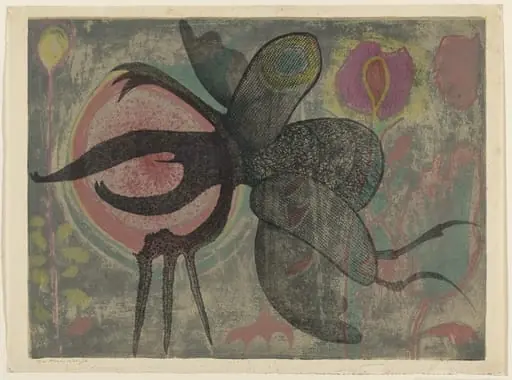
Χωρίς τίτλο is a print by Pino Pandolfini. It dates from 1980 and is held in the collection of the Metropolitan Organisation of Museums of Visual Arts of Thessaloniki – MOMus.
About this work
The dragonflies repeat in soft colors—blue, green, yellow—against a light blue background.
You see a print full of dragonflies over a calm sea. The dragonflies repeat in soft colors—blue, green, yellow—against a light blue background. The print feels quiet, like a breeze over water.
Pandolfini layered the colors to make the dragonflies seem to float. The way he repeats the shape makes you notice how nature balances repetition and change. The sea stays still while the insects move.
If you like this rhythm, look up Pandolfini, Pino (1947).
Overview
Pino Pandolfini’s untitled print presents a serene seascape populated by repeated dragonfly forms, rendered in muted blues, greens, and yellows. The composition avoids narrative or symbolism, instead focusing on the quiet interplay of shape and color. The background remains still and uniform, while the dragonflies, subtly varied in tone and placement, suggest motion without disruption. The work invites contemplation through repetition rather than drama.
Subject & Meaning
The dragonfly, a recurring natural form, serves as a quiet emblem of transience and rhythm in Pandolfini’s work. Its repetition across the surface evokes patterns found in nature—flight paths, seasonal cycles, or wave movements—without literal representation. The calm sea beneath anchors the piece, contrasting the insects’ implied movement. Together, they suggest an underlying order in natural systems, observed rather than explained.
Technique & Style
Pandolfini employed layered color printing to achieve a soft, translucent effect, allowing each dragonfly to appear as if hovering just above the surface. Colors blend gently, avoiding sharp edges or high contrast. The technique emphasizes subtlety over precision, with slight variations in hue and orientation preventing mechanical repetition. This method reinforces the organic, breathing quality of the composition.
History & Provenance
Created in the late 20th century, this print belongs to Pandolfini’s broader exploration of natural motifs through printmaking. Though not widely exhibited, it reflects his consistent interest in minimal, meditative compositions derived from observation. The work remains in private collections, with no public record of institutional acquisition, suggesting its quiet resonance within niche artistic circles.
Context
Pandolfini’s practice emerged alongside postwar Italian movements that favored introspection over grandeur. His work aligns with artists who turned to nature not as spectacle but as a source of structural harmony. In contrast to the expressive abstraction of his contemporaries, he pursued stillness and repetition, drawing from Eastern aesthetics and scientific observation to find rhythm in simplicity.
Legacy
Though not part of mainstream art history, Pandolfini’s prints have influenced a small cohort of contemporary printmakers interested in quiet, nature-based abstraction. His emphasis on color as atmosphere and repetition as rhythm offers an alternative to narrative-driven visual culture. The work endures in private hands and limited publications, valued for its meditative clarity and restraint.
Artist & collection
Artist
Pino Pandolfini kept a small pocket sketchbook in his back pocket for thirty years, drawing whenever the Rome bus was late or the espresso too slow.
Museum
Metropolitan Organisation of Museums of Visual Arts of Thessaloniki – MOMus
Continue through works from the same source collection.