Artwork
Χωρίς τίτλο
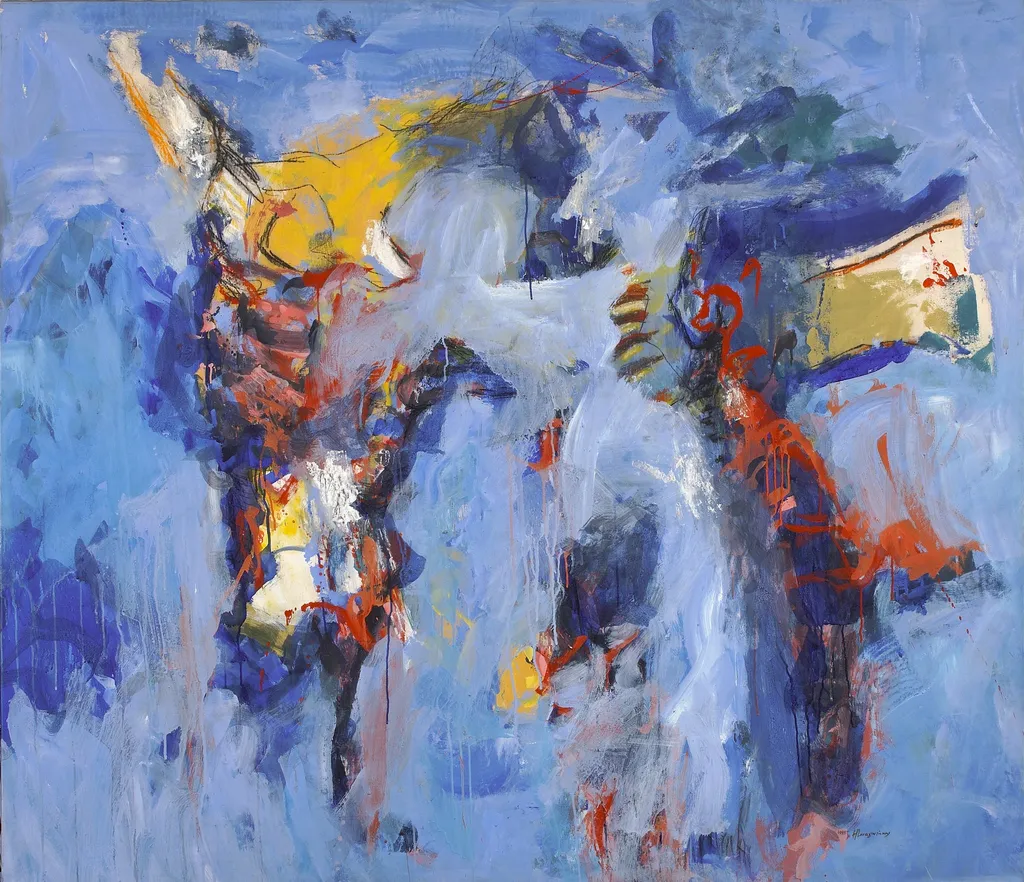
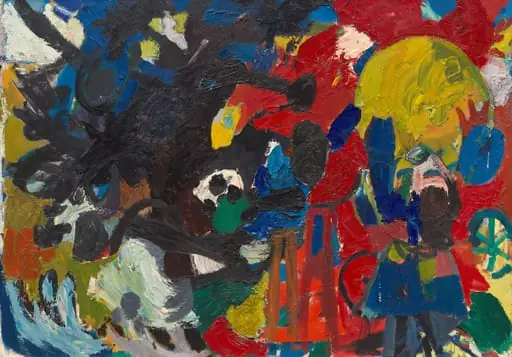
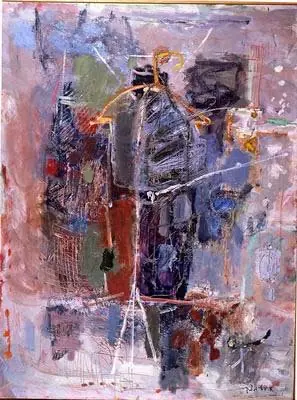
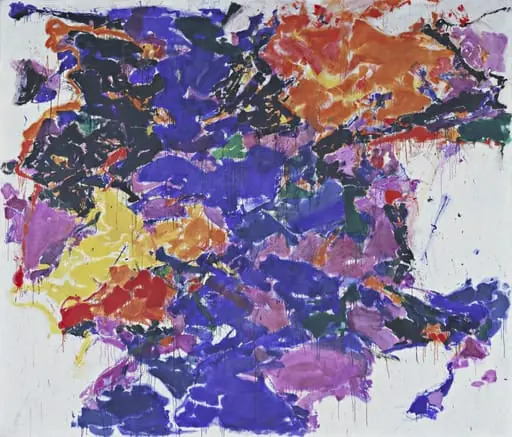
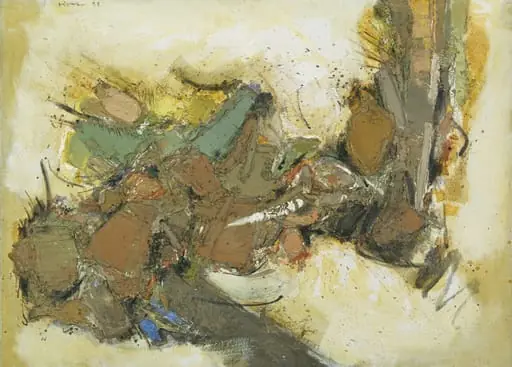
Χωρίς τίτλο is an unspecified painting by Stavros Pannagiotakis. It dates from 1995 and is held in the collection of the Metropolitan Organisation of Museums of Visual Arts of Thessaloniki – MOMus.
About this work
Overview
The absence of a formal title invites open interpretation, emphasizing emotional resonance over narrative clarity.
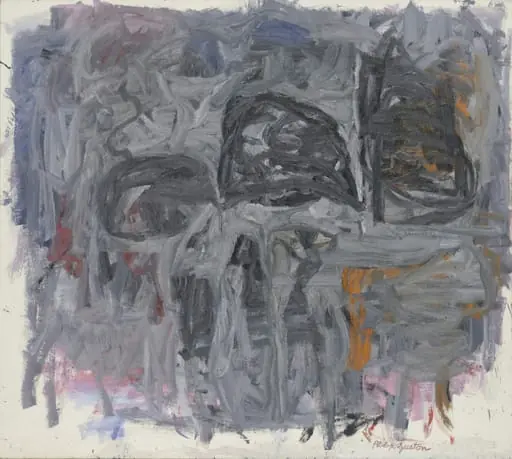
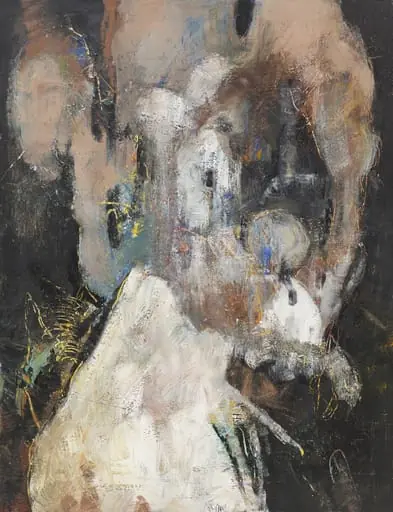
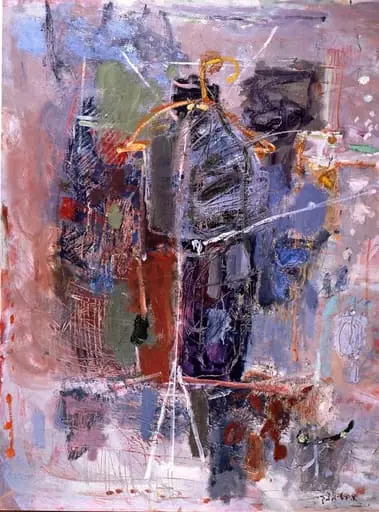
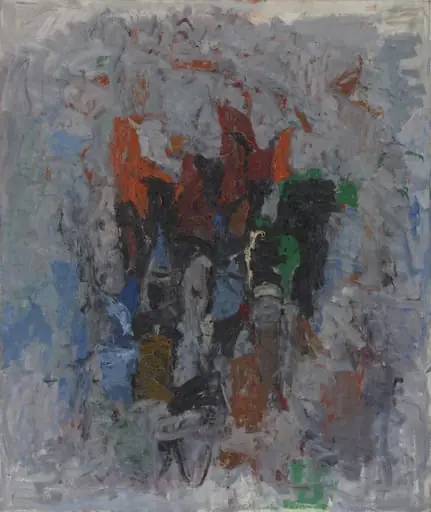
Created in 1995 by Stavros Pannagiotakis, this untitled work is part of the Museum of Ethnography’s collection. It presents a non-representational composition dominated by energetic brushwork and unmodulated color. The absence of a formal title invites open interpretation, emphasizing emotional resonance over narrative clarity. Its raw, unrefined surface suggests immediacy and spontaneity in the artist’s process.
Subject & Meaning
Three elongated, indistinct figures rise against a pale sky, their limbs extended in ambiguous gestures. Their forms suggest movement—perhaps dance or ritual—but lack defining features, resisting clear identification. The ambiguity is intentional, avoiding literal storytelling. The figures may evoke communal expression or inner states, leaving their significance open to the viewer’s perception without anchoring them to a specific cultural or mythological reference.
Technique & Style
The painting employs thick impasto alongside diluted washes, creating a dynamic texture across the surface. Bold hues of red, yellow, and blue collide without blending smoothly, heightening visual tension. Brushstrokes are visible and uneven, rejecting refinement in favor of physicality. This approach aligns with expressive abstraction, where the act of painting becomes as significant as the image produced.
History & Provenance
The work entered the Museum of Ethnography’s holdings shortly after its creation in 1995. No public record details its prior ownership or exhibition history prior to acquisition. Its inclusion in an ethnographic institution suggests an interest in its emotional or performative qualities rather than its connection to specific cultural traditions. The museum’s context frames it as a personal expression within broader human behavioral studies.
Context
Emerging from a postmodern Greek artistic milieu, the piece reflects a broader trend of rejecting classical form in favor of visceral, gestural expression. While not tied to a named movement, its energy echoes international abstract expressionism and informal art practices of the late 20th century. Its placement in an ethnographic museum signals an attempt to connect personal artistic gesture with universal modes of bodily expression.
Legacy
The work remains a singular example of Pannagiotakis’s abstract phase, with no known series or direct successors. It has not been widely reproduced or studied outside institutional archives. Its enduring presence in the Museum of Ethnography underscores its value as a document of individual emotional expression within a collection focused on cultural practices, offering a quiet counterpoint to more traditionally documented artifacts.
Artist & collection
Artist
Museum
Metropolitan Organisation of Museums of Visual Arts of Thessaloniki – MOMus
Continue through works from the same source collection.