Artwork
Adam and Eve after the Expulsion from Paradise
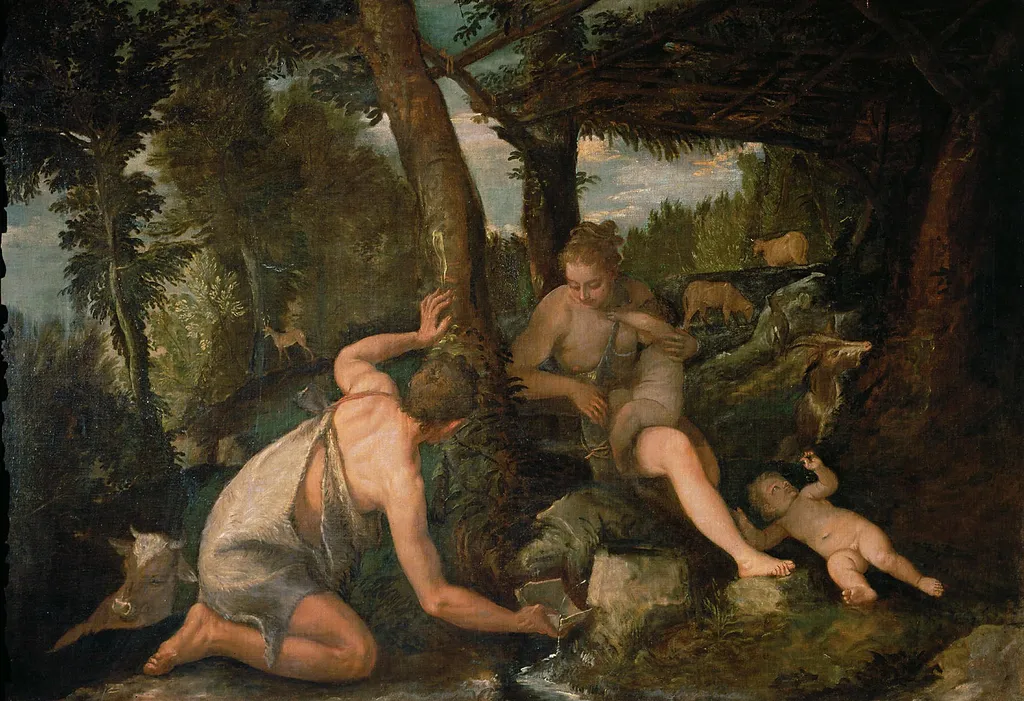
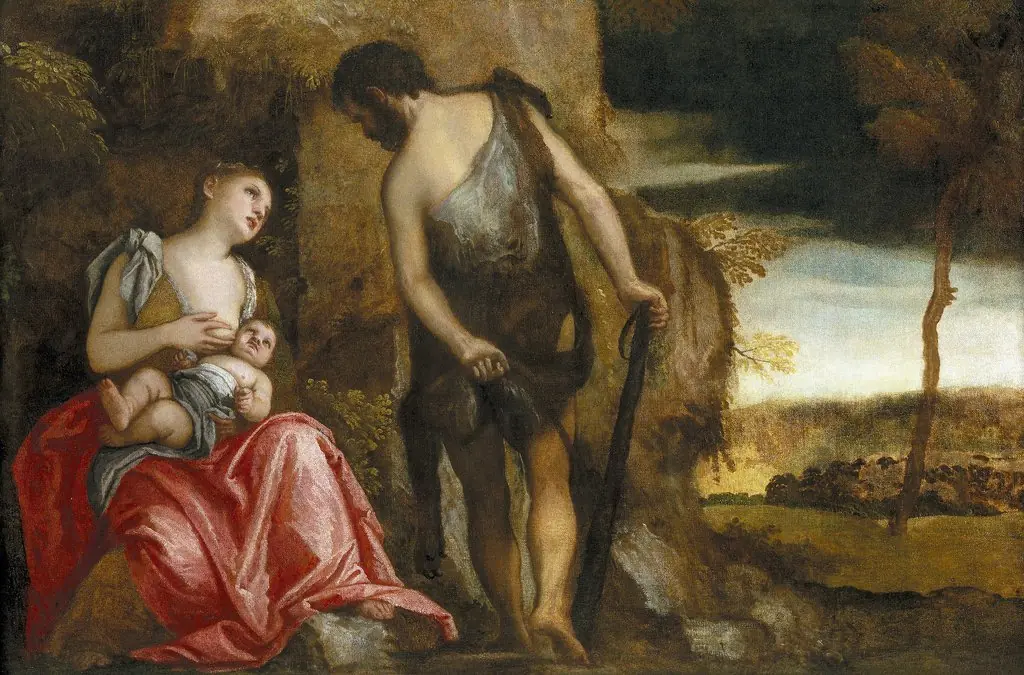
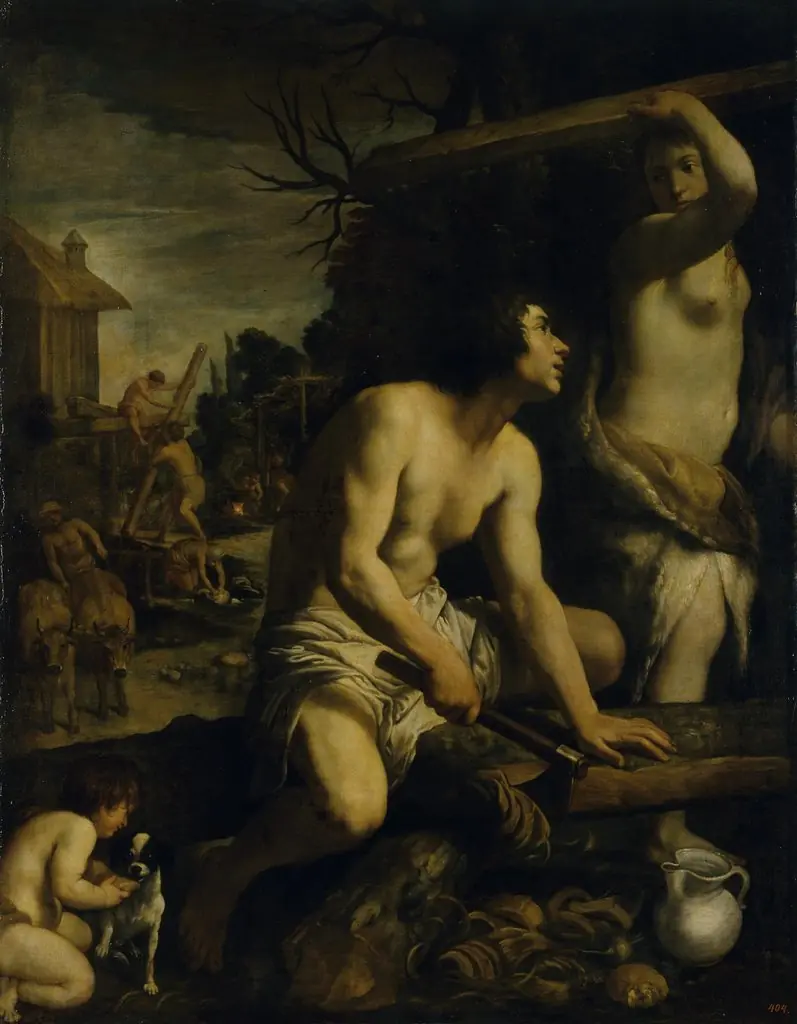
Adam and Eve after the Expulsion from Paradise is an oil painting by the Mannerist artist Paolo Veronese. It is held in the collection of the Kunsthistorisches Museum. Created around 1590, this oil painting portrays the biblical figures Adam and Eve shortly after their removal from Eden.
About this work
Overview
Created around 1590, this oil painting portrays the biblical figures Adam and Eve shortly after their removal from Eden. Executed in the Mannerist idiom, the work exemplifies the later phase of Paolo Veronese’s career, a Venetian artist renowned for his large, narrative compositions. The canvas is part of the Kunsthistorisches Museum’s holdings.
Subject & Meaning
The composition presents the newly exiled couple in a verdant landscape. Adam rests upon a rock while Eve stands nearby, her gaze directed toward him with a tender expression, suggesting a moment of shared sorrow and contemplation following their loss of paradise.
Technique & Style
Veronese employs a restrained palette of earth tones—greens, browns, and beiges—to model the foliage and figures. Subtle chiaroscuro creates volume, with light falling on the figures and receding shadows enhancing depth, while the overall arrangement reflects the elongated forms and elegant poses typical of Mannerist aesthetics.
History & Provenance
The painting entered the collection of the Kunsthistorisches Museum in Vienna, where it remains on display. It is attributed to Veronese’s late period, a time when his work increasingly emphasized color harmonies and compositional balance within the Mannerist framework.
Artist & collection
Artist
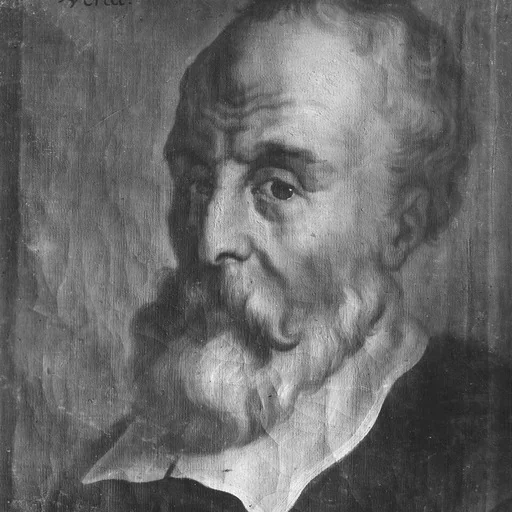
Paolo Caliari (1528 – 19 April 1588), known as Paolo Veronese ( VERR-ə-NAY-zay, -zee, US also -see; Italian: ), was an Italian Renaissance painter based in Venice, known for extremely large history paintings of…