Artwork
The Dead Christ Supported by an Angel and Adored by a Franciscan
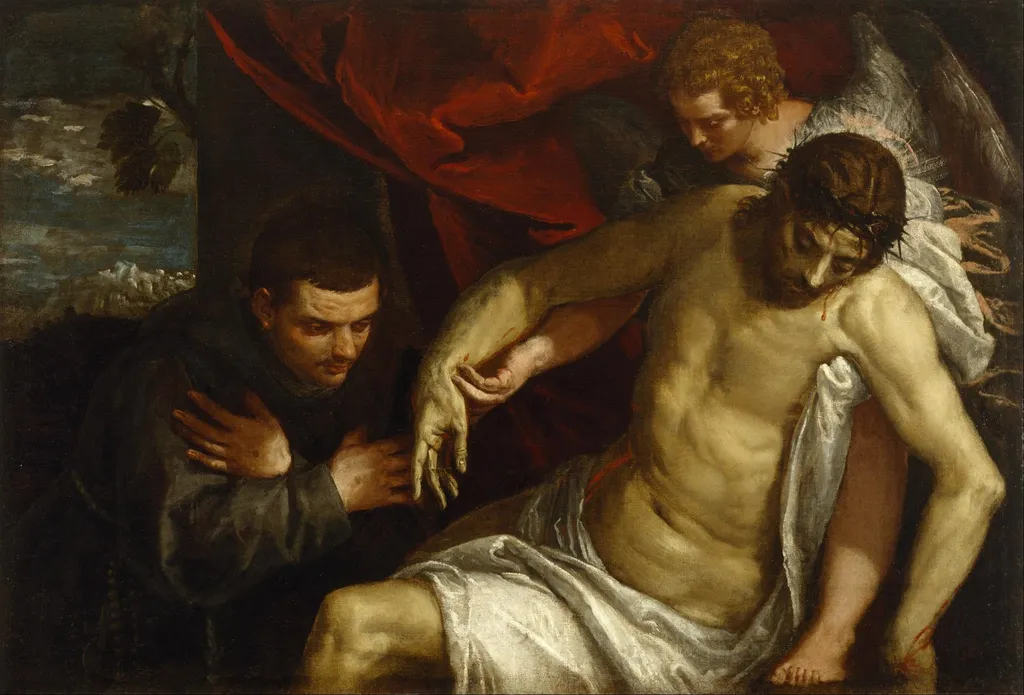
The Dead Christ Supported by an Angel and Adored by a Franciscan is an oil painting by the Mannerist artist Paolo Veronese. It dates from 1568 and is held in the collection of the Museum of Fine Arts, Houston.
About this work
Overview
Its intimate scale contrasts with Veronese’s larger narrative canvases, emphasizing contemplation over spectacle.
Painted around 1568, this oil work by Paolo Veronese presents a quiet moment of mourning after the Crucifixion. It belongs to a series of religious compositions produced during his mature period in Venice. The scene focuses on Christ’s lifeless body, cradled by an angel, with a Franciscan friar in silent devotion. Its intimate scale contrasts with Veronese’s larger narrative canvases, emphasizing contemplation over spectacle.
Subject & Meaning
The painting illustrates the moment of Christ’s body being held after death, a theme rooted in Franciscan devotional practices that emphasized empathy with Christ’s suffering. The kneeling friar, touching Christ’s hand, embodies personal piety and grief. The angel, wings spread, offers both physical support and spiritual witness. Together, they frame a scene of sacred tenderness, inviting the viewer into a private act of reverence.
Technique & Style
Veronese employs subtle chiaroscuro to model the figures against a deep, shadowed background, enhancing the emotional weight of the scene. The white shroud of Christ contrasts with the friar’s dark habit and the angel’s luminous wings, creating a quiet hierarchy of light. Brushwork is refined but not overly detailed, allowing the emotional tone to emerge through gesture and tone rather than elaborate ornamentation.
History & Provenance
The painting entered the collection of the Museum of Fine Arts, Houston, in the 20th century. Its earlier history is not fully documented, but its style and composition align with Veronese’s output during the late 1560s, a period when he was producing devotional works for Venetian churches and private patrons. It likely originated in a religious context before entering private hands.
Context
In mid-16th century Venice, religious imagery was shaped by Counter-Reformation ideals that encouraged emotional engagement with sacred figures. Veronese, though known for grand historical scenes, also responded to this demand with smaller, more introspective works. This painting reflects the Franciscan emphasis on humility and compassion, resonating with contemporary spiritual practices in northern Italy.
Legacy
Though less prominent than Veronese’s monumental altarpieces, this work exemplifies his ability to convey solemnity through restrained composition and nuanced lighting. It influenced later devotional painting in its focus on intimate human response to divine suffering. Its preservation in a major museum ensures continued study of his quieter, more personal approach to religious subjects.
Own this work as a print
Artist & collection
Artist
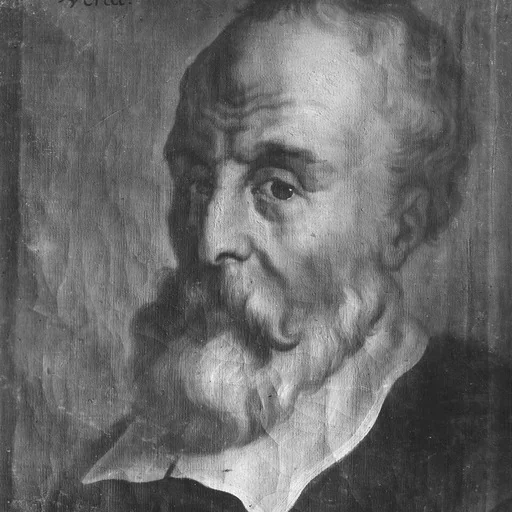
Paolo Caliari (1528 – 19 April 1588), known as Paolo Veronese ( VERR-ə-NAY-zay, -zee, US also -see; Italian: ), was an Italian Renaissance painter based in Venice, known for extremely large history paintings of…