Artwork
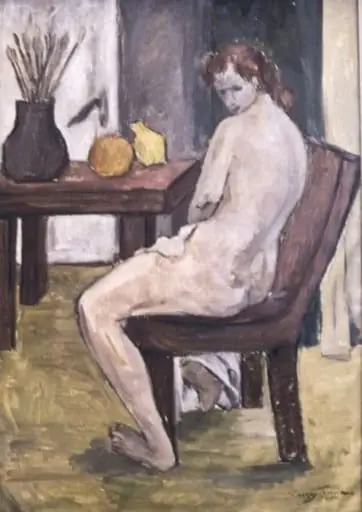
semi-nude study
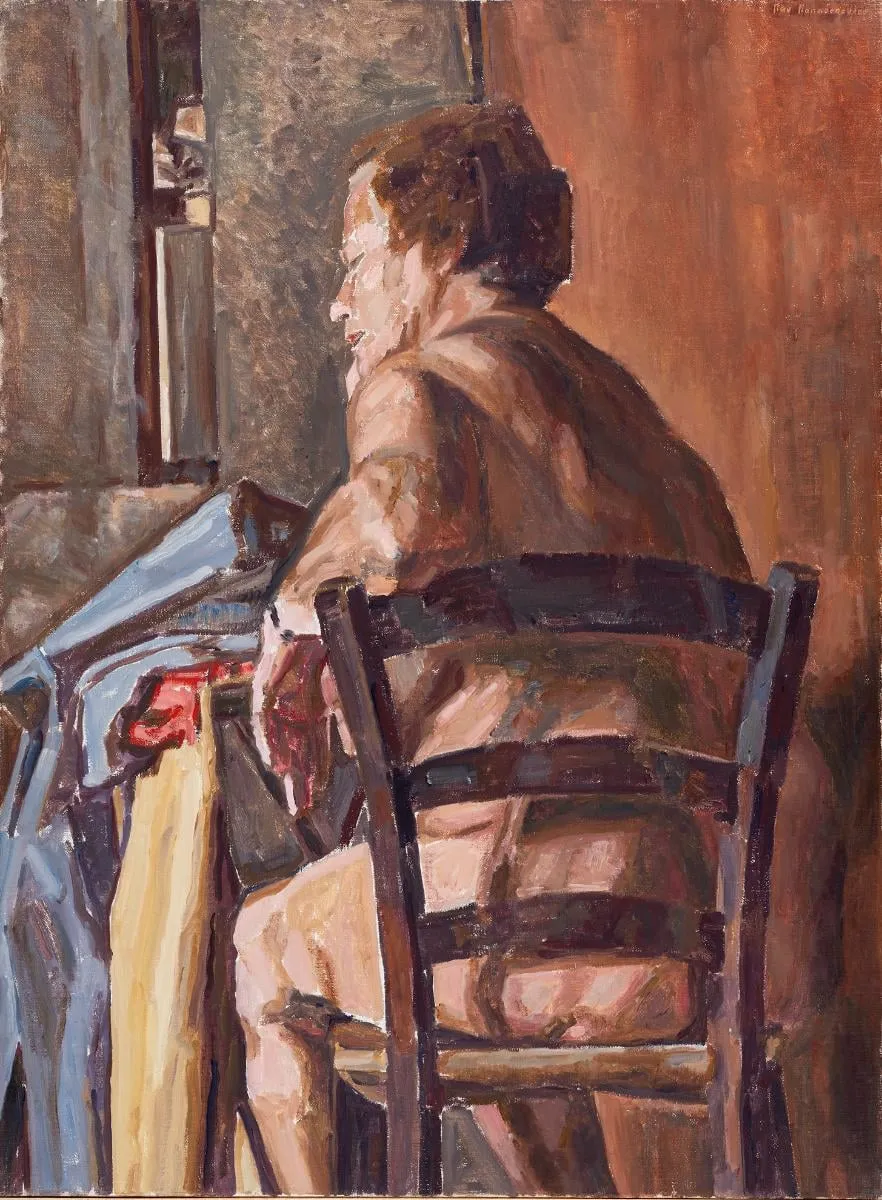
semi-nude study is a drawing by Papadopoulos Panagiotis. It dates from 1972 and is held in the collection of the Athens School of Fine Arts. This pencil drawing from 1972 presents a seated male figure in a quiet, unadorned pose.
About this work
The drawing is done in dark pencil, with careful shading to show the shape of his shoulders, back, and chest.
A young man sits on a simple wooden stool, leaning slightly forward, his bare torso facing the viewer. His arms rest on his knees, and his gaze is calm, looking down and off to the side. The drawing is done in dark pencil, with careful shading to show the shape of his shoulders, back, and chest.
This is a figure study, made for practice, not display. The artist focused on how light falls across the body, using small dots and repeated lines to build texture. It was drawn in 1972, a time when many artists in Greece were exploring the human form in new ways. The model’s pose feels relaxed, not staged or dramatic.
You can see this work at the Museum of Ethnography.
(Word count: 115)
Overview
This pencil drawing from 1972 presents a seated male figure in a quiet, unadorned pose. Executed as a study rather than a finished work, it captures the human form with attention to anatomical structure and the subtle play of light. The model, bare-chested and relaxed, sits on a plain wooden stool, his posture natural and untheatrical. The artist’s focus was on observation, not presentation, reflecting a pedagogical approach common in mid-century art training.
Subject & Meaning
The subject is a young man in a neutral, introspective stance—gaze lowered, arms resting on knees—conveying stillness rather than narrative. There is no symbolism or emotional drama; the figure exists as a vessel for formal inquiry. His calm demeanor and lack of idealization suggest an interest in authenticity over convention. The study prioritizes presence over performance, aligning with broader trends in Greek art of the period that valued direct observation.
Technique & Style
Rendered in dark pencil, the drawing employs layered hatching and delicate dotting to model form and texture. Shading is precise but restrained, emphasizing the contours of the torso, shoulders, and spine without theatrical contrast. The artist avoids bold outlines, instead building volume through incremental tonal shifts. This method reveals a disciplined approach to light and anatomy, characteristic of academic figure studies aimed at refining perceptual skill.
History & Provenance
Created in 1972, the work emerged during a period of renewed interest in the human figure among Greek artists, who were reexamining classical traditions through modern lenses. It was likely produced in a studio or academy setting, intended for personal development. The drawing entered the collection of the Museum of Ethnography, where it is preserved as an example of artistic practice rather than public art.
Context
In early 1970s Greece, many artists moved away from overt political or mythological themes to focus on the body as a site of formal exploration. This study reflects that shift—its simplicity and lack of ornamentation align with a broader movement toward direct, unembellished representation. The model’s ordinary posture and the drawing’s unpolished finish suggest an emphasis on process over product, common in educational environments of the time.
Legacy
Though not intended for public display, the drawing endures as a quiet testament to the discipline of observational drawing. It represents a moment in Greek art education when the human form was revisited with renewed rigor, free from grand narrative. Its preservation in a museum underscores its value as a record of artistic method, offering insight into how artists trained themselves to see and translate the body onto paper.
Artist & collection
Artist
Greek artist Papadopoulos Panagiotis shaped raw metal into expressive heads and sketched semi-nude figures in graphite during the early 1970s.