Artwork
My Mother with Shadows
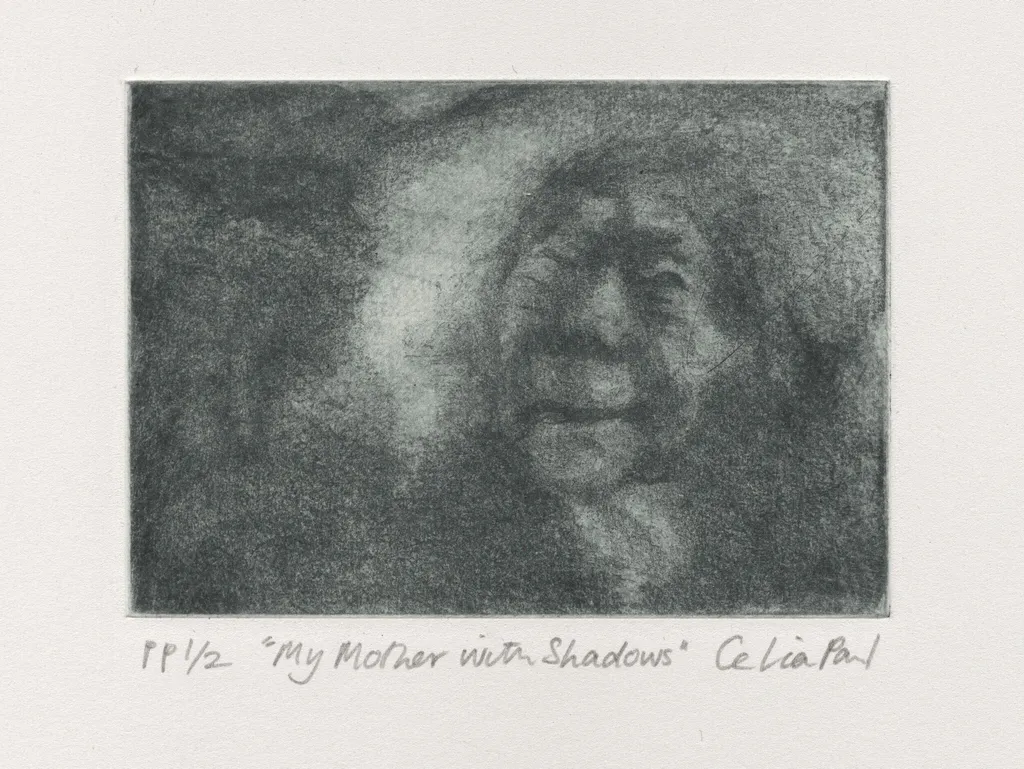
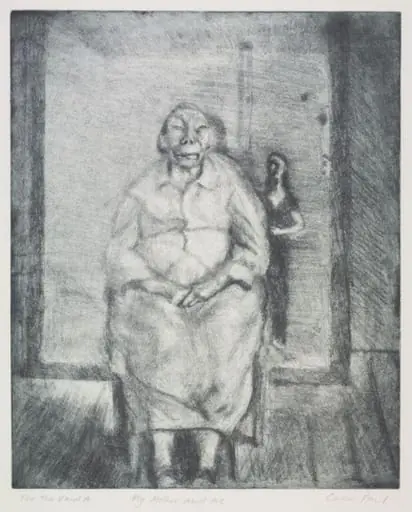
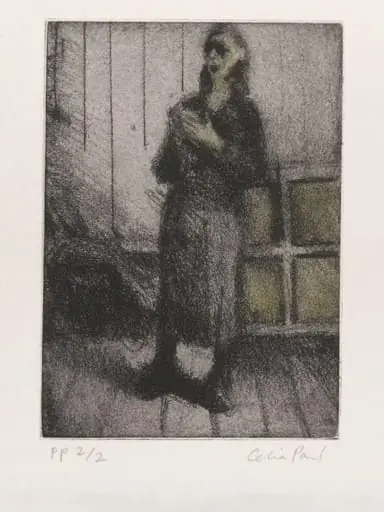
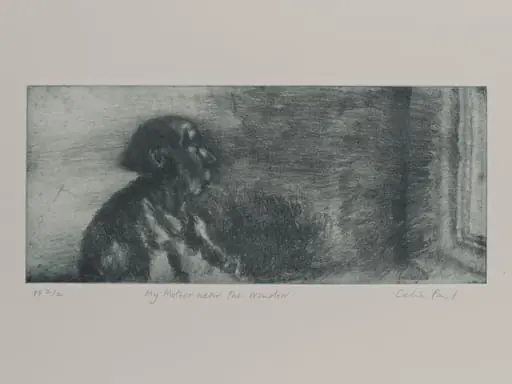
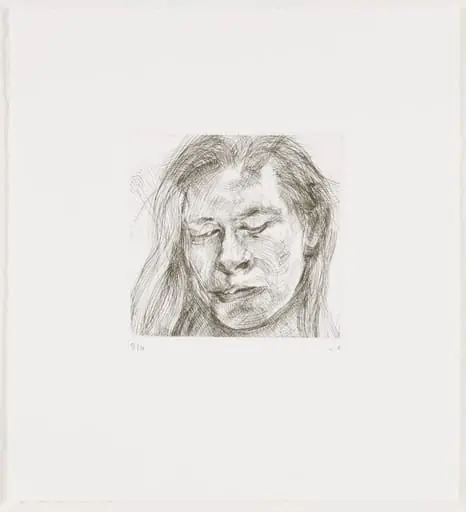
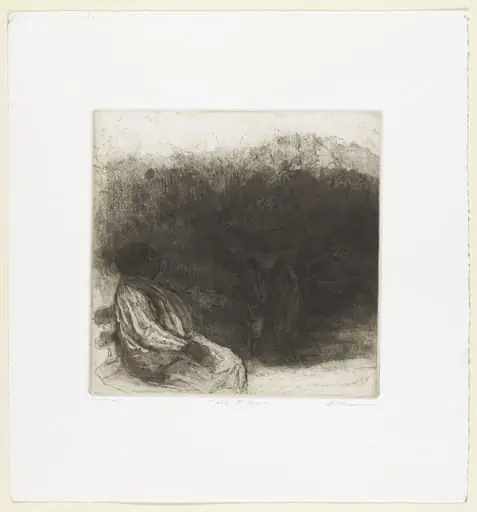
My Mother with Shadows is a print by Celia Paul. It dates from 2002 and is held in the collection of the Victoria and Albert Museum.
About this work
Overview
Celia Paul, born in 1959, is a British artist known for her restrained, introspective depictions of intimate surroundings.
Celia Paul, born in 1959, is a British artist known for her restrained, introspective depictions of intimate surroundings. Her work centers on family members, particularly her mother, rendered across painting and printmaking. Paul’s prints are typically small, emphasizing closeness and quietude. Her shift to soft-ground etching around 2002 marked a turning point, allowing her to translate the delicacy of her pencil drawings into printed form, often in collaboration with printer Dorothea Wight at Studio Prints.
Subject & Meaning
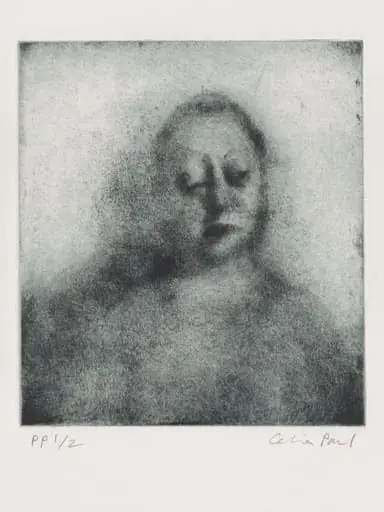
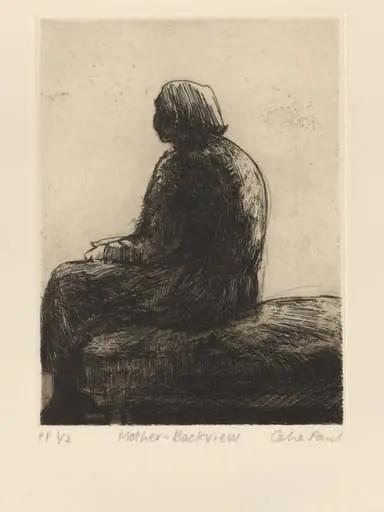
The central subject of Paul’s prints is her mother, portrayed over many years in moments of stillness. These images are not formal portraits but quiet records of presence, imbued with emotional resonance through subtle gestures and atmospheric shadows. The recurring figure suggests a meditation on time, memory, and familial bonds. The title 'My Mother with Shadows' reflects both literal tonal contrasts and the psychological weight carried by the sitter.
Technique & Style
Paul moved from hard-ground etching to soft-ground etching around 2002 to achieve softer, more tactile lines reminiscent of her drawings. This technique allowed for greater nuance in tone and texture, capturing the fragility of skin, fabric, and light. The resulting prints are spare in composition, with minimal detail and a muted palette, enhancing their intimate, contemplative quality. The collaboration with Dorothea Wight refined her ability to translate subtle gestures into printed form.
History & Provenance
Paul’s prints from the early 2000s onward were primarily produced at Studio Prints in London, under the guidance of master printer Dorothea Wight. These collaborations resulted in a cohesive body of work that expanded her reputation beyond painting. The prints have been held in private collections and institutional holdings, including those associated with Marlborough Fine Art, which documented the partnership in its 2018 survey of the studio’s output.
Context
Paul’s practice emerges from a tradition of British figurative art that values emotional restraint over dramatic expression. Her focus on domestic scenes and familial subjects aligns with a broader postwar interest in the personal as a site of artistic inquiry. Working from her Bloomsbury studio, she observes the quiet rhythms of everyday life, situating her work within a lineage of introspective artists who find depth in the ordinary.
Legacy
Paul’s prints have contributed to a renewed appreciation for small-scale, intimate portraiture in contemporary printmaking. Her consistent focus on a single subject over decades offers a rare longitudinal study of human presence. By prioritizing emotional authenticity over spectacle, her work has influenced a generation of artists seeking to convey depth through subtlety rather than scale or boldness.
Artist & collection
Artist
Celia Paul made intimate black-and-white prints that center on people and places tied to her life.