Artwork
With the Dot
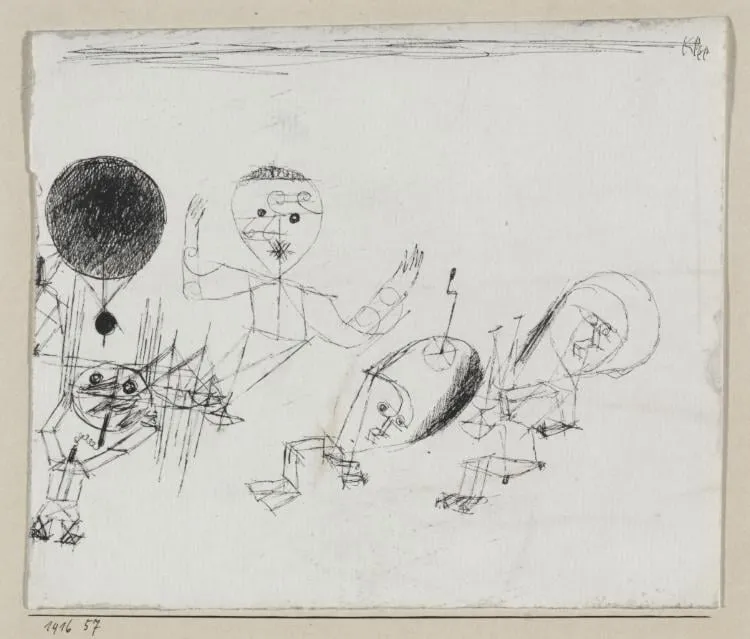
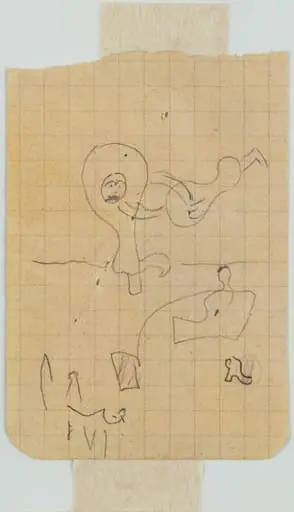
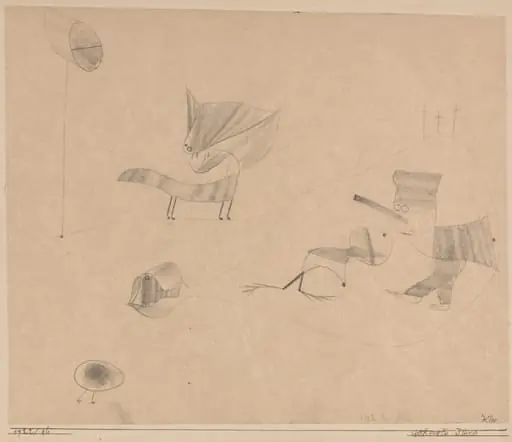
With the Dot is a drawing by Paul Klee. It dates from 1916 and is held in the collection of the Cleveland Museum of Art.
About this work
You see a small, busy drawing: a floating figure watches over a war scene—zeppelin, headless child, fallen soldier with a helmet that looks like a machine part.
You see a small, busy drawing: a floating figure watches over a war scene—zeppelin, headless child, fallen soldier with a helmet that looks like a machine part.
Klee made this in 1916, while World War I raged. The title’s dot (•) could be the zeppelin or a dark omen he kept drawing. The lines feel shaky, like a bad dream you can’t shake.
Look up more drawings from germany, 20th century to see how other artists showed war.
Overview
Created in 1916 amid the violence of World War I, this small ink drawing by Paul Klee captures a disquieting aerial scene. A suspended figure, ambiguous in moral tone, observes a landscape of destruction: a zeppelin, a decapitated child, a fallen soldier, and another figure in motion. The drawing’s title references a single dot, a recurring motif in Klee’s work that suggests an ominous presence, possibly the zeppelin itself or a symbol of impending doom.
Subject & Meaning
The imagery conveys the psychological weight of war through surreal, fragmented elements. The hovering figure may represent a divine watcher, a spirit of war, or a manifestation of collective guilt. The decapitated child and soldier evoke senseless loss, while the helmet transformed into a mechanical handle critiques the dehumanization of combat. The dot, central to the title, functions as both a literal object and a metaphysical sign—unseen but felt, a harbinger of chaos.
Technique & Style
Klee employed fine, trembling ink lines to construct a dense, intimate composition. The shaky contours and layered forms evoke a sense of instability, mirroring the emotional turbulence of wartime. His use of minimal color and schematic figures aligns with a symbolic, rather than naturalistic, approach. The drawing’s compact scale intensifies its claustrophobic atmosphere, as if the viewer is peering into a private nightmare.
History & Provenance
Made during Klee’s service in the German army, the drawing reflects his personal response to the war’s brutality. It was produced in 1916, a year marked by escalating casualties and industrialized warfare. Though not publicly exhibited at the time, it remained in Klee’s personal collection and later entered institutional holdings, where it is now recognized as part of his early wartime graphic output.
Context
Klee’s 1915 statement—that horror drives art toward abstraction—finds direct expression here. Unlike propagandistic war imagery of the era, this work rejects realism in favor of symbolic distortion. It aligns with broader German artistic responses to trauma, where figures like George Grosz and Otto Dix also turned to fragmented, unsettling forms to convey the disintegration of social and moral order.
Legacy
This drawing exemplifies Klee’s early transition from figurative to symbolic representation under duress. Its influence extends to later 20th-century artists grappling with trauma and abstraction, particularly those exploring the psychological aftermath of conflict. Though not widely known outside specialized circles, it remains a quiet but potent testament to art’s capacity to register horror beyond literal depiction.
Artist & collection
Artist
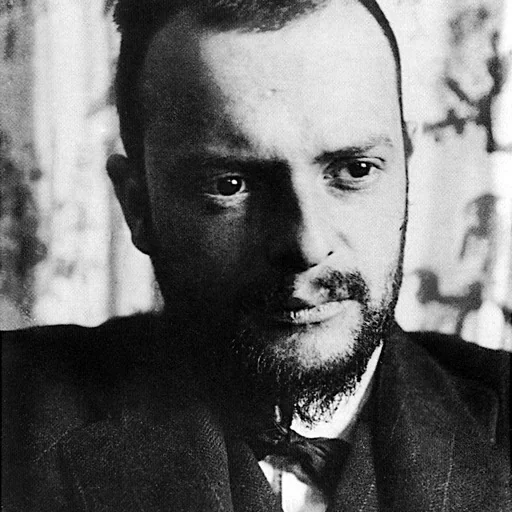
Paul Klee (German: ; 18 December 1879 – 29 June 1940) was a Swiss-born German artist.

![Sheet of Studies [recto and verso], by John Flaxman](https://artifactworldgallery.com/img/john-flaxman--sheet-of-studies-recto-and-verso--47b91b8b6f057ed6-w320.webp)