Artwork
Two Cows and a Young Bull beside a Fence in a Meadow
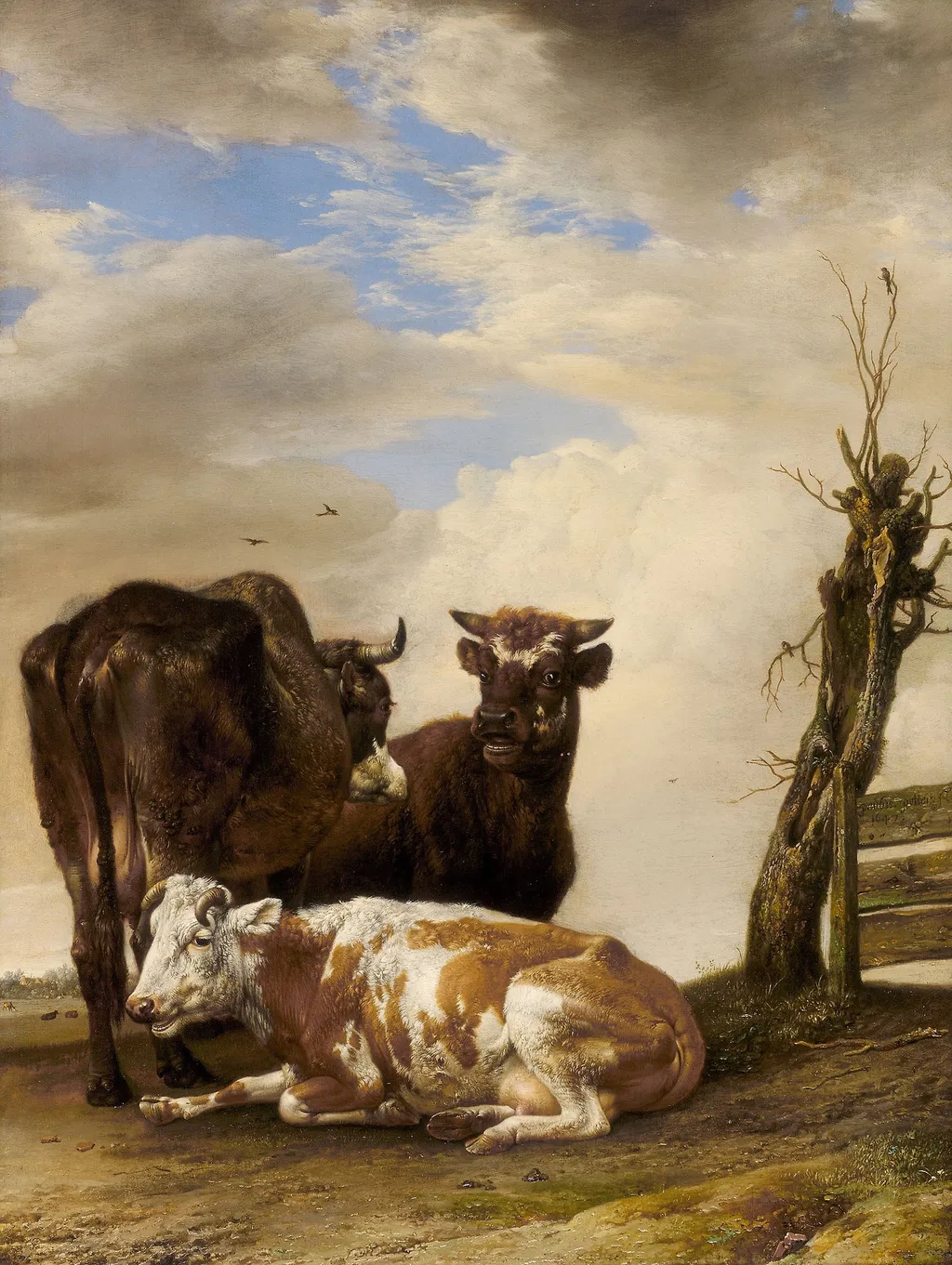
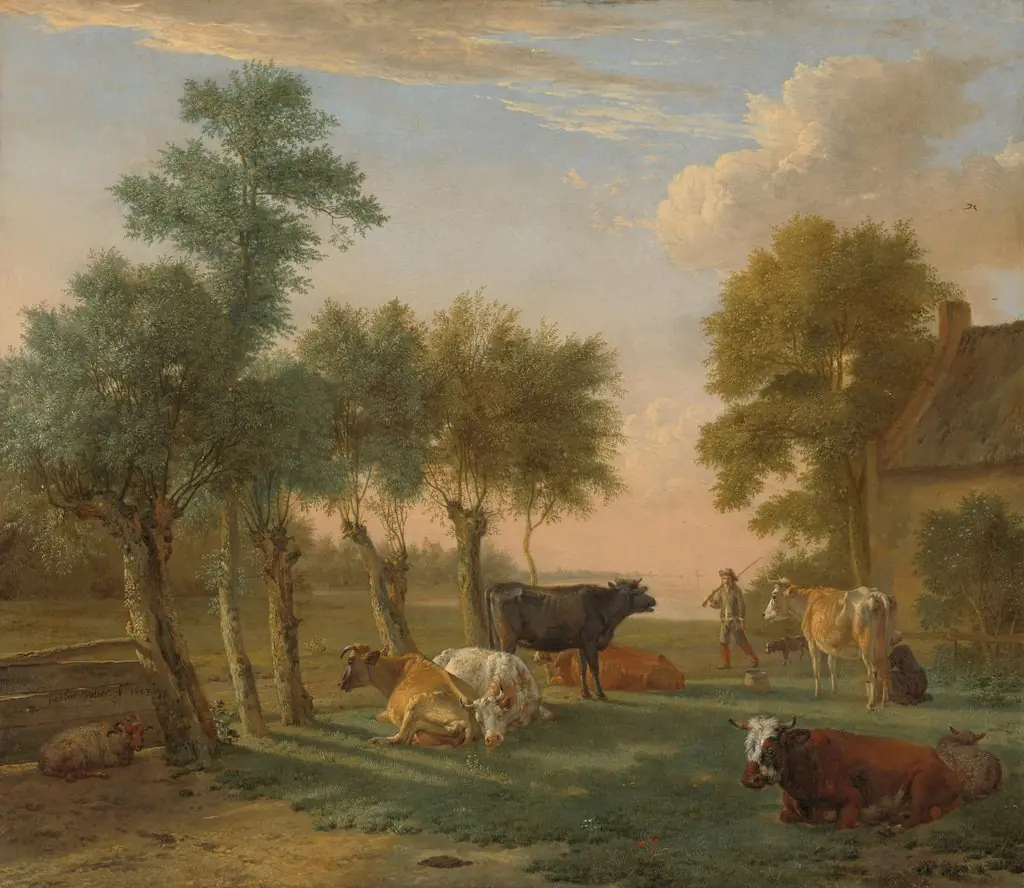
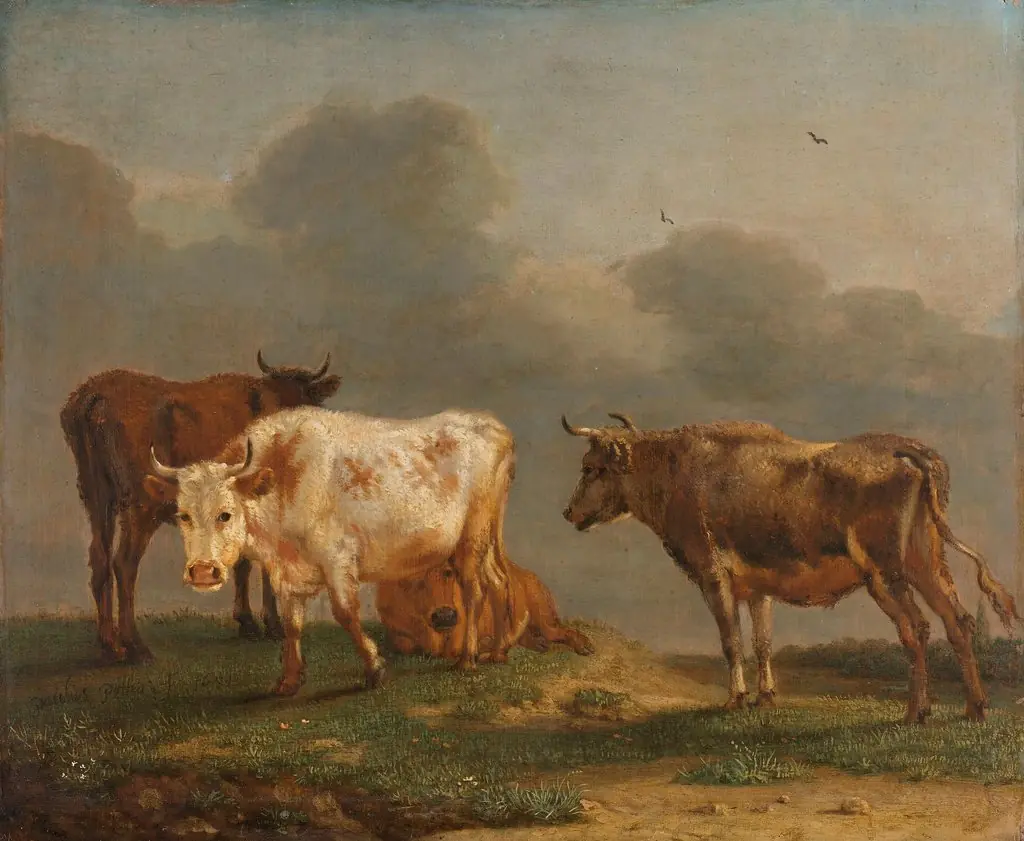
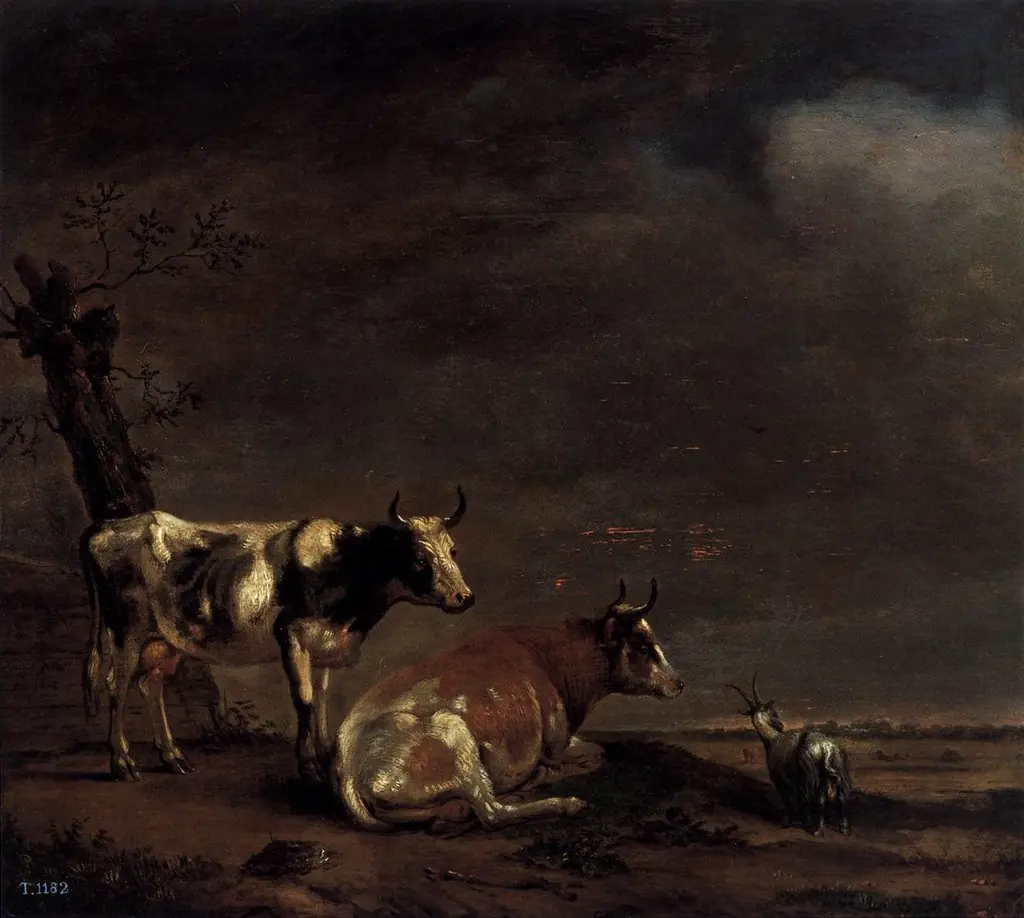
Two Cows and a Young Bull beside a Fence in a Meadow is an oil painting by the Dutch Golden Age artist Paulus Potter. It dates from 1647 and is held in the collection of the Art Institute of Chicago.
About this work
Overview
Potter, noted for his focus on livestock within natural settings, rendered the scene with a restrained palette that emphasizes the calm of the countryside.
Created in 1647 by Dutch artist Paulus Potter, this oil painting presents a quiet rural tableau featuring three cattle positioned beside a low fence within a meadow. The composition is anchored by a muted sky and a solitary bare tree, allowing the animals to dominate the visual field. Potter, noted for his focus on livestock within natural settings, rendered the scene with a restrained palette that emphasizes the calm of the countryside.
Subject & Meaning
The work centers on three cows—a dark-coated adult turned away, a brown‑and‑white animal lying down, and a smaller, darker young bull gazing outward. Their varied postures suggest a moment of repose and observation, inviting contemplation of the everyday life of farm animals. The minimal surrounding elements, such as the fence and tree, reinforce the theme of simplicity and the harmonious coexistence of humans and livestock in an agrarian landscape.
Technique & Style
Potter employed a low viewpoint, typical of his approach, to bring the viewer close to the herd. Careful modulation of light across the animals’ hides creates a subtle chiaroscuro effect, highlighting the texture of fur and the volume of each form. The transition from deep shadows to illuminated patches conveys a tangible sense of three‑dimensionality, while the restrained color range maintains atmospheric unity throughout the meadow.
History & Provenance
Painted during the height of the Dutch Golden Age, the piece reflects the period’s interest in realistic depictions of rural life. Potter, who produced roughly a hundred works before his premature death from tuberculosis in 1654, contributed significantly to the genre of animal painting. The painting’s later ownership records trace its movement through several European collections before entering its current institutional setting.
Context
In mid‑17th‑century Netherlands, there was a growing market for paintings that celebrated domestic prosperity and the natural world. Potter’s focus on cattle aligns with contemporary agricultural advancements and the cultural value placed on livestock as symbols of wealth. The work’s serene composition and attention to detail exemplify the broader trend toward naturalism and scientific observation in Dutch art of the era.
Own this work as a print
Artist & collection
Artist
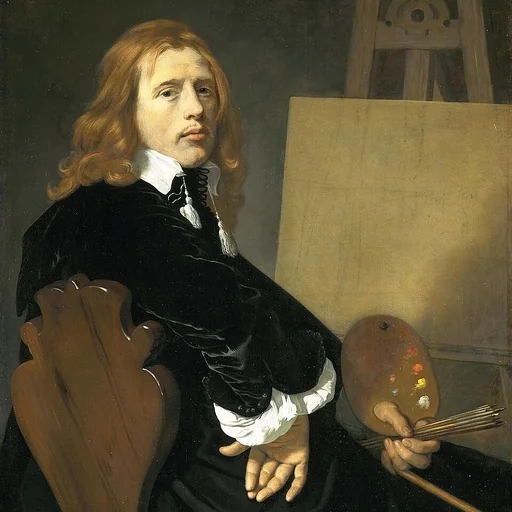
Paulus Potter (Dutch pronunciation: ; 20 November 1625 (baptised) – 17 January 1654 (buried)) was a Dutch painter who specialized in landscapes featuring animals, often from a low vantage point.