Artwork
Washington
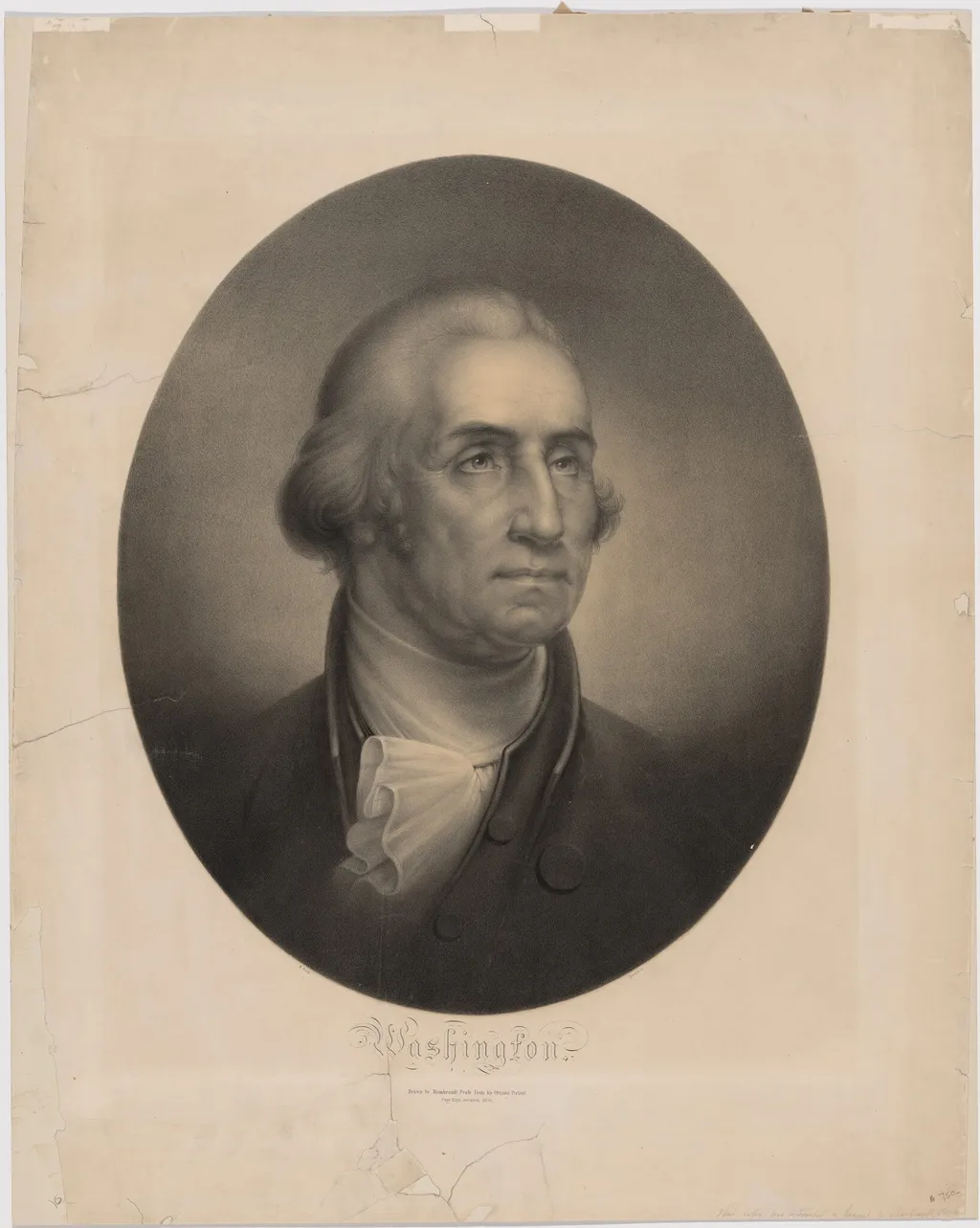
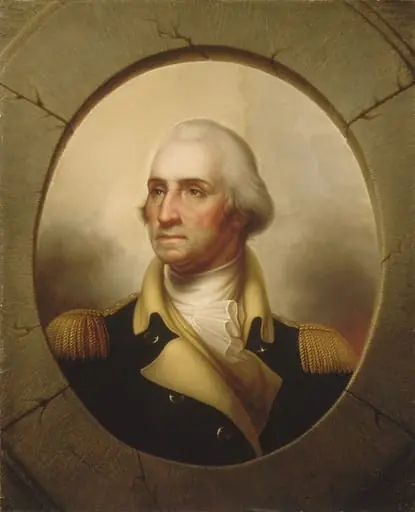
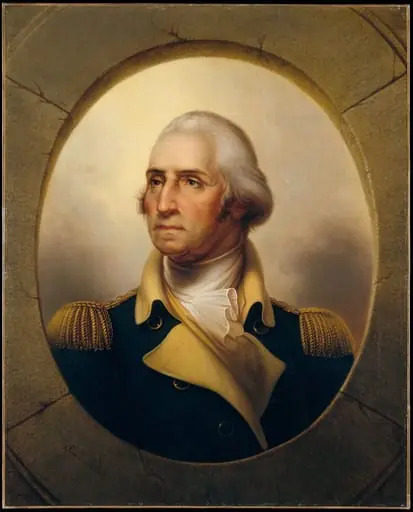
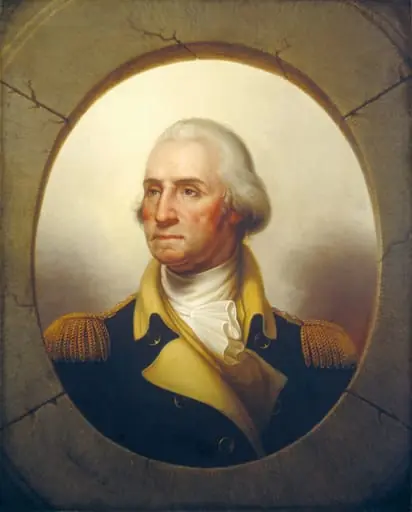
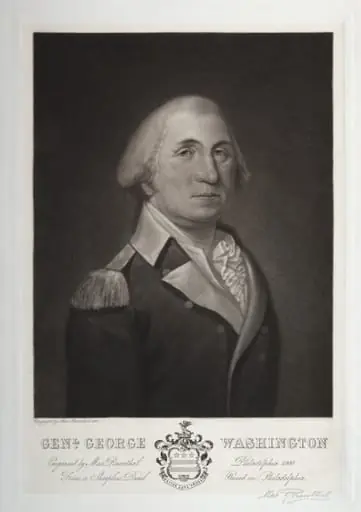
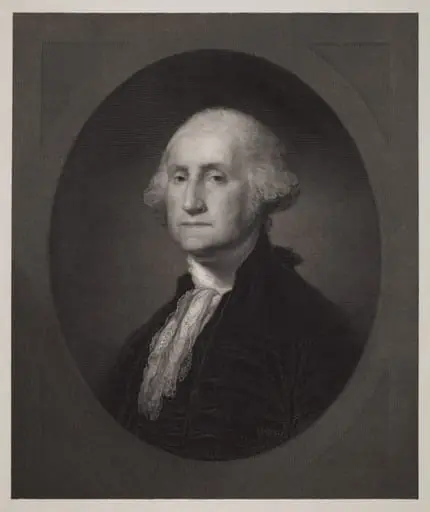
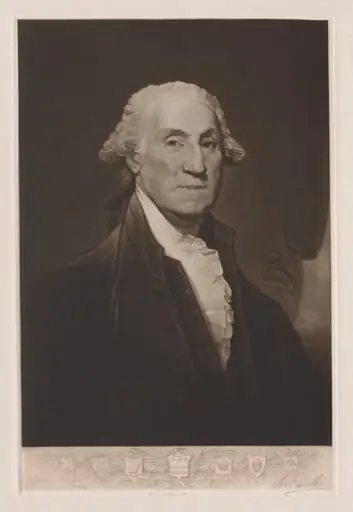
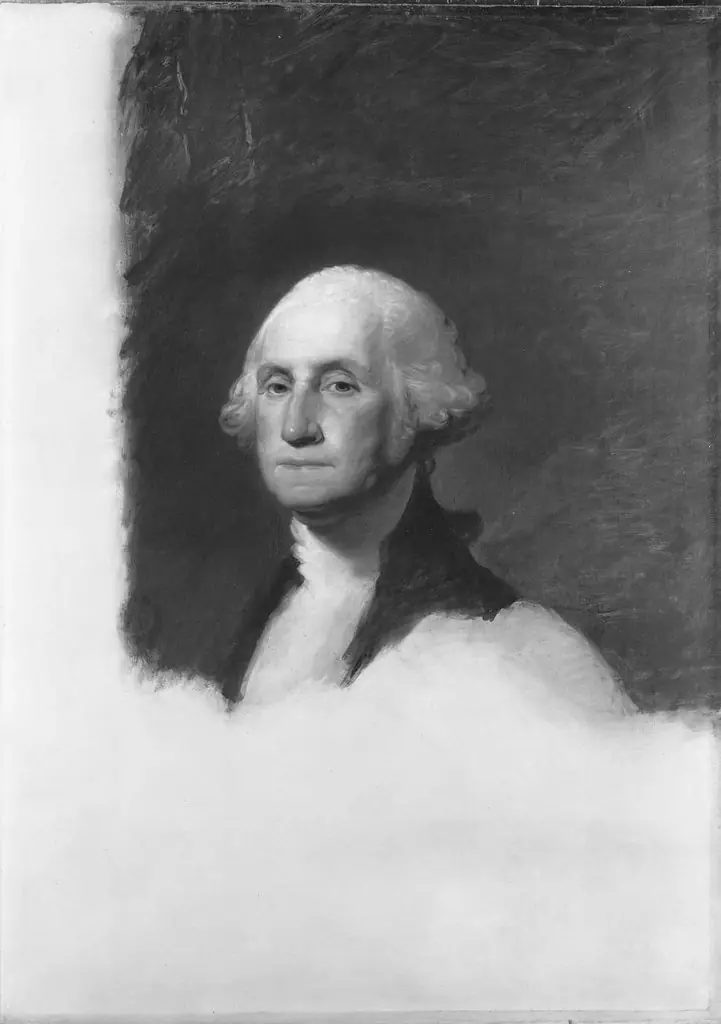
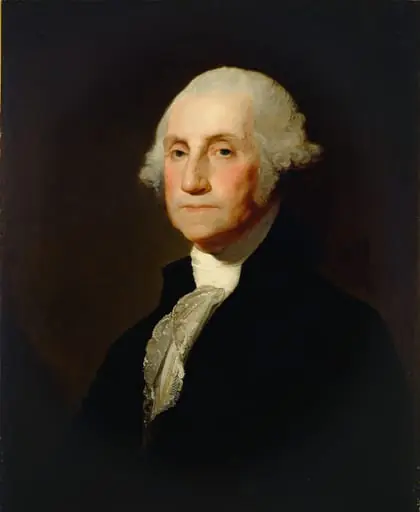
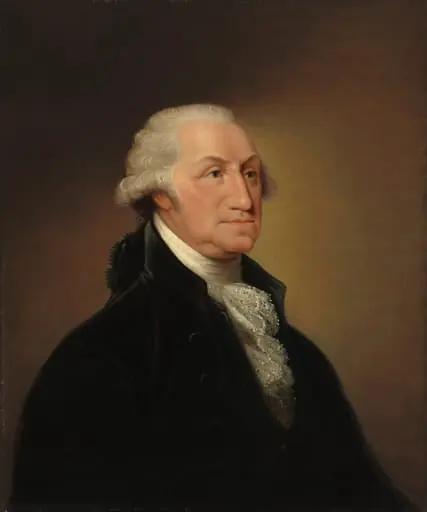
Washington is an ink print by the Impressionist artist Rembrandt Peale. It dates from 1856 and is held in the collection of the National Gallery of Art.
About this work
Overview
Rembrandt Peale’s 1856 lithograph titled "Washington" presents a portrait of the first U.S. president rendered in black‑toned attire against an unadorned backdrop. The composition is dominated by the sitter’s solemn expression, emphasized through precise line work and subtle gradations that give the figure a three‑dimensional presence despite the flat medium.
Subject & Meaning
The image portrays George Washington in a dark coat, his gaze directed outward, conveying a restrained authority rather than overt heroism. By focusing on the facial features and the modest uniform details, Peale underscores the leader’s personal dignity and the gravitas associated with his role in the early Republic.
Technique & Style
Executed as a lithograph, the work was produced by drawing with a greasy medium on a limestone surface, then treating the stone so that ink adheres only to the drawn areas. Peale’s handling of line and shading demonstrates the medium’s capacity for fine detail, evident in the crisp rendering of the coat buttons and the nuanced tonal transitions that model Washington’s face.
History & Provenance
Created in the mid‑nineteenth century, the print reflects Peale’s ongoing interest in American historical subjects. While specific ownership records are limited, the lithograph has appeared in several collections of American portraiture, illustrating the period’s demand for accessible images of national figures.
Artist & collection
Artist
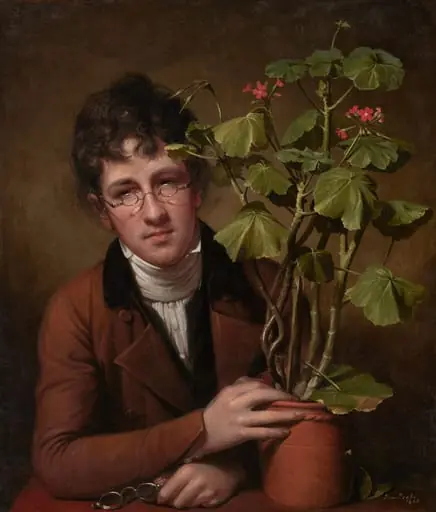
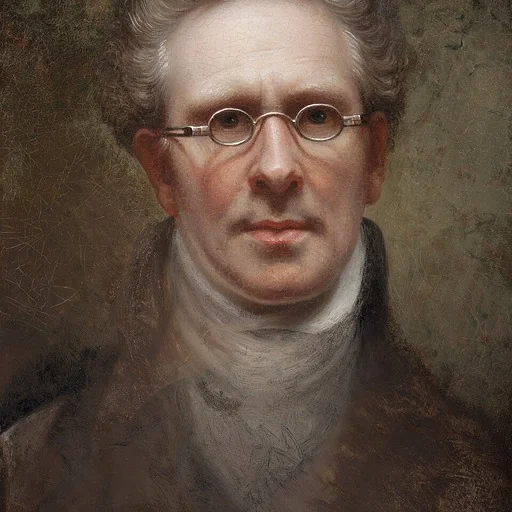
Rembrandt Peale (February 22, 1778 – October 3, 1860) was an American artist and museum keeper.