Artwork
Threshing in the Abruzzi. Cività d'Antino
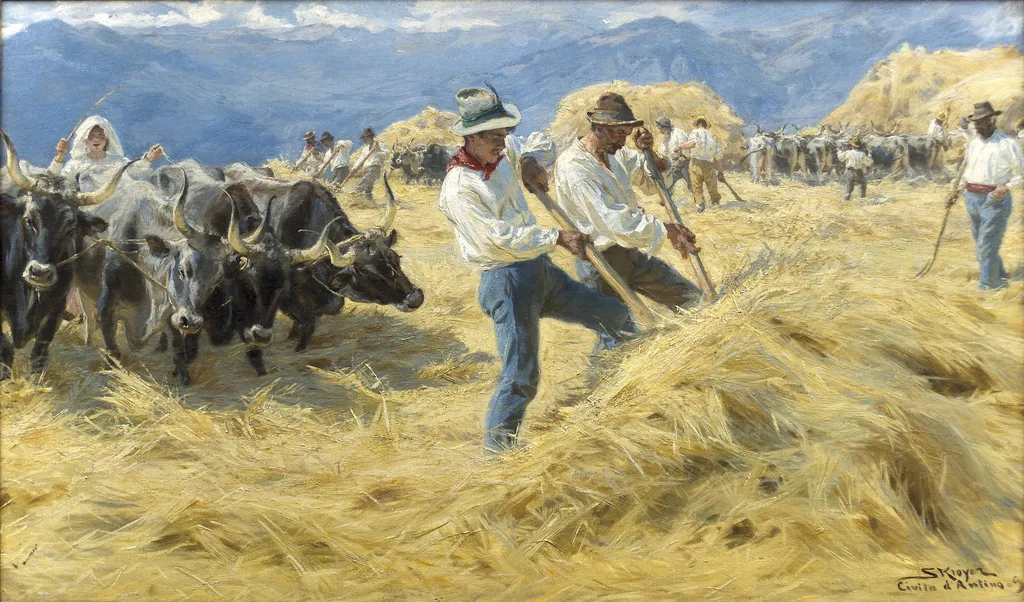
Threshing in the Abruzzi. Cività d'Antino is an oil painting by the Impressionist artist Peder Severin Krøyer. It dates from 1896 and is held in the collection of the Statens Museum for Kunst.
About this work
Overview
Peder Severin Krøyer’s 1896 oil painting, titled Threshing in the Abruzzi. Cività d'Antino, captures a bustling agricultural moment in a sun‑lit field. The canvas, now part of the Statens Museum for Kunst collection, presents a vivid snapshot of rural labor, emphasizing the interplay of light, movement, and the landscape’s golden tones.
Subject & Meaning
The work portrays a group of farmhands engaged in the harvest, with two figures in the foreground guiding oxen while others attend to hay in the background. The composition highlights the communal effort required for threshing, reflecting the rhythm of agrarian life in the Abruzzi region and underscoring the dignity of manual work.
Technique & Style
Krøyer employs a pronounced impasto, layering thick paint to render the texture of straw, animal fur, and clothing. This tactile approach, combined with a bright, almost luminous palette, gives the scene a palpable sense of immediacy. The brushwork varies from loose, expressive strokes in the foliage to finer detail in the figures, balancing realism with painterly vigor.
History & Provenance
Executed in 1896, the painting entered the holdings of Denmark’s national gallery, the Statens Museum for Kunst, where it remains on display. Its acquisition reflects the museum’s commitment to representing Nordic artists who explored subjects beyond their native borders, illustrating Krøyer’s interest in Mediterranean rural motifs.
Context
Created during a period when Krøyer traveled extensively in Italy, the canvas reflects his fascination with southern European countryside scenes. The Abruzzi’s agricultural practices, captured here, offered a contrast to the artist’s familiar Danish settings, allowing him to experiment with new light conditions and cultural atmospheres while maintaining his characteristic observational style.
Own this work as a print
Artist & collection