Artwork
Kermis in a Flemish village
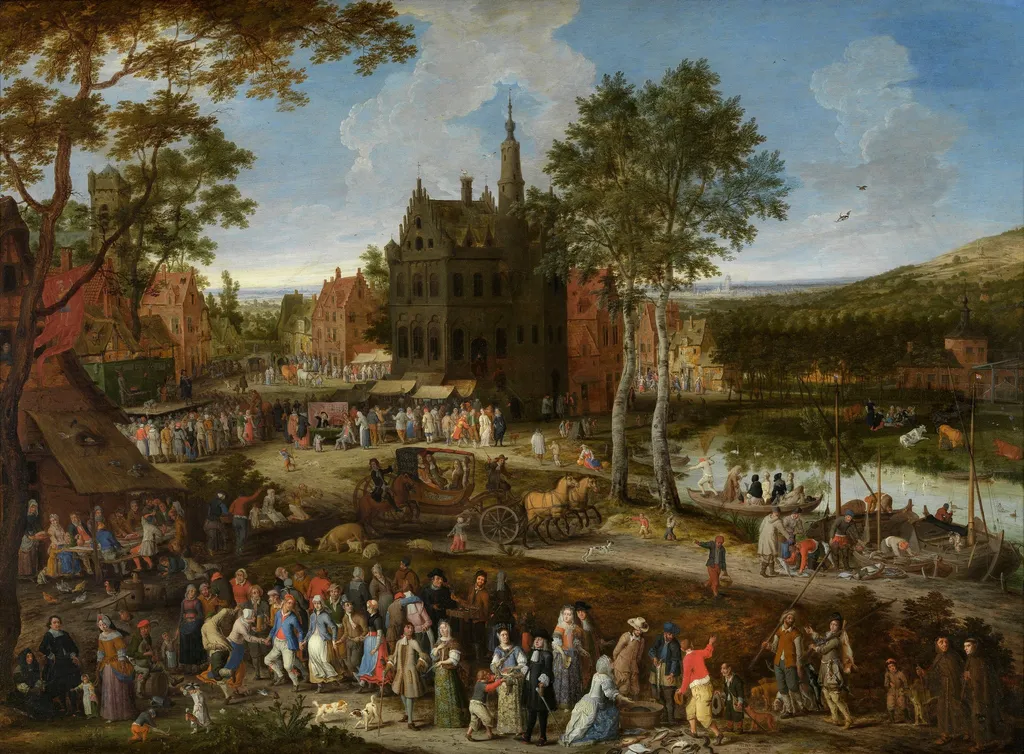
Kermis in a Flemish village is an oil painting by the Flemish Baroque painting artist Peeter Gijsels. It is held in the collection of the Royal Museum of Fine Arts Antwerp.
About this work
Overview
Peeter Gijsels, a Flemish painter working in Antwerp during the late 17th century, executed the copper painting *Kermis in a Flemish village* in 1694. The work captures a bustling village fair, populated by townspeople, a horse‑drawn wagon, and a river that runs through the settlement. It is part of the collection of the Royal Museum of Fine Arts in Antwerp.
Subject & Meaning
The scene portrays a traditional kermis, a seasonal festival that combined market activity, social gathering, and entertainment. Figures are shown strolling, conversing, fishing, and riding in a wagon, while a prominent brick building with a tower anchors the composition, suggesting a communal focal point such as a church or town hall.
Technique & Style
Rendered on copper, the painting benefits from the metal’s smooth surface, allowing Gijsels to achieve fine detail and luminous color. Warm earth tones—browns, reds, and greens—dominate, while strategic highlights illuminate faces and objects, creating a subtle chiaroscuro that guides the viewer’s eye across the crowded tableau.
Context
Gijsels was known for genre scenes that echoed the style of Jan Brueghel the Elder, especially in his treatment of lively rural festivities. By the 1690s, such depictions of everyday life were popular in Flemish art, reflecting both a market for decorative works and a cultural interest in local customs.
History & Provenance
Since its creation, the copper work has remained in Belgium, eventually entering the holdings of the Royal Museum of Fine Arts Antwerp, where it is displayed as an example of late Baroque Flemish genre painting.
Own this work as a print
Artist & collection
Artist
Peeter Gijsels or Pieter Gijsels (1621, Antwerp – 1690, Antwerp), was a Flemish Baroque painter.