Artwork
H Beard Print Collection
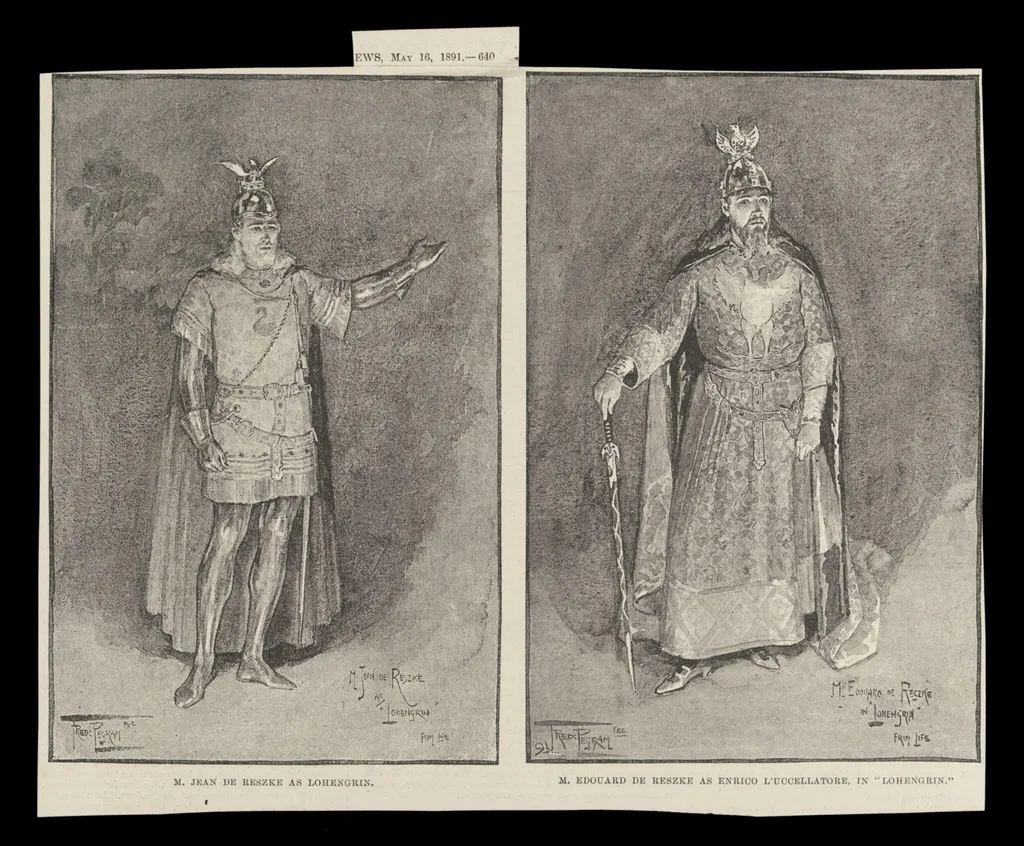
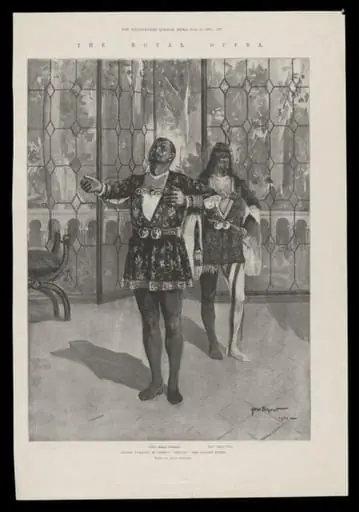
H Beard Print Collection is a print by the Impressionist artist Fred Pegram. It dates from 16 and is held in the collection of the Victoria and Albert Museum.
About this work
The reverse side is covered with newspaper clippings from the same issue, glued on later.
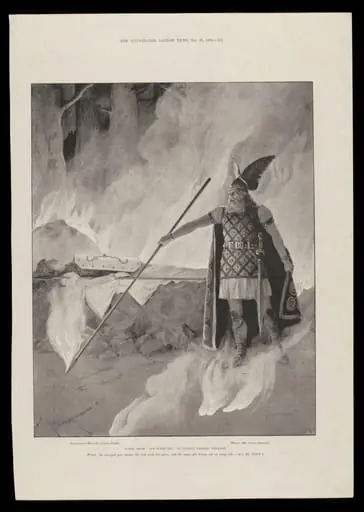
This print shows a scene from an opera, made as a press illustration. Fred Pegram carved it in 1891 for The Illustrated London News. It captures two singers in costume for roles from Wagner’s Lohengrin.
The reverse side is covered with newspaper clippings from the same issue, glued on later. You can still see bits of text showing opera reviews and ads.
If you like this mix of art and newsprint, look up the Victoria and Albert Museum.
Overview
This 1891 print depicts two singers in costume from Wagner’s opera Lohengrin, created by Fred Pegram as a press illustration for The Illustrated London News. The image was produced using a wood engraving technique, typical of period journalistic illustration. The reverse side retains original newspaper clippings from the same issue, glued on after printing, offering a layered record of contemporary media consumption.
Subject & Meaning
The scene portrays Jean de Reszke as the knight Lohengrin and his brother Edouard as Enrico, both roles from Wagner’s romantic opera. Their costumes and postures reflect the dramatic, mythic tone of the work. The illustration served not as fine art but as a visual summary for readers, translating theatrical spectacle into accessible news imagery for a broad public audience.
Technique & Style
Fred Pegram executed the image in wood engraving, a precise method favored by illustrated newspapers for its fine detail and reproducibility. The composition emphasizes costume and gesture over background detail, prioritizing clarity for print reproduction. The contrast between the figures and the sparse setting enhances their theatrical presence, aligning with journalistic priorities of the time.
History & Provenance
The print was published in The Illustrated London News in 1891, accompanying coverage of the opera’s performance. The reverse side, covered in clipped articles and advertisements from the same issue, suggests it was preserved by a private collector who valued both the image and its contextual ephemera. This layering reflects how printed media was often reused or archived in domestic settings.
Context
In the late 19th century, illustrated newspapers like The Illustrated London News played a key role in bringing opera and theater to audiences who could not attend live performances. Wood engravings such as this one bridged high culture and mass media, offering visual narratives that reinforced public interest in classical music and celebrity performers of the stage.
Legacy
The print survives as a hybrid artifact—part journalistic record, part personal archive. Its preserved clippings offer insight into how audiences engaged with cultural events beyond the page. Institutions such as the Victoria and Albert Museum hold similar materials, preserving the material culture of 19th-century media and the everyday practices of its readers.
Artist & collection
Artist
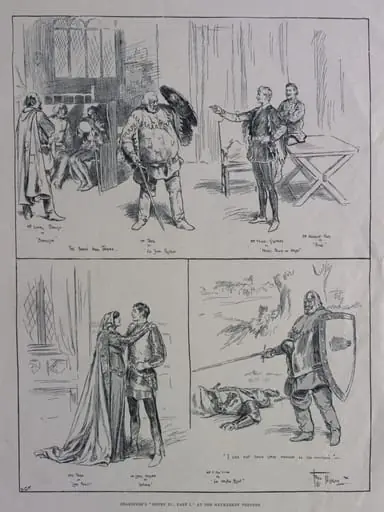
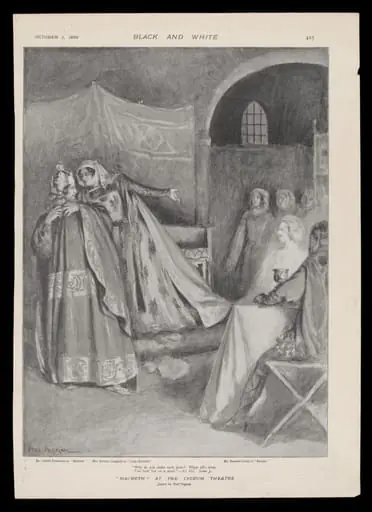
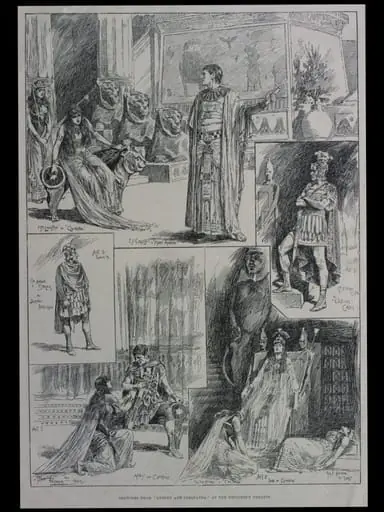
Fred Pegram made prints in the late 1800s, mostly dated between 1890 and 1898. The four works in this set all come from the H Beard Print Collection. They sit squarely in the printmaking tradition of the era, turning…

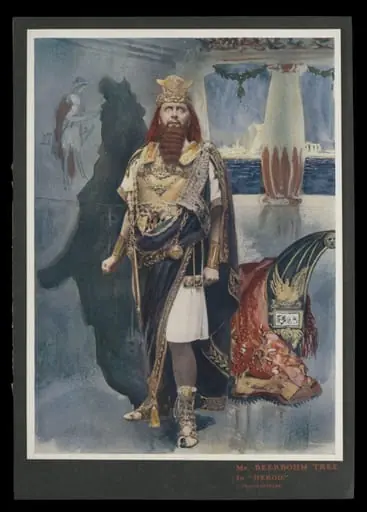 H Beard Print Collection
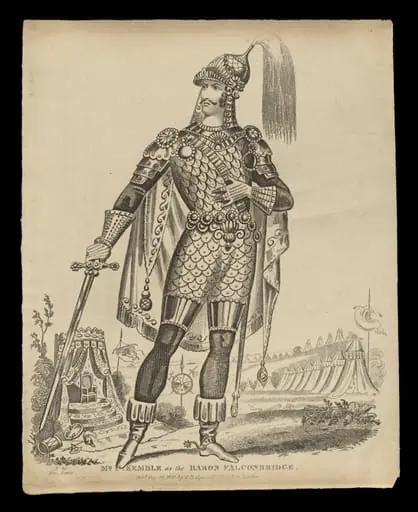 H Beard Print Collection
 H Beard Print Collection
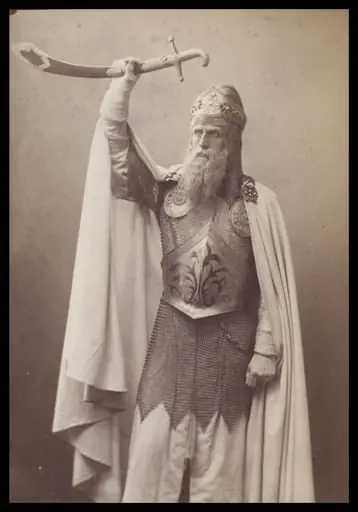 Guy Little Theatrical Photograph
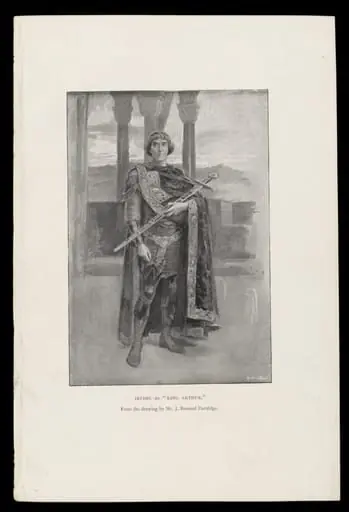 H Beard Print Collection
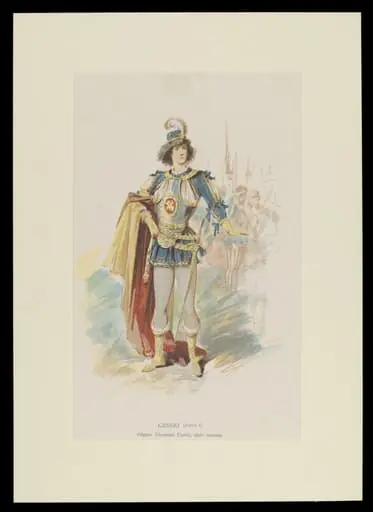 H Beard Print Collection
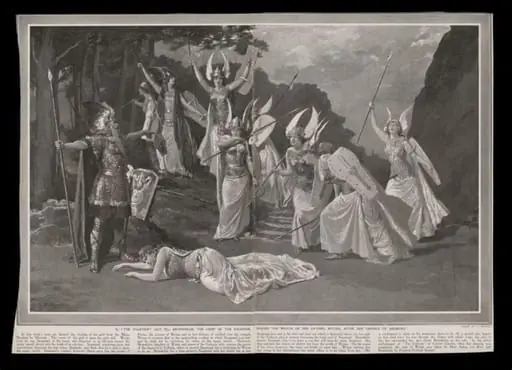 H Beard Print Collection
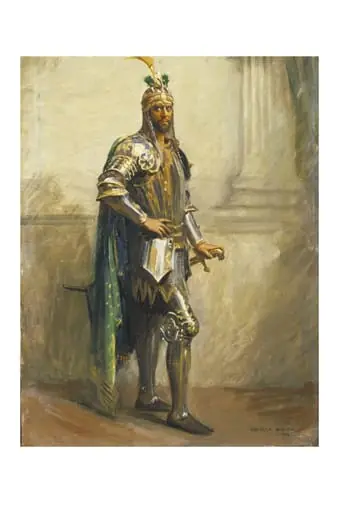 Herbert Beerbohm Tree as Othello in <i>Othello</i> by William Shakespeare
 H Beard Print Collection
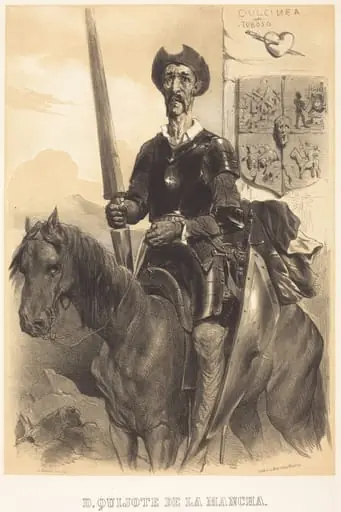 Don Quixote de la Mancha
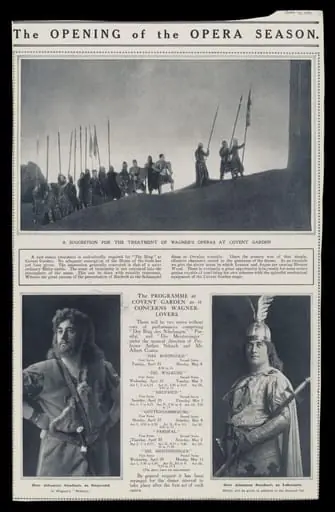 H Beard Print Collection