Artwork
Portrait of a young man with a javelin and a hunting horn
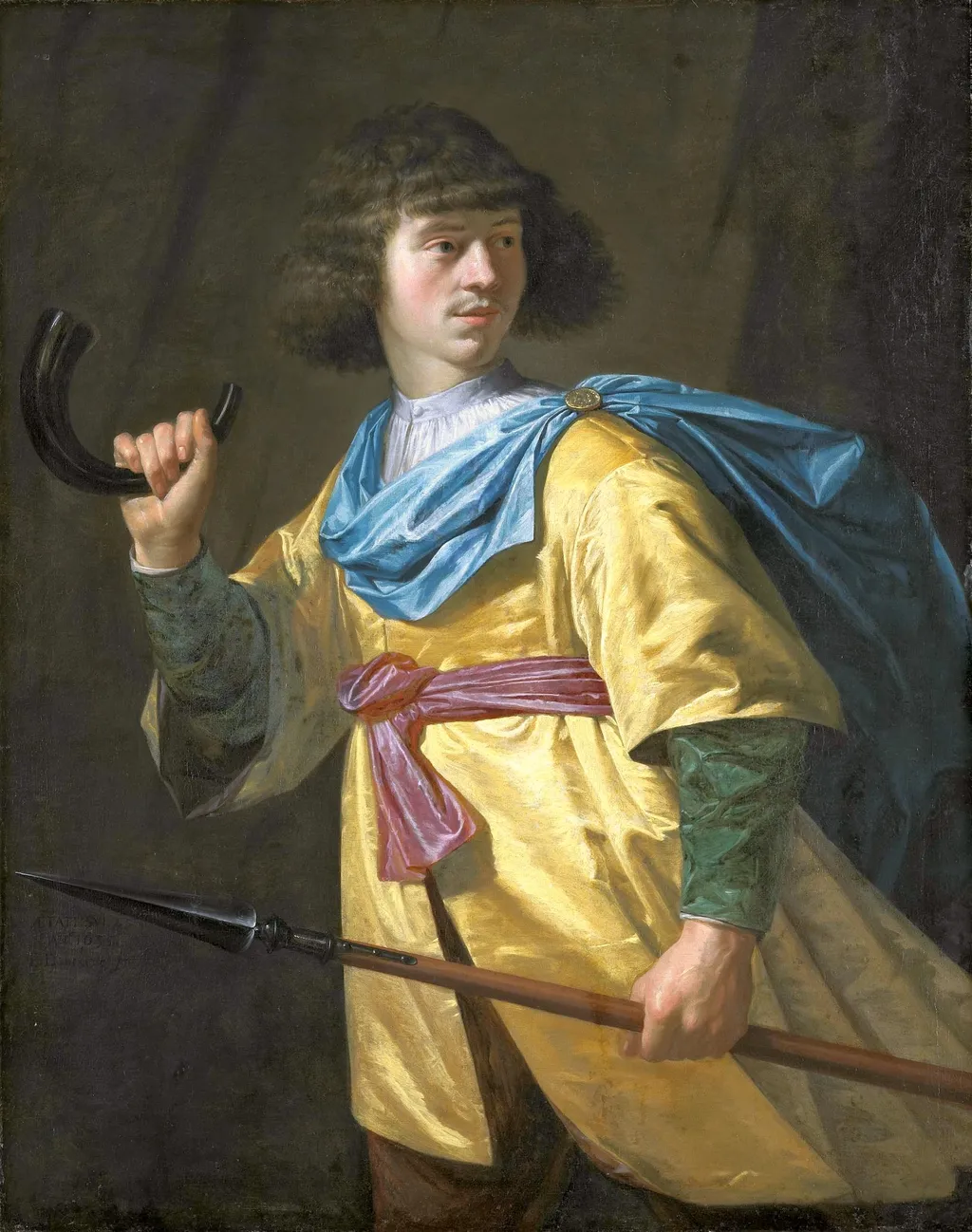
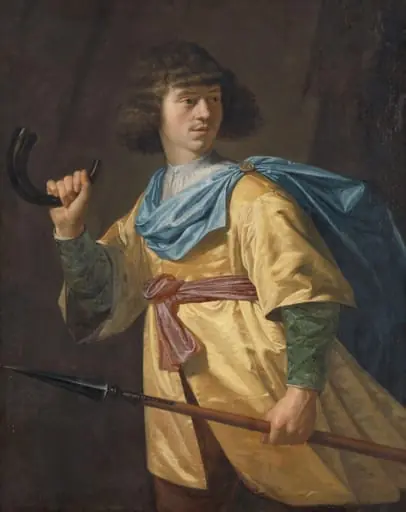
Portrait of a young man with a javelin and a hunting horn is an oil painting by the Dutch Golden Age artist Peter Danckerts de Rij. It dates from 1635 and is held in the collection of the Rijksmuseum.
About this work
Overview
Dressed in a bright yellow doublet, a blue cape over the left shoulder, a white shirt, and a red waist sash, the sitter’s curly brown hair frames his face.
The work, executed in oil on canvas in 1635, portrays a youthful figure clutching a hunting horn in his right hand and a javelin in his left. Dressed in a bright yellow doublet, a blue cape over the left shoulder, a white shirt, and a red waist sash, the sitter’s curly brown hair frames his face. The composition rests against a subdued, dark background that emphasizes the figure’s attire and accessories.
Subject & Meaning
The combination of a hunting horn and a javelin, together with the luxurious garments, points to a person of aristocratic standing or a dedicated hunter. Such props were commonly used to signal noble leisure pursuits and martial skill in 17th‑century portraiture, suggesting the sitter wished to be identified with both courtly refinement and the virtues of the hunt.
Technique & Style
The painter employs chiaroscuro, contrasting the luminous yellows and reds of the clothing with the deep shadows of the backdrop to model the figure’s form. Fine brushwork renders the texture of the fabrics and the sheen of the horn, while broader strokes suggest the folds of the cape. The overall handling reflects the Dutch Golden Age’s attention to realistic detail combined with a dramatic use of light.
History & Provenance
Created by Peter Danckerts de Rij, a Dutch artist who spent much of his career in the Polish‑Lithuanian Commonwealth and Sweden, the portrait entered the Rijksmuseum’s collection in the 20th century. Danckerts de Rij, born in Amsterdam in 1605 and buried there in 1660, produced a range of portraits and courtly scenes during his itinerant career, of which this piece is a representative example.
Context
In the early 1630s, Dutch painters were increasingly commissioned by foreign courts, bringing their refined portrait techniques abroad. The inclusion of hunting paraphernalia aligns with contemporary European aristocratic culture, where the hunt symbolized both leisure and military preparedness. The work thus reflects cross‑cultural patronage and the diffusion of Dutch artistic conventions into Central and Northern European elite circles.
Own this work as a print
Artist & collection
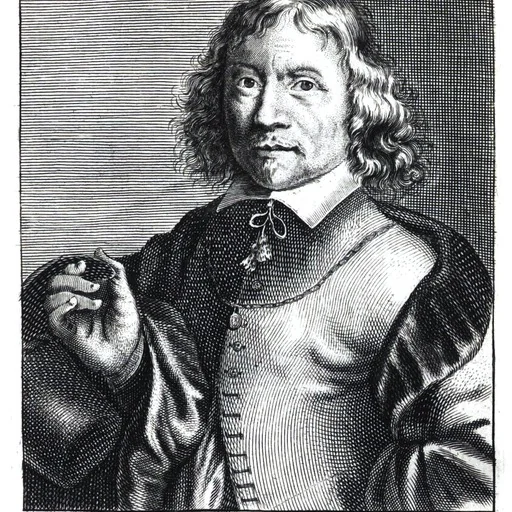
Artist
Pieter, Peeter, or Peter Danckerts de Rij, Dankers de Ry, or Peteris Dankersas (1605, in Amsterdam – buried 15 December 1660, Amsterdam). was a Dutch Golden Age painter mostly active in the Polish–Lithuanian Commonwealth and Sweden.