Artwork
Equestrian portrait of Mary de' Medici (1575-1642) and the triumph at Julich
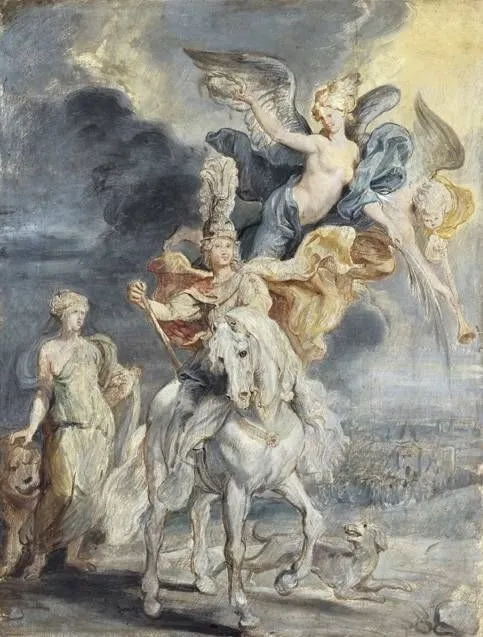
Equestrian portrait of Mary de' Medici (1575-1642) and the triumph at Julich is an oil painting by the Flemish Baroque painting artist Peter Paul Rubens. It dates from 1622 and is held in the collection of the Bavarian State Painting Collections.
About this work
Overview
Created in 1622 by the Flemish painter Peter Paul Rubens, this oil on canvas presents a dynamic equestrian portrait of Marie de’ Medici. The composition places the queen on a white horse against a turbulent sky, while a winged figure bearing a crown hovers above and a attendant with a scroll stands below. The work is housed in Munich’s Alte Pinakothek.
Subject & Meaning
The central figure is Marie de’ Medici, former queen of France, shown in regal attire that emphasizes her status. The angelic presence with a crown suggests divine sanction or triumph, and the scroll‑holding figure may represent official recognition. Together they convey a narrative of political legitimacy and victorious rule, aligning the monarch with heavenly favor.
Technique & Style
Rubens employs the Baroque hallmarks of vigorous movement and rich coloration, using strong contrasts of light and dark to heighten drama. The swirling clouds and illuminated sky demonstrate chiaroscuro, while the fluid brushwork captures the texture of fabrics and the sheen of the horse’s mane, creating a sense of immediacy and vitality.
History & Provenance
Commissioned shortly after Marie de’ Medici’s exile, the painting entered the collection of the Alte Pinakothek in the 19th century, where it remains on display. Its provenance reflects the work’s journey from a private royal commission to a public museum setting, illustrating the broader circulation of Rubens’ diplomatic portraiture.
Context
The portrait aligns with the Counter‑Reformation’s artistic agenda, which favored emotionally engaging images that reinforced authority. Rubens, both an artist and a diplomat, used his mastery of Baroque aesthetics to craft a visual assertion of the queen’s power, situating her triumph within a broader narrative of divine right and political restoration.
Artist & collection
Artist
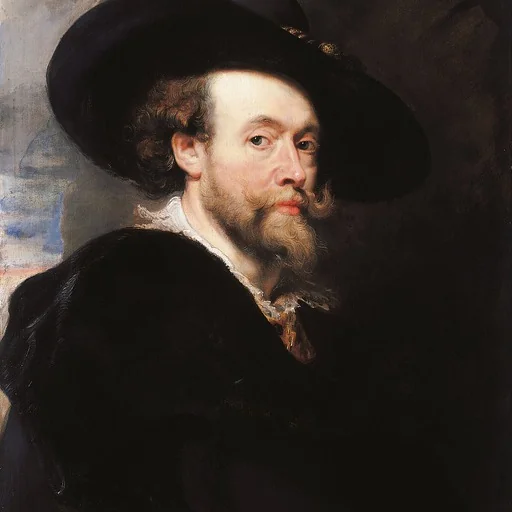
Sir Peter Paul Rubens ( ROO-bənz; Dutch: ; 28 June 1577 – 30 May 1640) was a Flemish artist and diplomat.