Artwork
Portrait of Mulay Ahmad
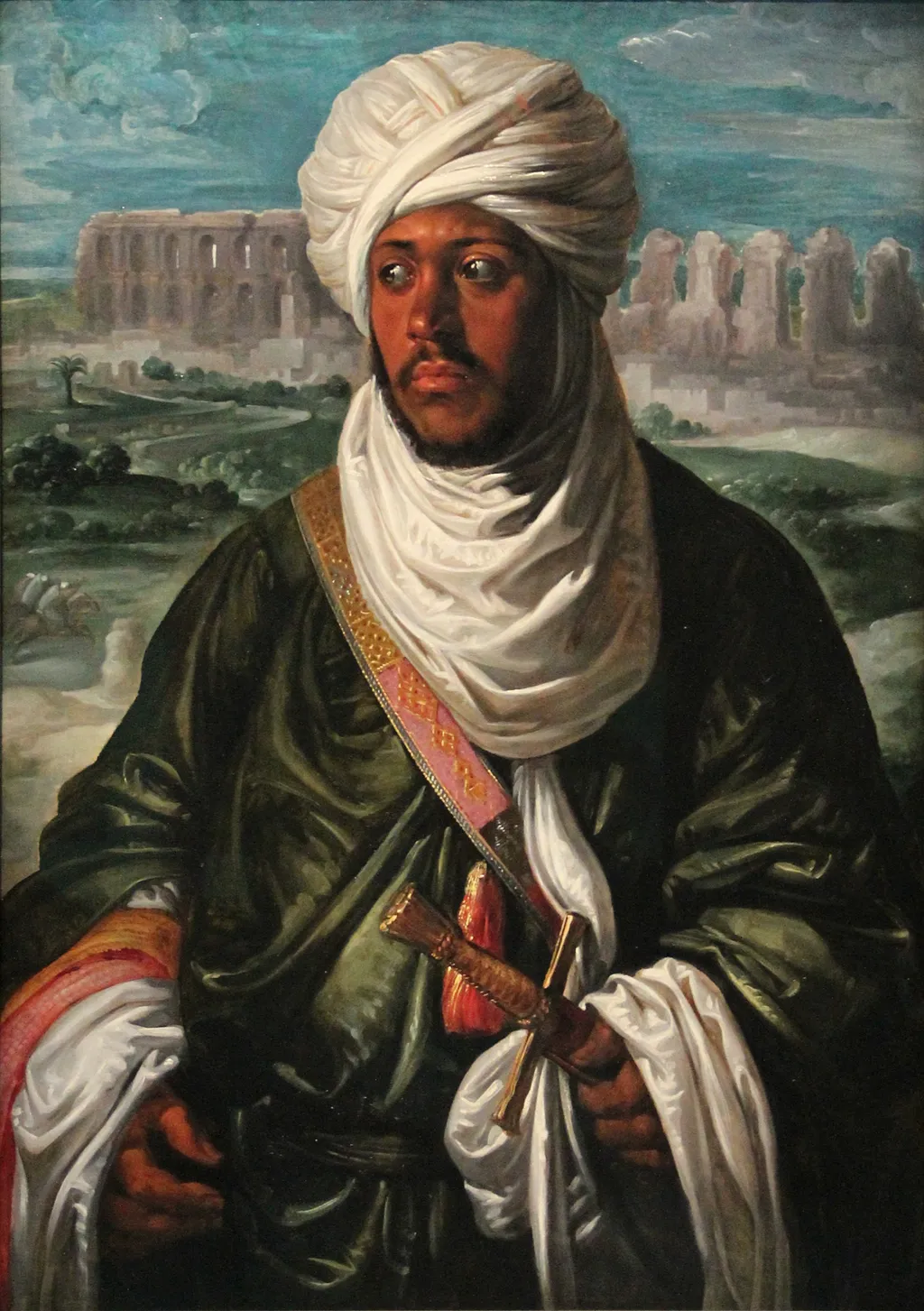
Portrait of Mulay Ahmad is an oil painting by the Flemish Baroque painting artist Peter Paul Rubens. It dates from 1609 and is held in the collection of the Museum of Fine Arts Boston.
About this work
His right hand holds a curved sword with a red-wrapped hilt, while his left rests on a folded cloth.
This man wears a white turban and draped cloth over dark robes. His right hand holds a curved sword with a red-wrapped hilt, while his left rests on a folded cloth. Behind him, a distant landscape shows crumbling ruins and a rocky hillside under a cloudy sky.
The sword’s red wrapping stands out against the dark fabric, drawing your eye. Rubens painted this portrait in 1609, showing off his skill with light and shadow.
Next, check out chiaroscuro to see how artists like Rubens used light and dark to shape faces.
Overview
Peter Paul Rubens executed the oil portrait of Mulay Ahmad in 1609, situating the work within his early Baroque output. The canvas presents a dignified figure in a white turban and dark garments, holding a curved sword with a red‑wrapped hilt. A distant, crumbling landscape forms the backdrop, and the painting now belongs to the Museum of Fine Arts in Boston.
Subject & Meaning
The sitter, identified as Mulay Ahmad, is portrayed as a person of status, his posture and weapon suggesting martial authority. The white turban and the richly draped cloth emphasize his cultural identity, while the sword’s vivid red binding draws attention to his role as a warrior or leader within his milieu.
Technique & Style
Rubens employs the Baroque hallmark of chiaroscuro, using strong contrasts of light and shadow to model the figure’s face and the gleam of the sword. The handling of oil paint reveals his skill in rendering texture—from the sheen of the turban to the roughness of the distant ruins—creating a sense of depth and movement.
History & Provenance
Created during Rubens’s early career, the portrait entered the collection of the Museum of Fine Arts, Boston, where it is displayed as part of the institution’s European paintings. Its provenance traces back to private ownership before being acquired by the museum, though detailed acquisition records are limited.
Context
The work reflects Rubens’s diplomatic engagements, as he often painted notable foreign figures encountered during his travels. The inclusion of architectural ruins in the background aligns with contemporary interests in antiquity and serves to situate the sitter within a timeless, heroic narrative common to early 17th‑century portraiture.
Own this work as a print
Artist & collection
Artist
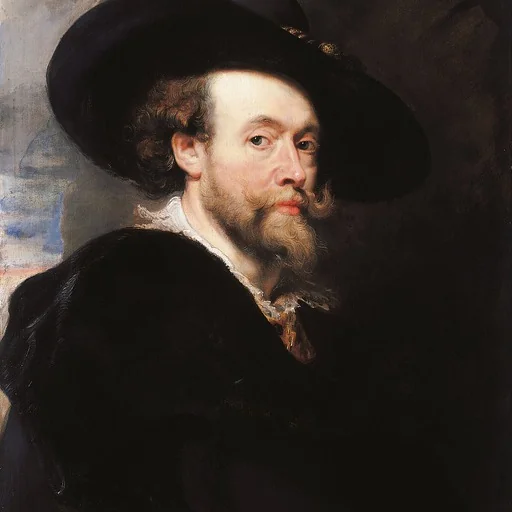
Sir Peter Paul Rubens ( ROO-bənz; Dutch: ; 28 June 1577 – 30 May 1640) was a Flemish artist and diplomat.