Artwork
Venus and Adonis
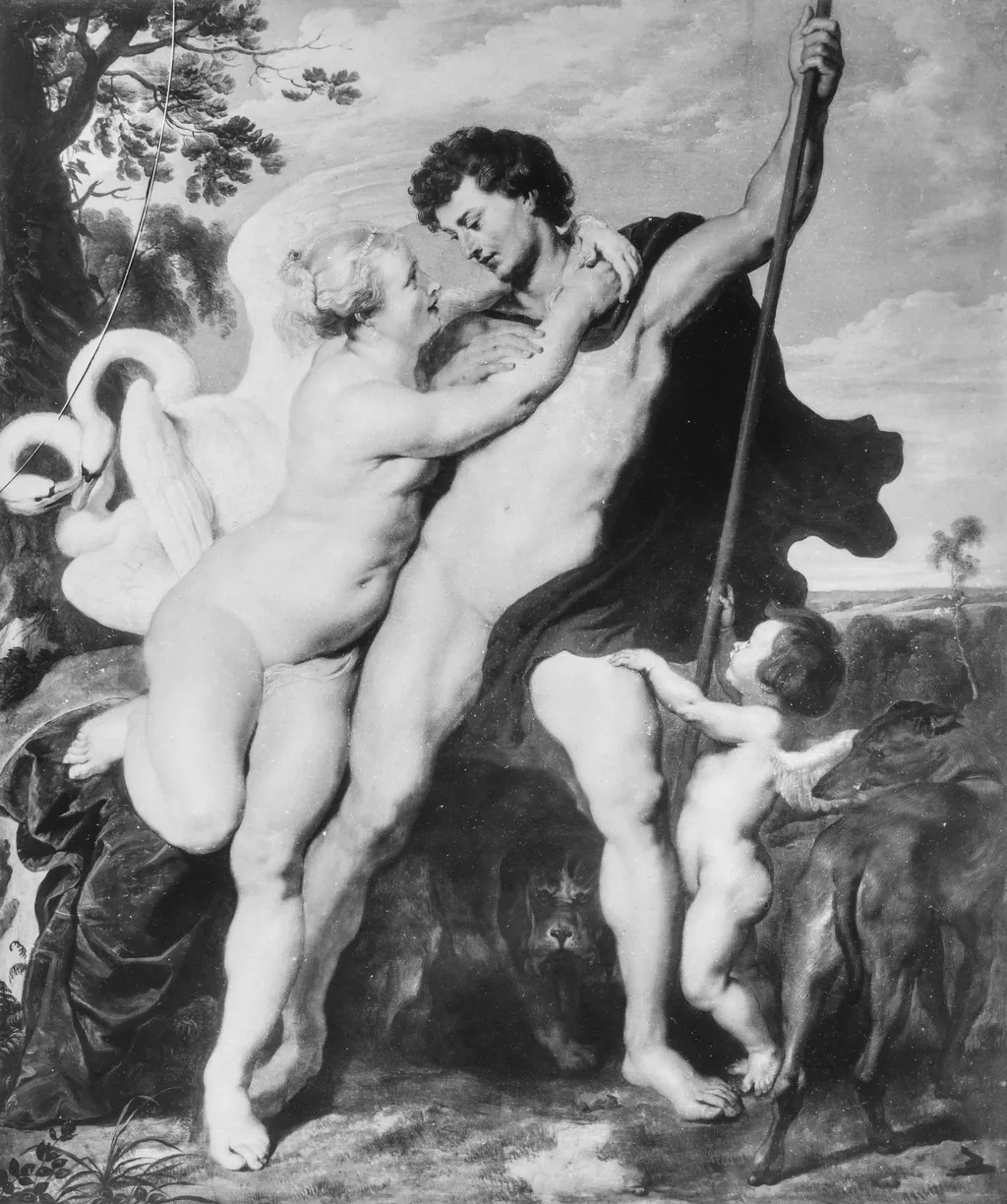
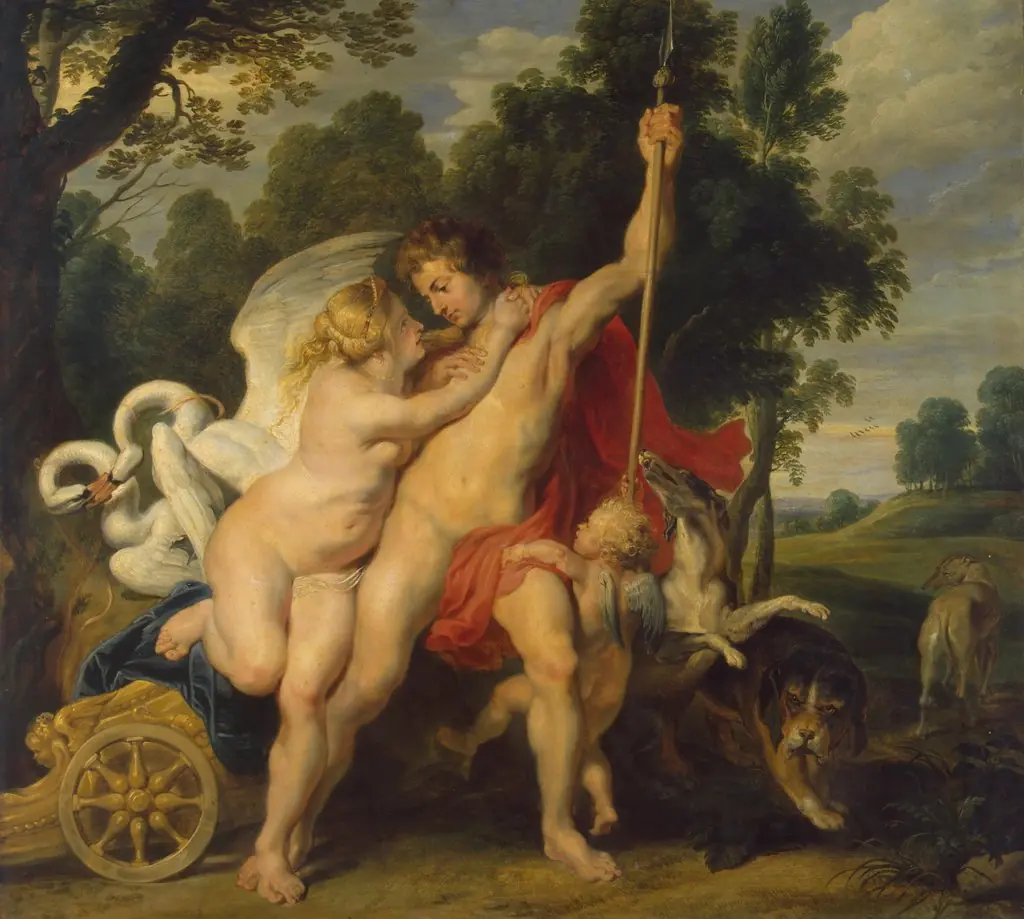
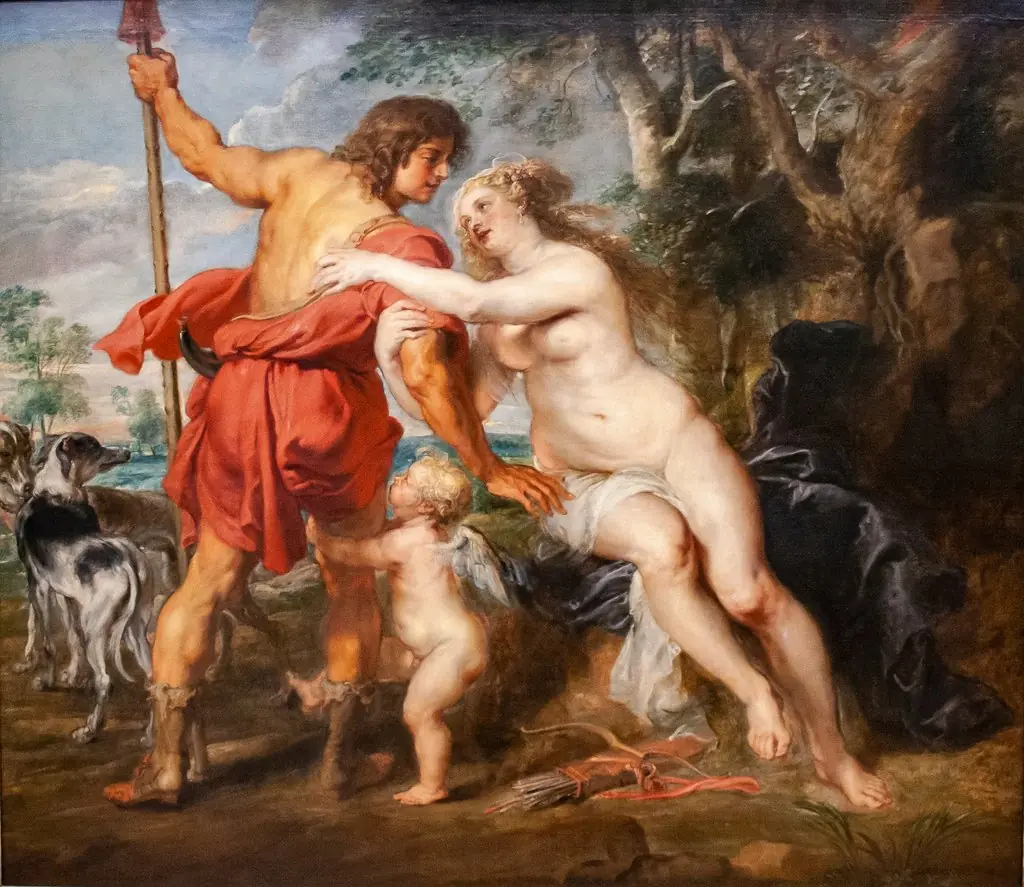
Venus and Adonis is an oil painting by the Flemish Baroque painting artist Peter Paul Rubens. It dates from 1610 and is held in the collection of the Gemäldegalerie Berlin.
About this work
Overview
The composition centers on an intimate yet tense encounter between two figures, framed by a naturalistic landscape.
Painted in 1610 by Peter Paul Rubens, this oil on canvas work illustrates a moment from classical mythology. As a key example of Flemish Baroque painting, it combines narrative drama with physical vitality. Rubens, known for his diplomatic career as well as his art, used mythological subjects to explore human emotion and movement, often drawing from Ovid’s writings. The composition centers on an intimate yet tense encounter between two figures, framed by a naturalistic landscape.
Subject & Meaning
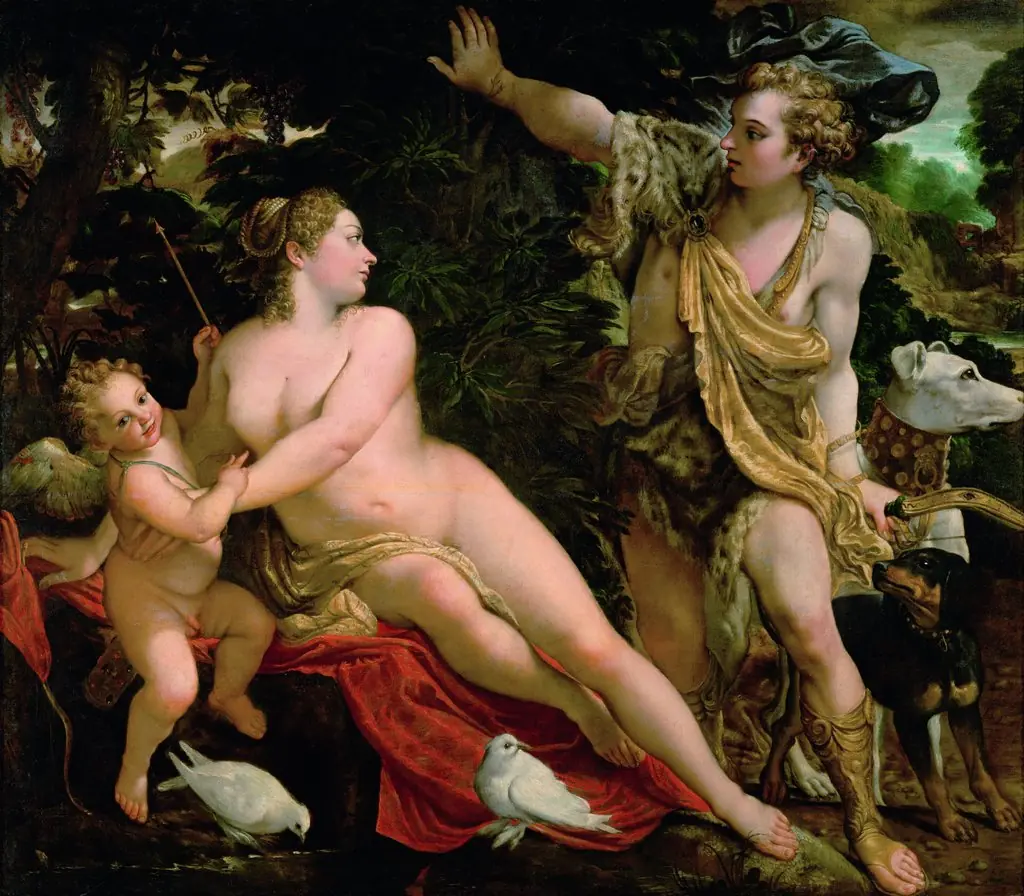
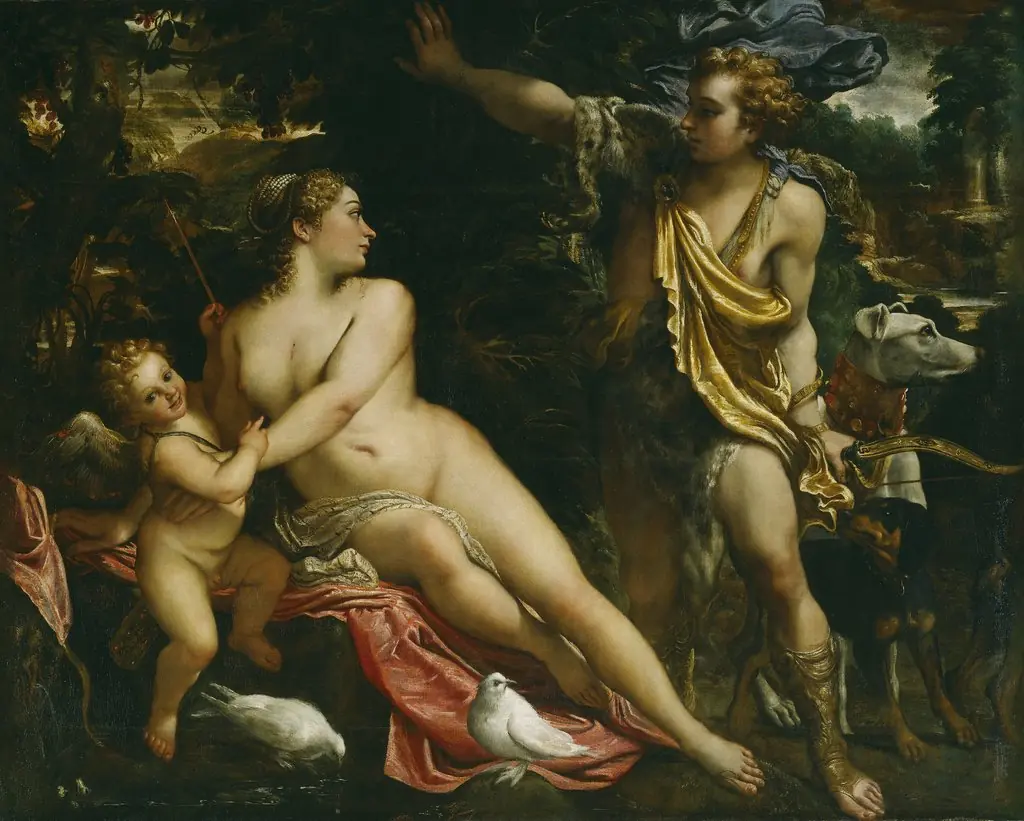
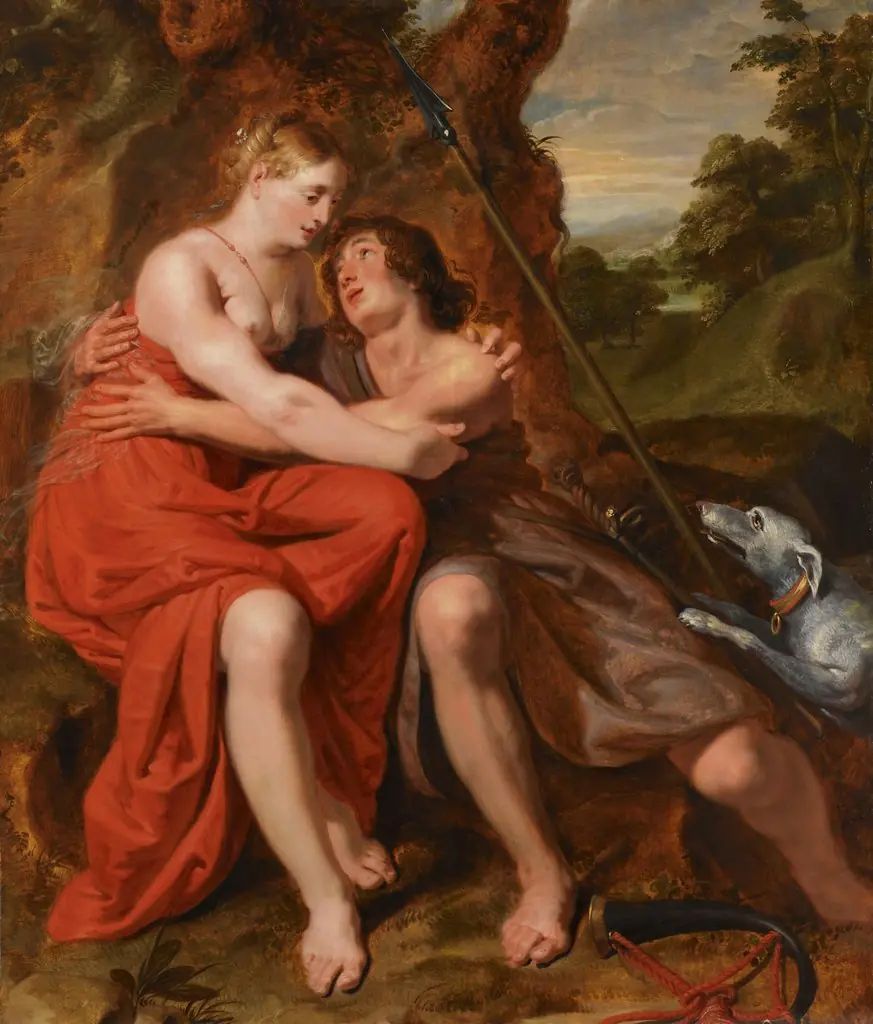
The scene portrays Venus, goddess of love, attempting to dissuade her mortal lover Adonis from going hunting, a pursuit she foresees will lead to his death. Her embrace is urgent, her touch tender yet desperate. Adonis, armed and resolute, prepares to leave, his posture suggesting duty over desire. The child beside them, likely Cupid, reinforces the theme of love’s power. The swan, sacred to Venus, and the hound, symbolizing loyalty or the hunt, deepen the mythological context.
Technique & Style
Rubens employs chiaroscuro to model the figures with sculptural weight, enhancing their three-dimensionality against the atmospheric background. His brushwork is fluid, particularly in rendering skin and fabric, where textures contrast yet harmonize. The nude forms are rendered with a naturalistic sensuality, avoiding idealization. The palette is rich but restrained, with warm flesh tones set against darker drapery and muted greens of the landscape, guiding focus to the central group.
History & Provenance
Commissioned during Rubens’s early return to Antwerp after his Italian sojourn, the painting reflects his absorption of Renaissance and Venetian influences. It remained in private collections in the Low Countries before entering a public museum in the 19th century. Its attribution has never been in doubt, and it is consistently cited in scholarly studies of Rubens’s mythological cycles from the 1610s, a period when he was refining his narrative style.
Context
In early 17th-century Flanders, mythological painting served both intellectual and aesthetic purposes, appealing to humanist tastes among collectors. Rubens’s engagement with Ovid aligned with broader European interest in classical literature. The painting’s emotional intensity and physical dynamism reflect the Counter-Reformation’s emphasis on visceral religious and moral experiences, even when depicting pagan subjects.
Legacy
This work contributed to the enduring popularity of mythological themes in Northern European art. Rubens’s treatment of the human form and emotional tension influenced generations of painters, from Van Dyck to later academic artists. While not his most widely reproduced image, it remains a studied example of how classical narrative could be rendered with psychological depth and tactile presence in the Baroque era.
Own this work as a print
Artist & collection
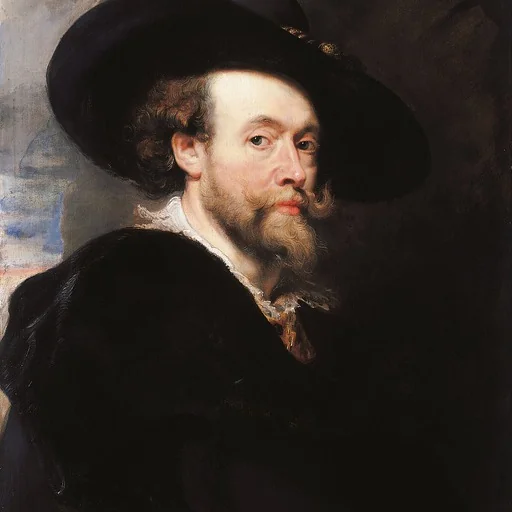
Artist
Sir Peter Paul Rubens ( ROO-bənz; Dutch: ; 28 June 1577 – 30 May 1640) was a Flemish artist and diplomat.