Artwork
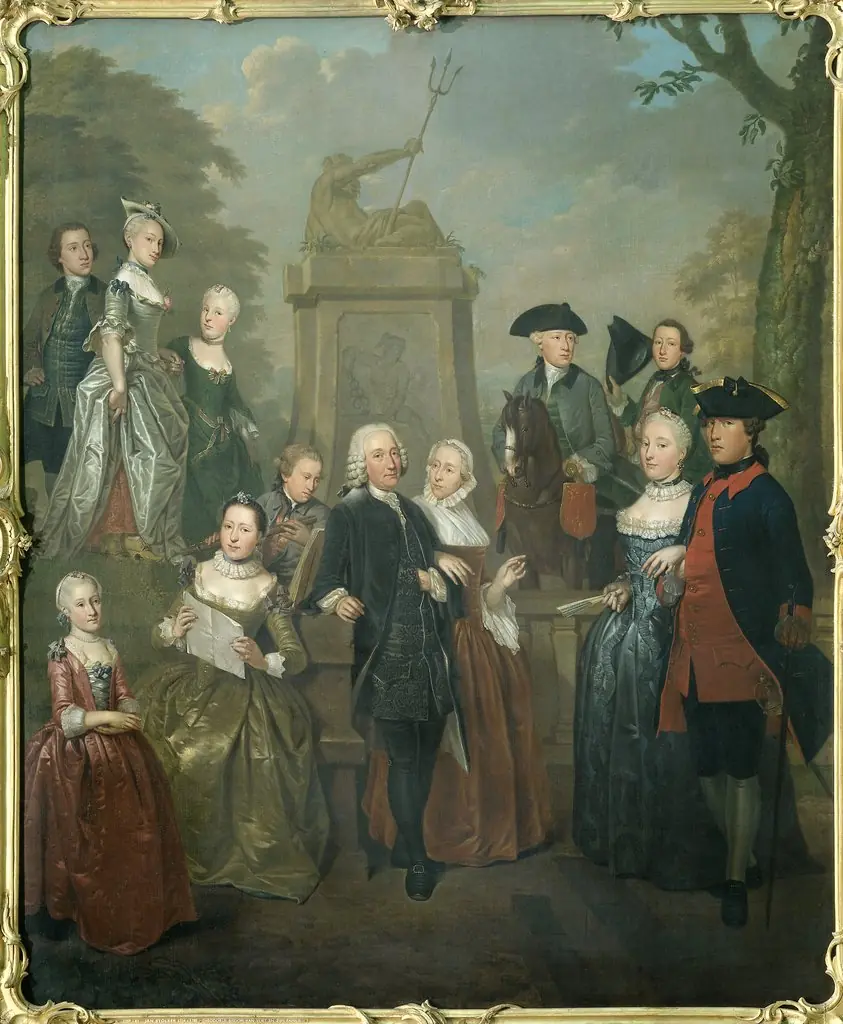
Berend van Iddekinge with his Wife and their Son
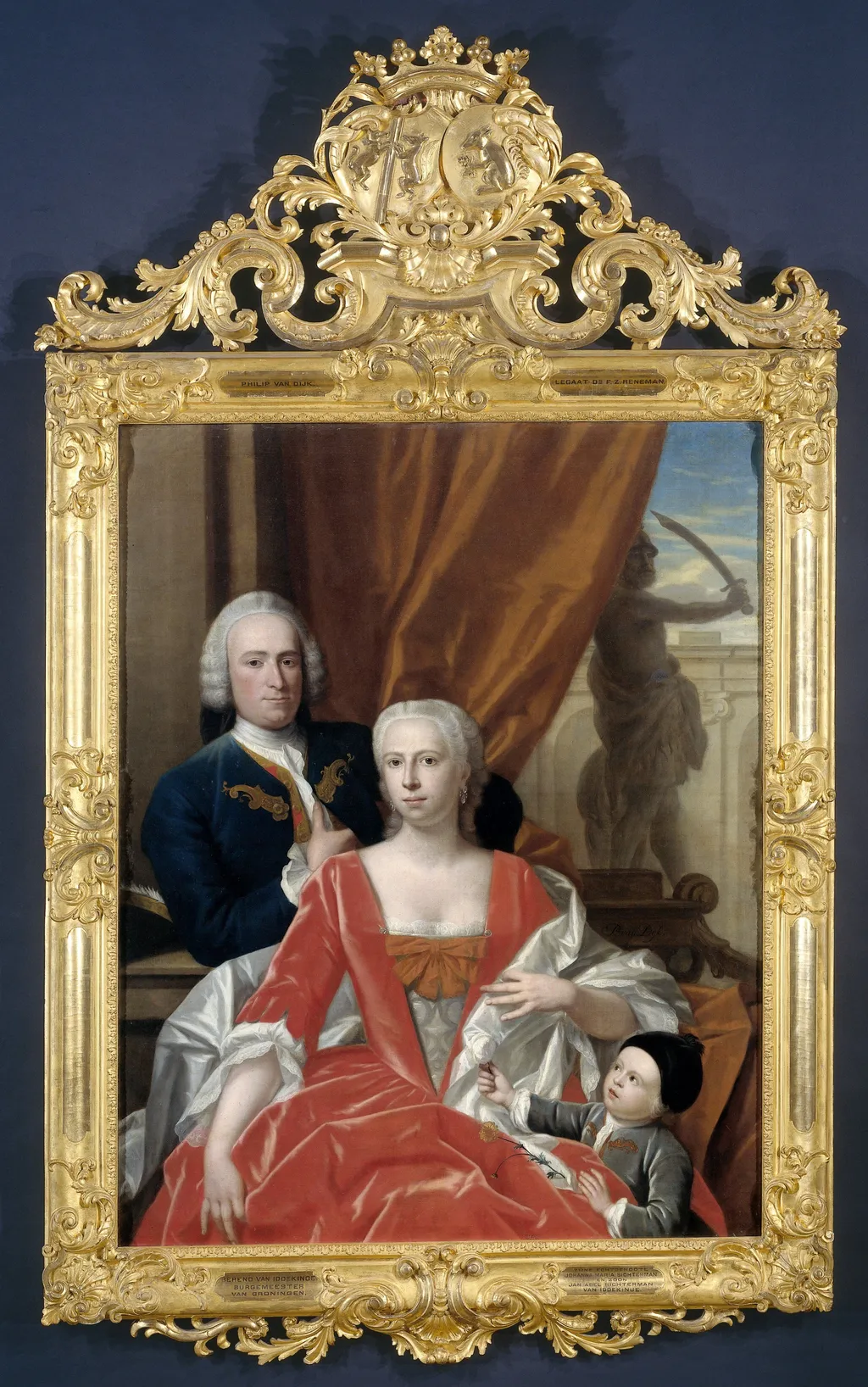
Berend van Iddekinge with his Wife and their Son is an oil painting by the Rococo painting artist Philip van Dijk. It dates from 1745 and is held in the collection of the Rijksmuseum.
About this work
The use of chiaroscuro, a technique that uses strong contrasts between light and dark, adds depth and dimension to the painting.
This painting shows a family of three: a man, a woman, and a young boy. The man is dressed in a blue coat with gold trim, while the woman wears a red dress with a white shawl. The boy is dressed in a gray jacket and black hat.
The family is posed in front of a curtain, with a statue of a man holding a sword visible behind them. The woman's hand is placed on the boy's shoulder, and the man's hand rests on her shoulder.
The painting is a portrait of a wealthy family, likely from the 18th century. The use of chiaroscuro, a technique that uses strong contrasts between light and dark, adds depth and dimension to the painting. If you're interested in learning more about this technique, look up chiaroscuro.
Overview
This oil painting, titled Berend van Iddekinge with his Wife and their Son, was completed by Philip van Dijk in 1745. It presents a formal family portrait, capturing the likenesses of Berend van Iddekinge, his spouse, and their young child. The work is a notable example of 18th-century portraiture and is currently housed in the collection of the Rijksmuseum.
Subject & Meaning
The composition features three figures: a man in a blue, gold-trimmed coat, a woman in a red dress with a white shawl, and a boy in a gray jacket and black hat. They are arranged before a draped curtain, with a statue of a sword-bearing figure visible in the background. The woman's hand rests on the boy's shoulder, while the man's hand is placed on hers, suggesting familial connection and social standing typical of a prosperous 18th-century household.
Technique & Style
Van Dijk employed oil paint to create this portrait, utilizing the technique of chiaroscuro. This approach is characterized by pronounced contrasts between areas of light and shadow, which serve to enhance the painting's three-dimensionality and depth. The strategic illumination and shading contribute to the visual impact of the figures and their surroundings, defining forms and creating a sense of volume within the composition.
Artist & collection