Artwork
Battle Scene
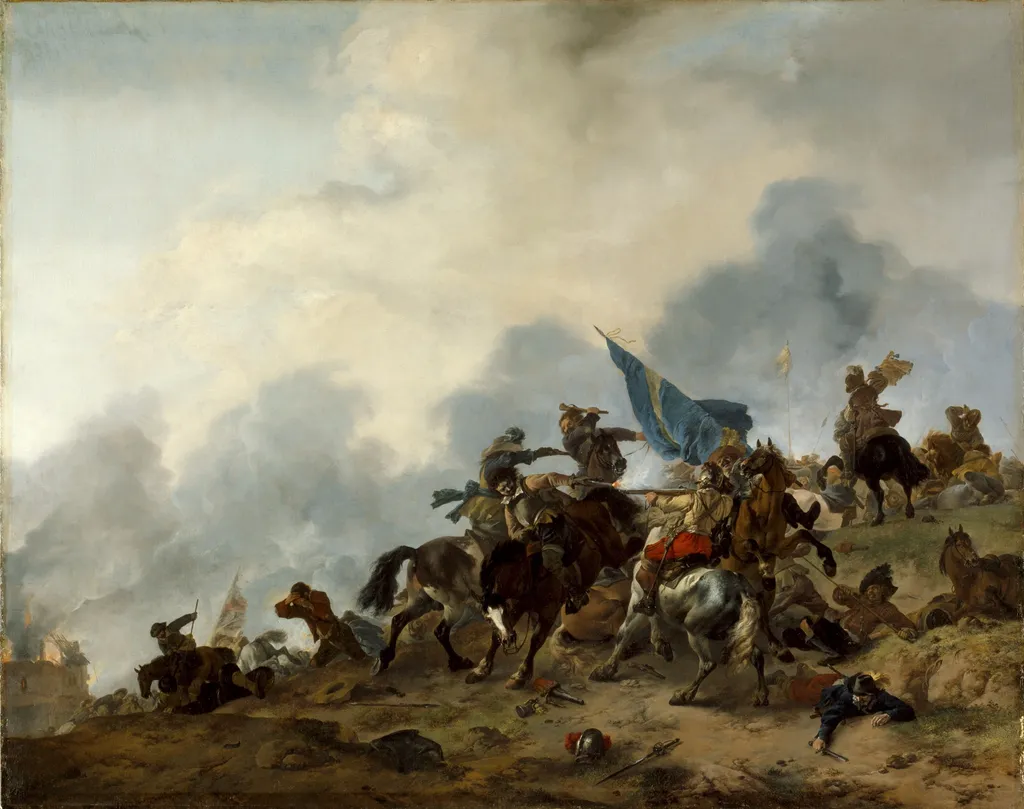
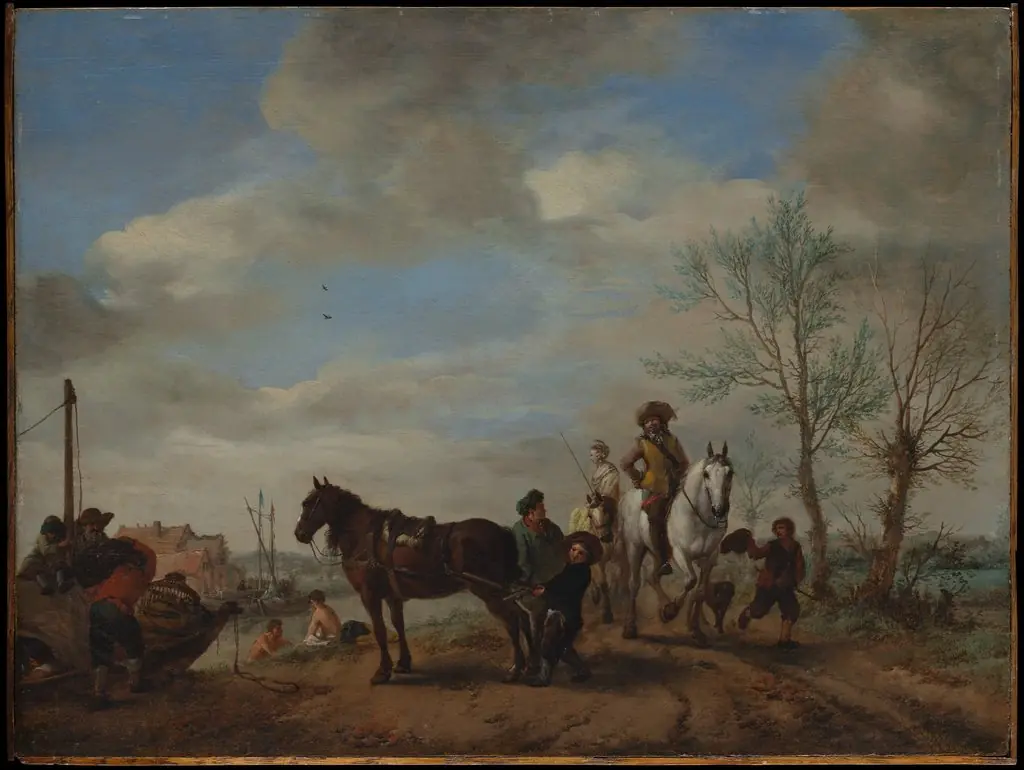
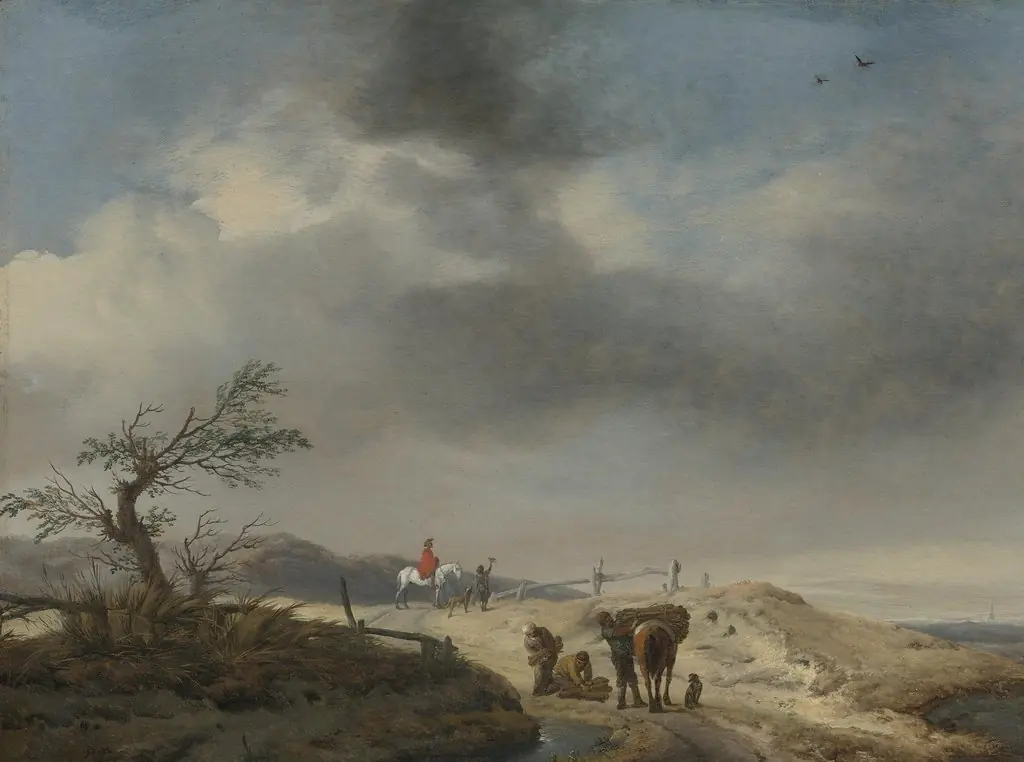
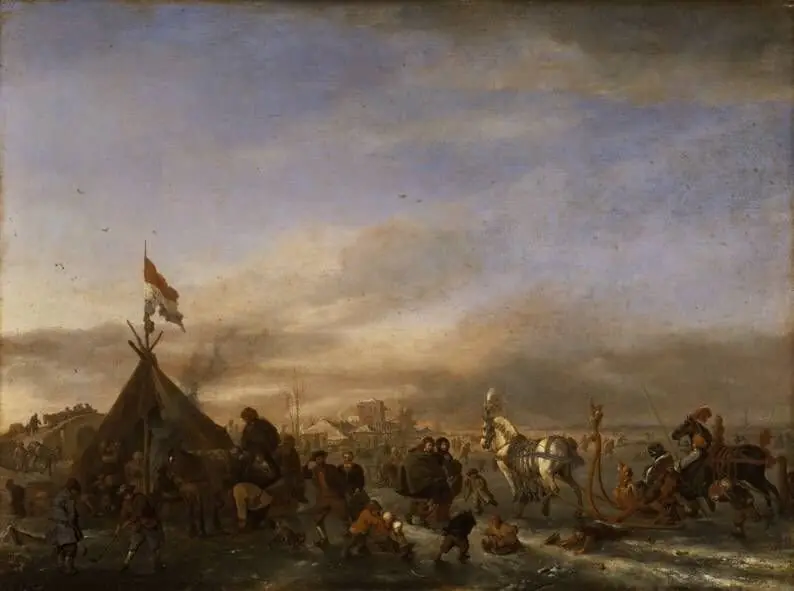
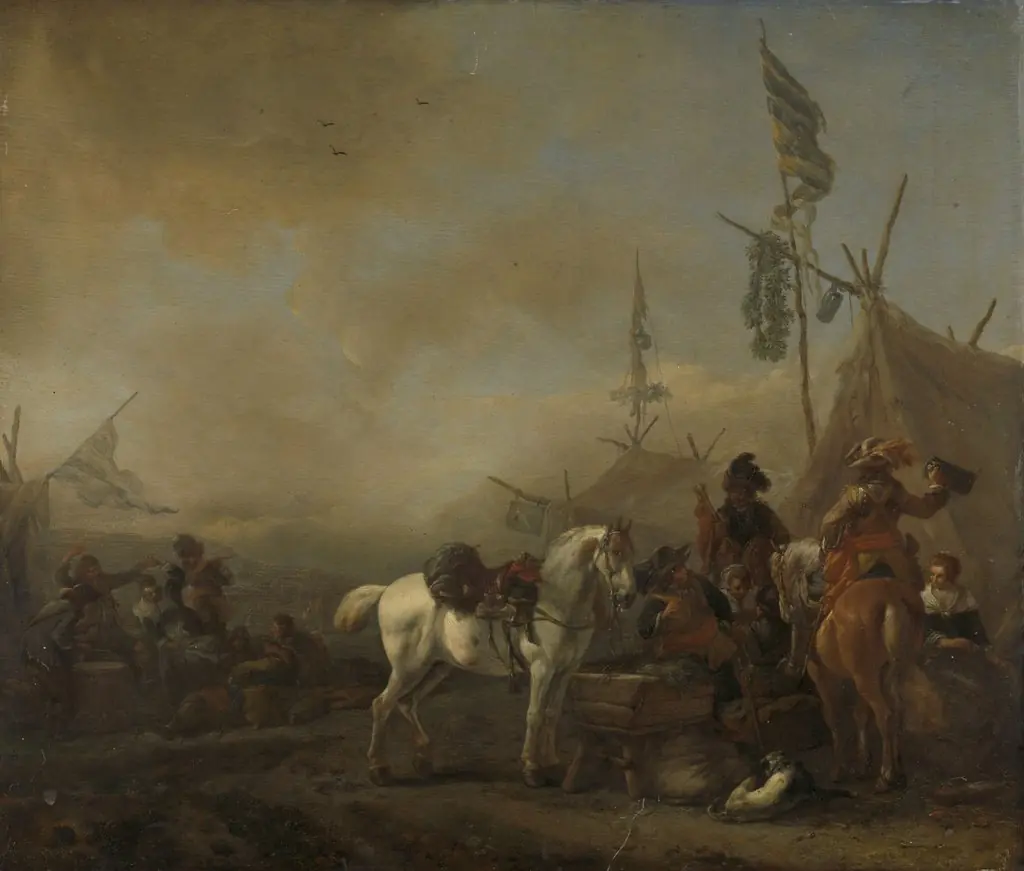
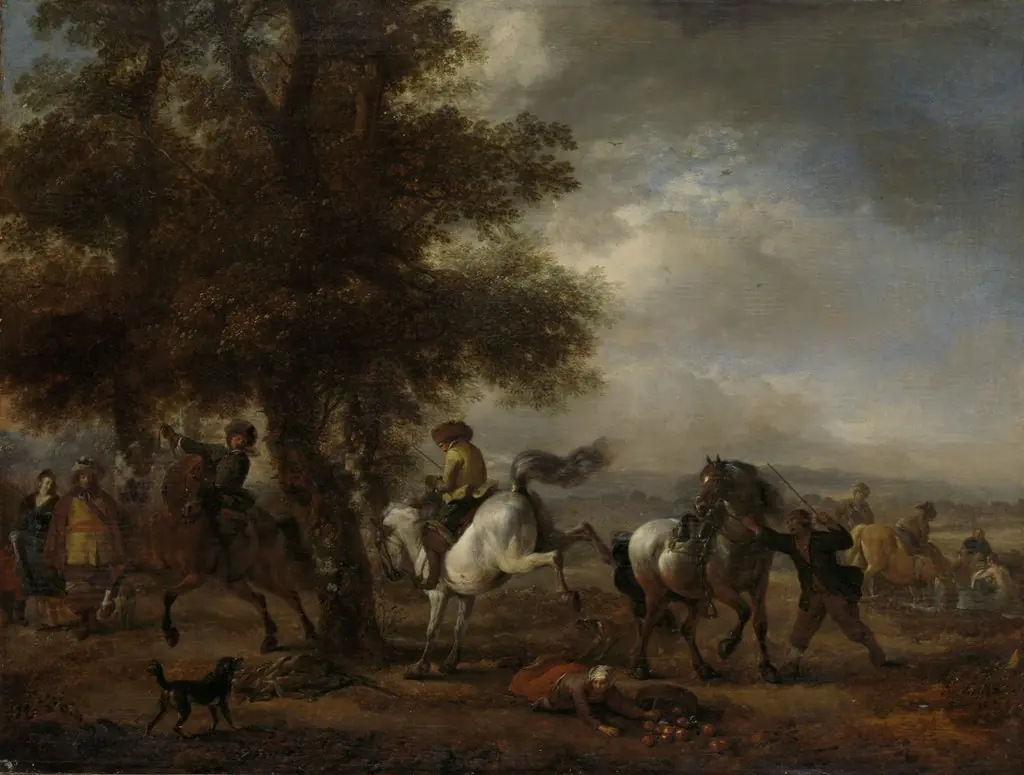
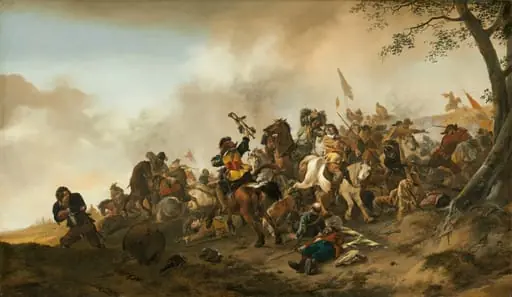
Battle Scene is an oil painting by the Dutch Golden Age artist Philips Wouwerman. It dates from 1646 and is held in the collection of the Los Angeles County Museum of Art.
About this work
Overview
Painted in 1646 by Philips Wouwerman, this oil-on-canvas work captures a moment of military chaos during the Dutch Golden Age.
Painted in 1646 by Philips Wouwerman, this oil-on-canvas work captures a moment of military chaos during the Dutch Golden Age. Wouwerman, a member of the Haarlem Guild of St. Luke, specialized in equestrian and battlefield subjects. The painting’s dynamic composition and atmospheric detail reflect his mastery in rendering movement and tension, placing it within the broader tradition of Dutch history painting focused on military life.
Subject & Meaning
The scene depicts a disordered cavalry engagement, likely inspired by contemporary conflicts rather than a specific historical event. Fallen soldiers, scattered armor, and rearing horses convey the violence and confusion of battle. The lone red sleeve draws attention without signaling rank or allegiance, perhaps emphasizing individual vulnerability amid collective chaos. The painting avoids glorification, instead presenting war as turbulent and disorienting.
Technique & Style
Wouwerman employed layered glazes and loose brushwork to suggest motion and atmosphere. Dust and smoke obscure the background, while foreground figures are rendered with sharper detail to guide the viewer’s eye. Horses are depicted with anatomical accuracy, their musculature and posture conveying panic and exertion. The muted palette—dominated by browns and grays—is punctuated by selective color, such as the red sleeve, to heighten emotional impact.
History & Provenance
Created during Wouwerman’s most productive period, the painting entered the Los Angeles County Museum of Art’s collection in the 20th century. Its provenance prior to modern acquisition is not fully documented, though it aligns with the market for Dutch battle scenes among collectors of the 18th and 19th centuries. The work has been consistently attributed to Wouwerman since its inclusion in museum records.
Context
In mid-17th-century Holland, military themes were popular among artists despite the Republic’s relative peace after the Eighty Years’ War. Wouwerman’s battle scenes catered to urban patrons fascinated by cavalry tactics, horsemanship, and the drama of war as experienced by soldiers rather than commanders. His works often blended observation with imagination, drawing from both real encounters and printed sources.
Legacy
Wouwerman’s influence extended to later Dutch and Flemish painters who adopted his compositional strategies for depicting movement. His ability to convey chaos with clarity helped define a subgenre of battle painting distinct from grand historical narratives. While less celebrated than contemporaries like Rembrandt, his output shaped how 17th-century audiences visualized the realities of mounted combat.
Own this work as a print
Artist & collection
Artist
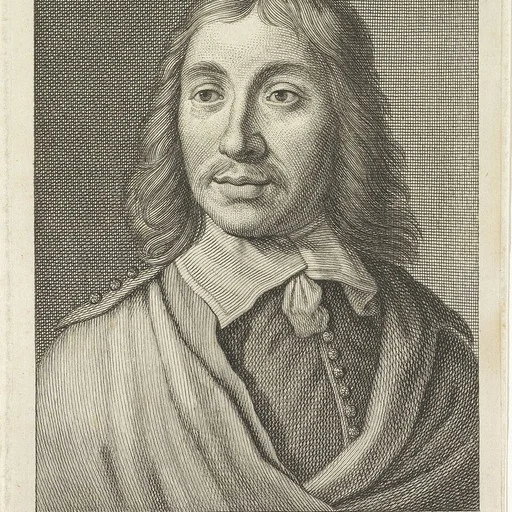
Philips Wouwerman (also Wouwermans) (24 May 1619 (baptized) – 19 May 1668) was a Dutch painter of hunting, landscape and battle scenes. He became prolific during the Dutch Golden Age and joined the Haarlem Guild of St. Luke.