Artwork
Hawking party resting by a fountain
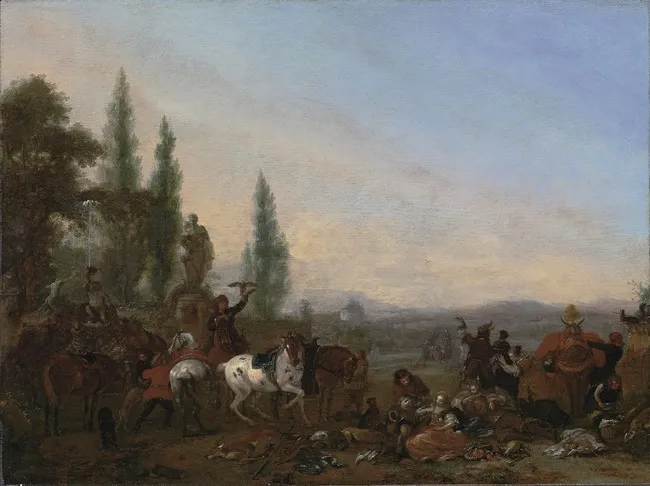
Hawking party resting by a fountain is an oil painting by the Dutch Golden Age artist Philips Wouwerman. It dates from 1660 and is held in the collection of the Detroit Institute of Arts.
About this work
Overview
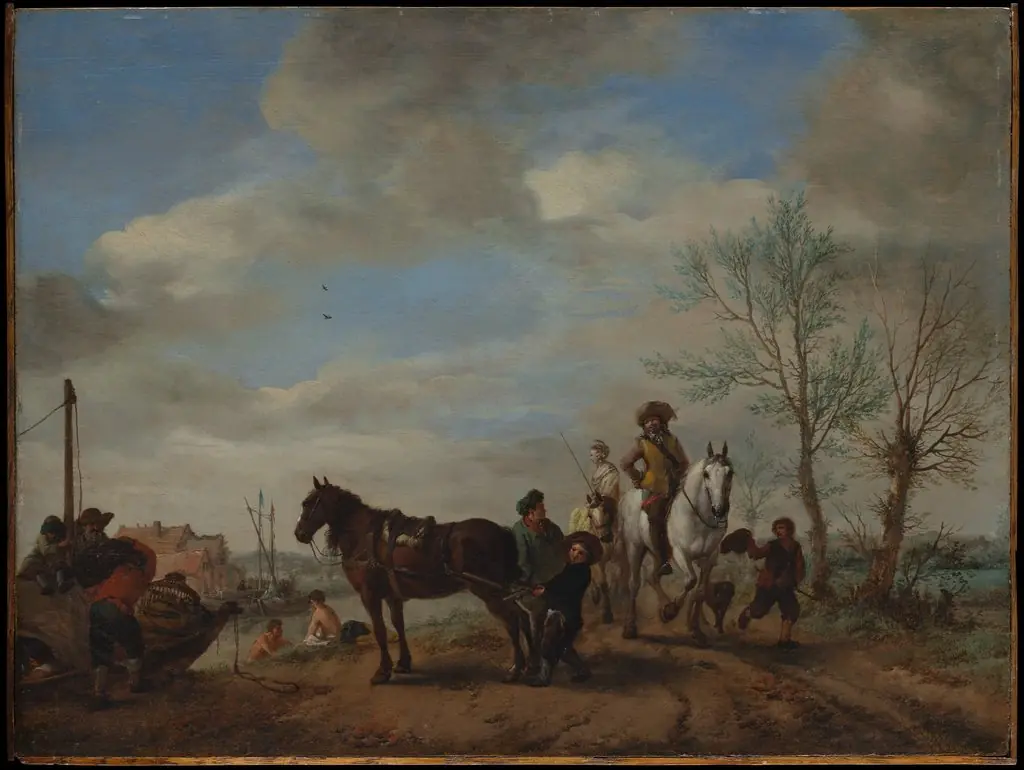
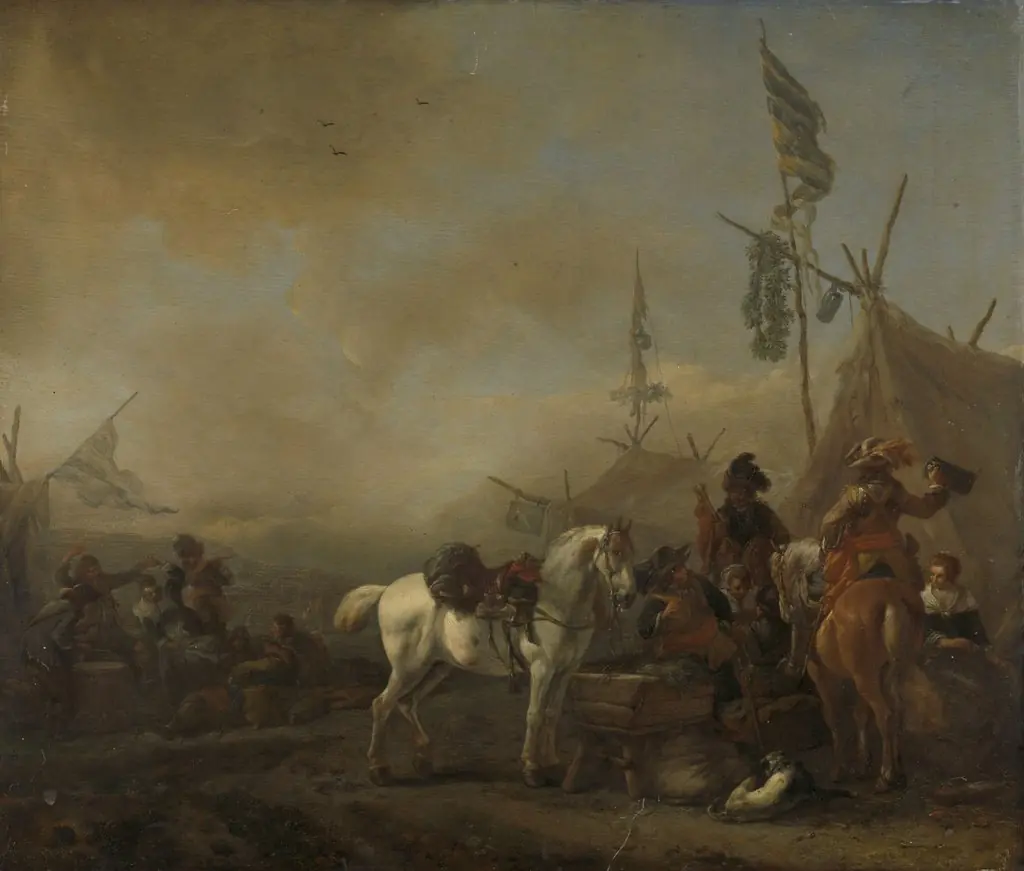
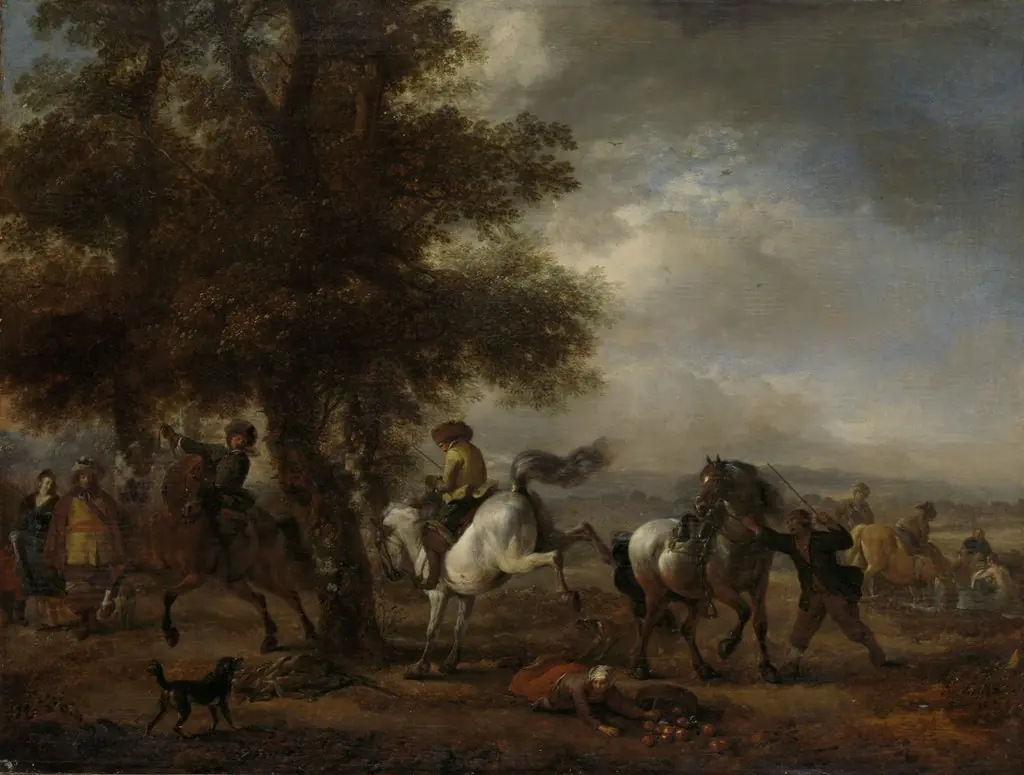
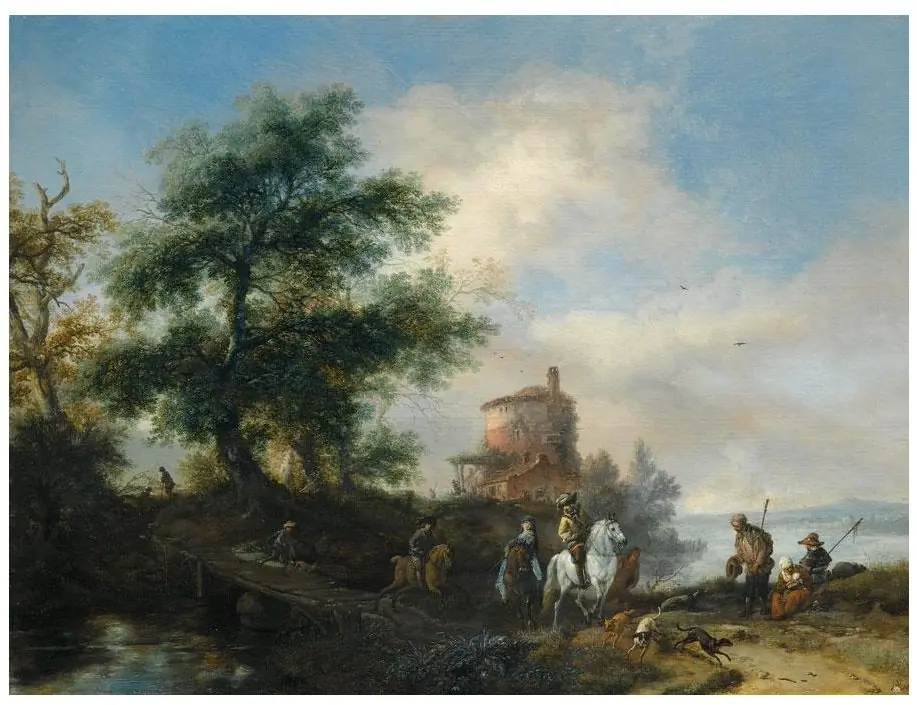
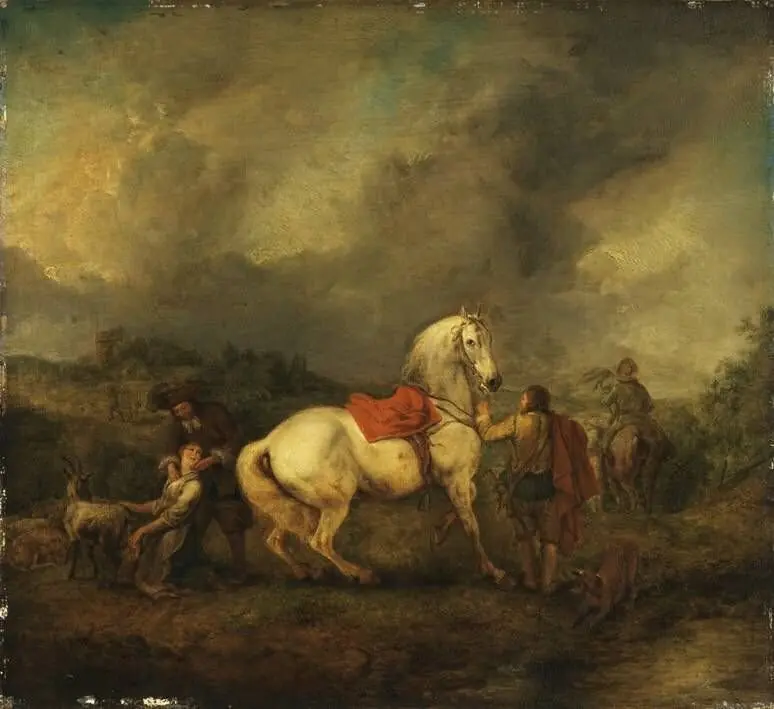
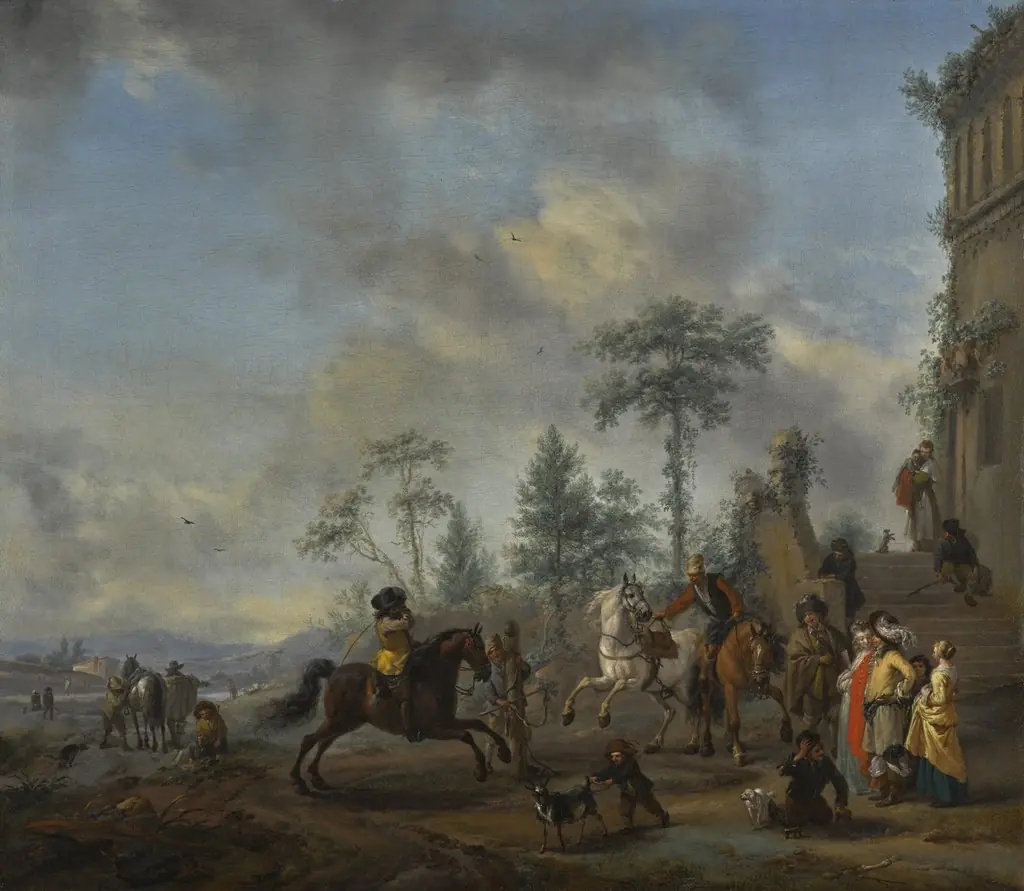
Philips Wouwerman, a Dutch painter of the mid‑17th century, executed the oil painting *Hawking party resting by a fountain* in 1660. The work belongs to the Detroit Institute of Arts. It presents a brief pause in a hunting excursion, with riders, horses and a falcon gathered around a modest fountain in an open landscape.
Subject & Meaning
The composition captures a moment of rest during a falconry hunt: mounted riders dismount, some horses stand or graze, and a figure holds a falcon on a gloved hand. The central fountain serves as a focal point, suggesting a place for refreshment and social interaction amid the chase.
Technique & Style
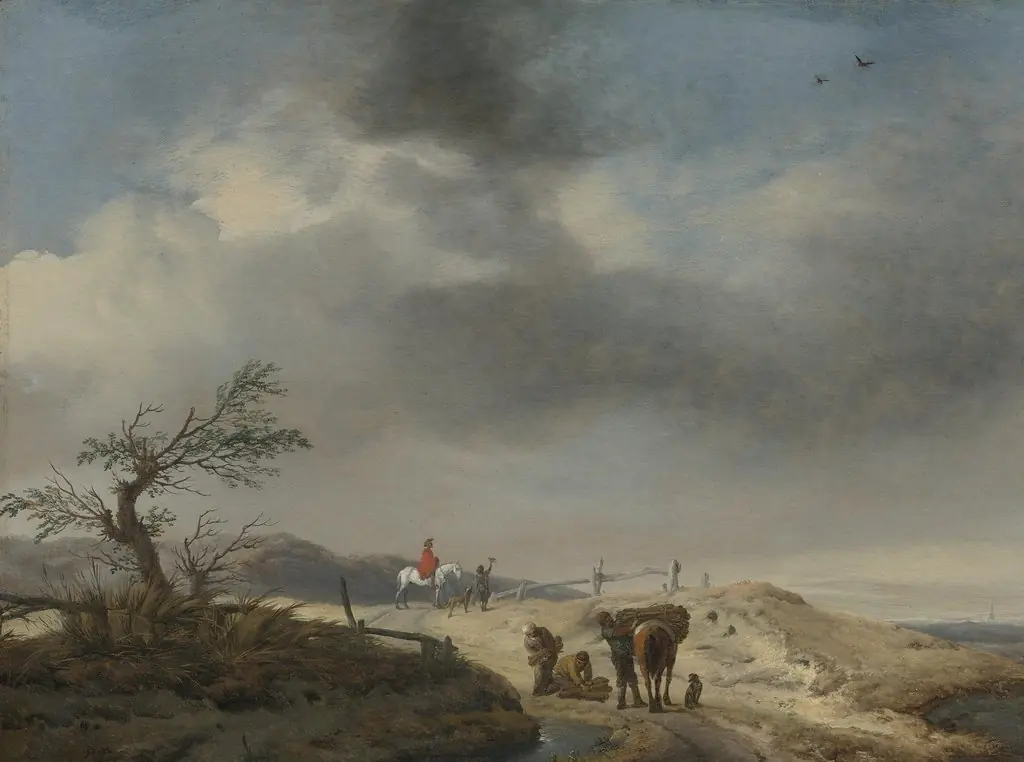
Wouwerman employs a muted palette for sky and clothing, allowing the warmer tones of the horses and the bird to stand out. Soft, atmospheric brushwork renders the thin trees and distant horizon, while careful attention to detail defines the equipment and attire of the hunters.
History & Provenance
A member of the Haarlem Guild of St. Luke, Wouwerman was known for lively hunting and equestrian scenes. This particular canvas entered the Detroit Institute of Arts collection, where it remains on display as part of the museum’s Dutch Golden Age holdings.
Context
The painting reflects the popularity of falconry and equestrian sport among the Dutch elite in the 17th century. Wouwerman’s work often combined narrative action with landscape, illustrating both the leisure and the skill associated with aristocratic pursuits.
Artist & collection
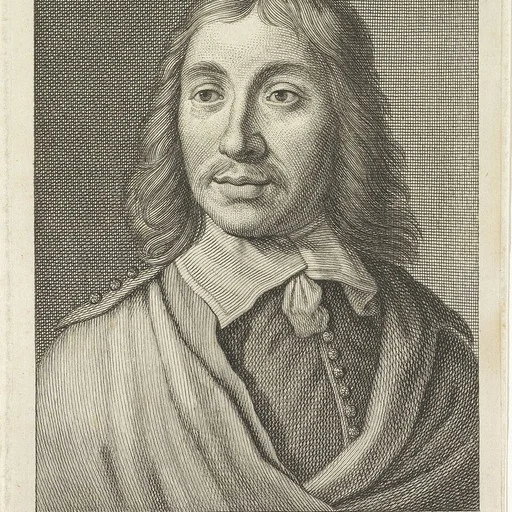
Artist
Philips Wouwerman (also Wouwermans) (24 May 1619 (baptized) – 19 May 1668) was a Dutch painter of hunting, landscape and battle scenes. He became prolific during the Dutch Golden Age and joined the Haarlem Guild of St. Luke.