Artwork
NUD
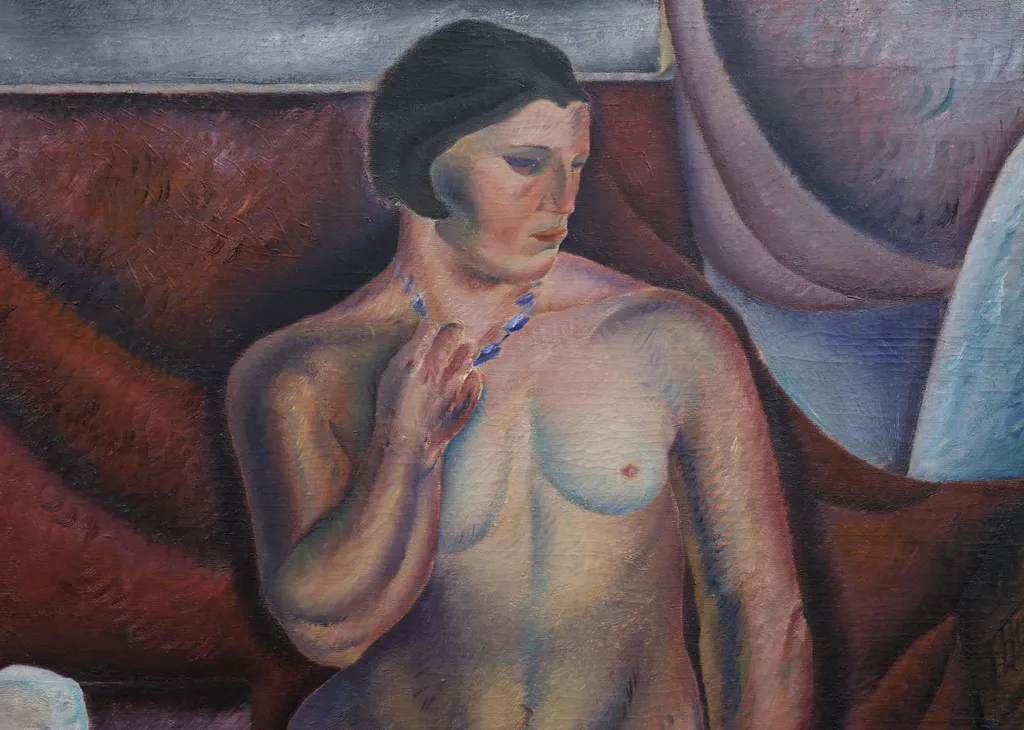
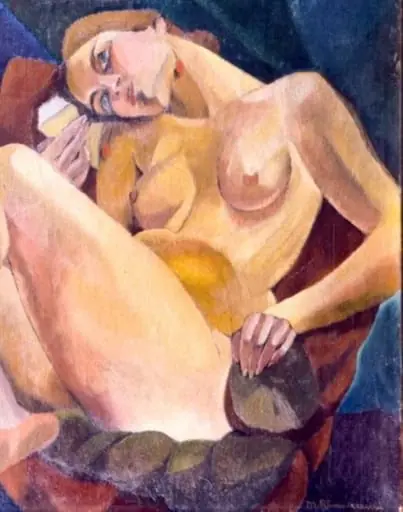
NUD is a print by Alexandru Phoebus. It dates from 1932 and is held in the collection of the National Museum of Art of Romania.
About this work
Overview
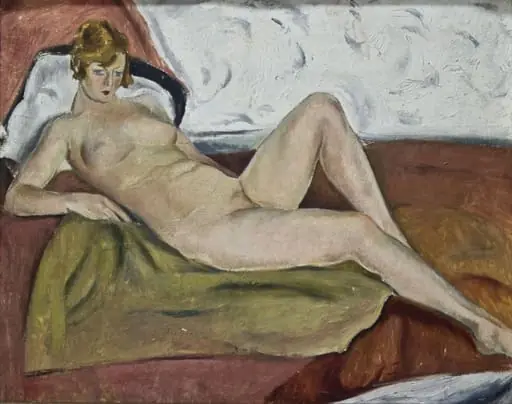
The composition centers on a nude woman seated on a brown couch, her posture restrained and her attention turned inward.
Painted in 1932 by Alexandru Phoebus, this work presents a solitary female figure in a quiet interior setting. The composition centers on a nude woman seated on a brown couch, her posture restrained and her attention turned inward. The scene is minimal, with a white wall and a purple curtain framing the figure, emphasizing solitude and stillness. The painting’s subdued palette and controlled lighting suggest a contemplative mood rather than overt sensuality.
Subject & Meaning
The subject is a woman in a moment of private reflection, her gaze lowered and hand gently touching her neck. The absence of narrative context invites interpretation rooted in introspection rather than storytelling. The blue necklace, the only colored accent beyond the curtain, may imply personal identity or vulnerability. Her calm demeanor and lack of engagement with the viewer reinforce an atmosphere of inner focus, distancing the image from conventional depictions of the nude as object.
Technique & Style
Phoebus employs muted tones and soft chiaroscuro to model the figure’s form, creating subtle volume without harsh contrasts. The shading is delicate, avoiding dramatic lighting in favor of a quiet interplay of light and shadow. Brushwork is restrained, with smooth transitions between planes, enhancing the sense of stillness. The background elements—wall and curtain—are rendered with minimal detail, ensuring the figure remains the sole focus of visual attention.
History & Provenance
The painting was completed in 1932 during a period when Phoebus was exploring intimate, psychologically nuanced portraiture. It remains in private hands, with no public exhibition history documented in major institutional records. Its survival without significant alteration suggests careful stewardship, though its early reception and acquisition path are not publicly traceable.
Context
Created in interwar Romania, the work reflects broader European trends toward psychological realism and restrained modernism. While contemporaries like Modigliani or Soutine emphasized expressive distortion, Phoebus opted for quietude, aligning more closely with the introspective tone of certain interwar German and Romanian painters. The absence of overt eroticism distinguishes it from academic nudes of the time, suggesting a shift toward personal, interiorized representation.
Legacy
Though not widely exhibited or reproduced, the painting stands as a representative example of Phoebus’s mature style—calm, understated, and psychologically attuned. It contributes to a lesser-known strand of Romanian modernism that prioritized emotional restraint over spectacle. Its continued private ownership limits public access, but it remains a quiet reference point in studies of interwar Eastern European figurative painting.
Own this work as a print
Artist & collection