Artwork
Landscape with Saint Bruno in Ecstasy
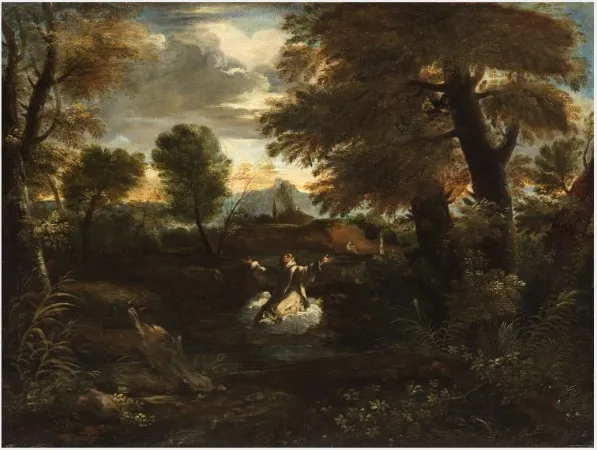
Landscape with Saint Bruno in Ecstasy is an oil painting by Pier Francesco Mola. It dates from 1649 and is held in the collection of the National Gallery of Ireland.
About this work
Overview
The composition balances a calm sky, muted clouds and a verdant foreground, creating a contemplative atmosphere that invites quiet reflection.
Pier Francesco Mola’s oil painting, Landscape with Saint Bruno in Ecstasy, dates from around 1649. The work presents a tranquil natural setting in which a solitary, dark‑clad figure kneels on a rock, his arms positioned in a gesture of intense spiritual focus. The composition balances a calm sky, muted clouds and a verdant foreground, creating a contemplative atmosphere that invites quiet reflection.
Subject & Meaning
At the centre of the scene stands Saint Bruno, founder of the Carthusian order, rendered in a moment of ecstatic prayer. His outstretched right arm and hand placed near his chest suggest a divine encounter or inner revelation. The surrounding landscape, with its gentle trees and soft light, reinforces the saint’s withdrawal from worldly concerns into a meditative communion with the divine.
Technique & Style
Mola employs chiaroscuro to model the saint’s form, allowing light to fall on his torso while the surrounding foliage recedes into shadow. The delicate handling of oil creates a luminous sky where blue peeks through cloud cover, and the layered foliage conveys depth. The painter’s restrained palette and smooth brushwork reflect the Roman Baroque sensibility of his contemporaries while maintaining a serene, almost lyrical quality.
History & Provenance
Created circa 1649, the canvas entered the collection of the National Gallery of Ireland, where it remains on display. Documentation traces its acquisition to the early 20th century, though earlier ownership records are sparse. The painting’s presence in the gallery underscores the institution’s commitment to representing Italian Baroque landscape traditions.
Context
Mola, a member of the Roman Academy, was known for integrating figures into expansive natural settings, a practice that aligned with the Counter‑Reformation’s emphasis on devotional imagery set within the created world. By placing Saint Bruno amid a peaceful landscape, the work reflects contemporary theological ideas that nature could serve as a conduit for spiritual experience, linking the saint’s asceticism with the harmony of the environment.
Artist & collection

Artist
Pier Francesco Mola, called Il Ticinese was an Italian painter of the High Baroque, mainly active around Rome.

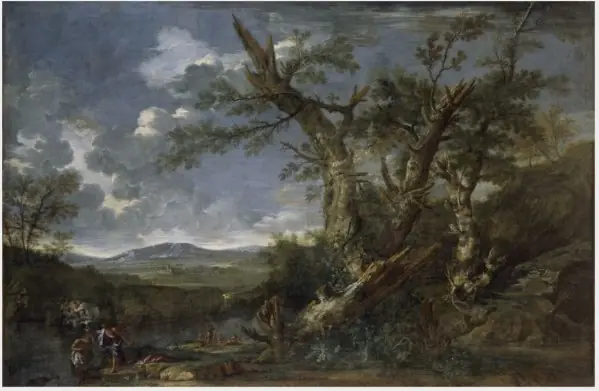 Landscape with the Baptism of Christ in the River Jordan
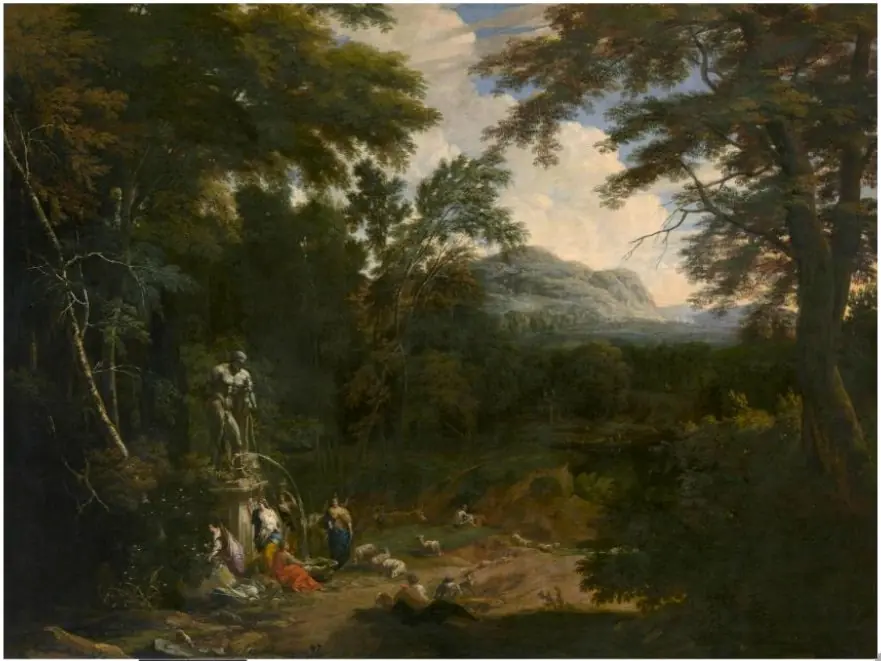 Landscape with figures at the foot of a fountain
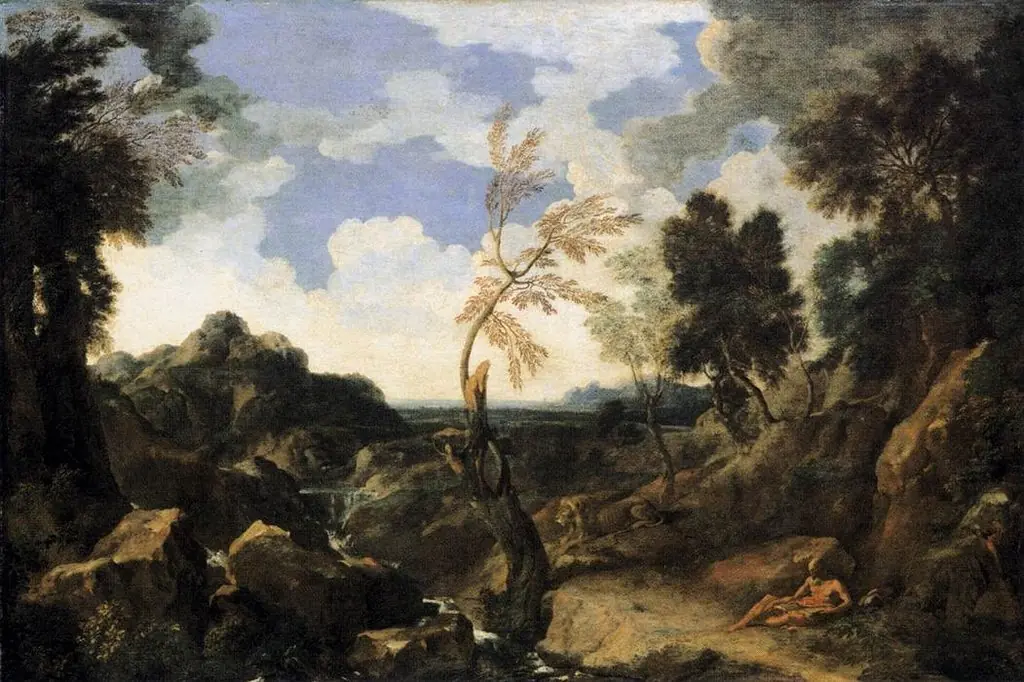 Landscape with Saint Jerome and the Lion
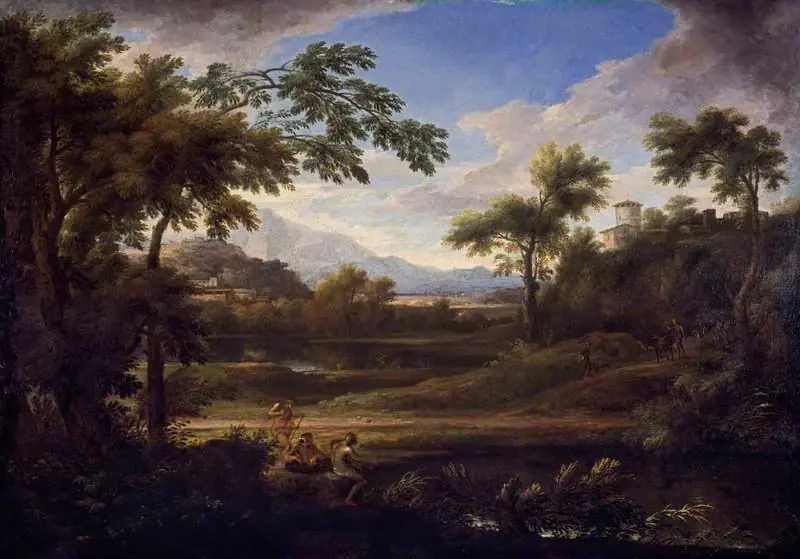 Classical Landscape
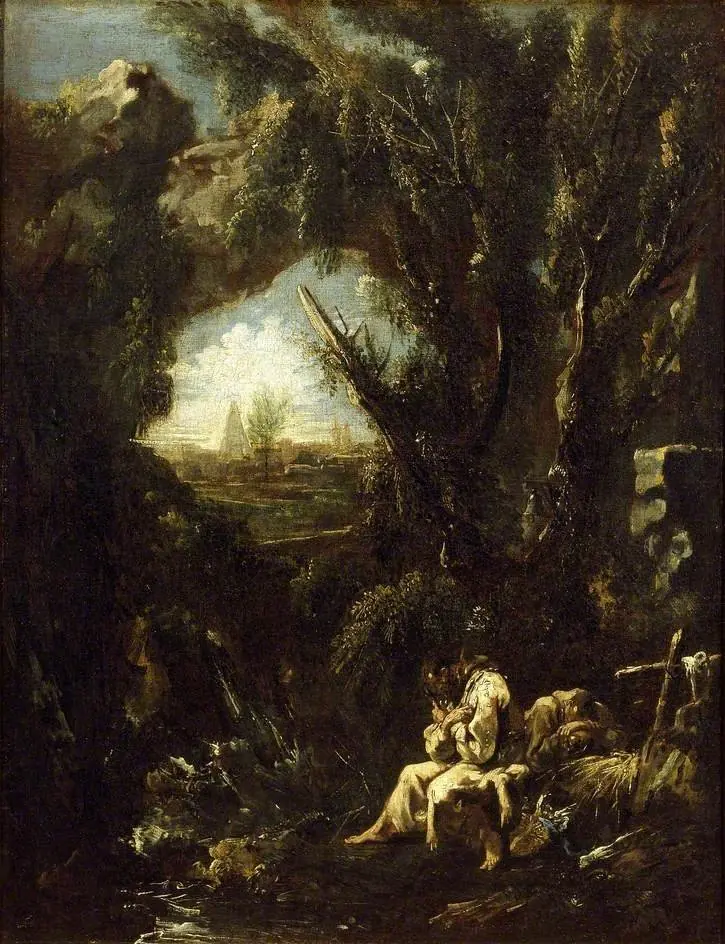 Landscape with two Hermits in meditation
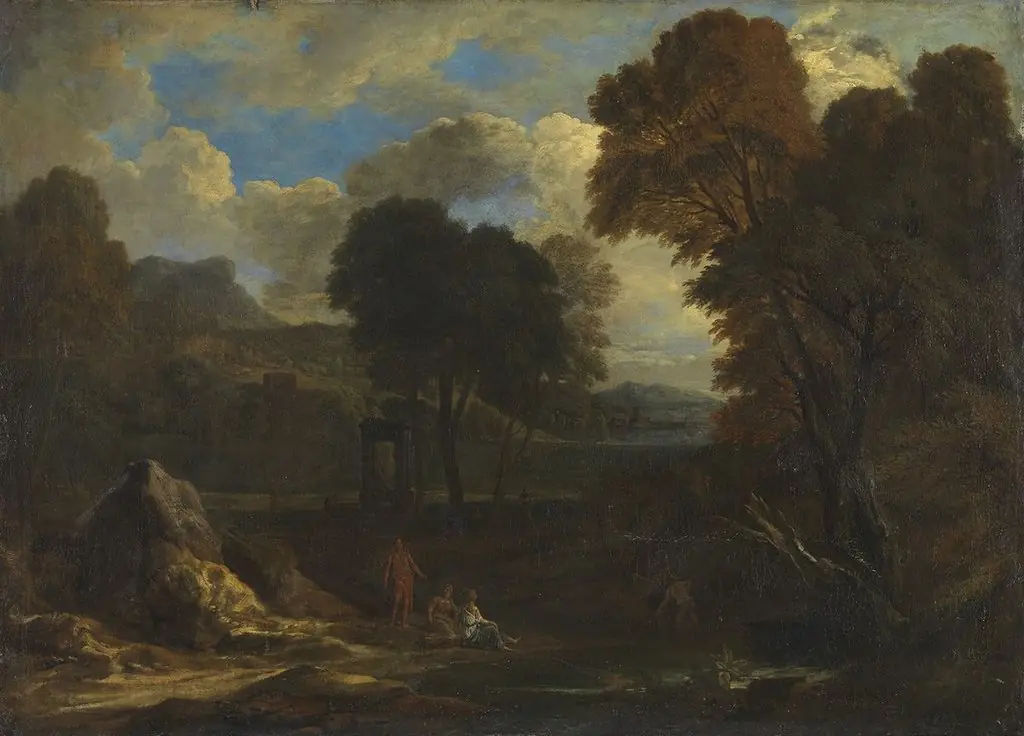 Landschaft
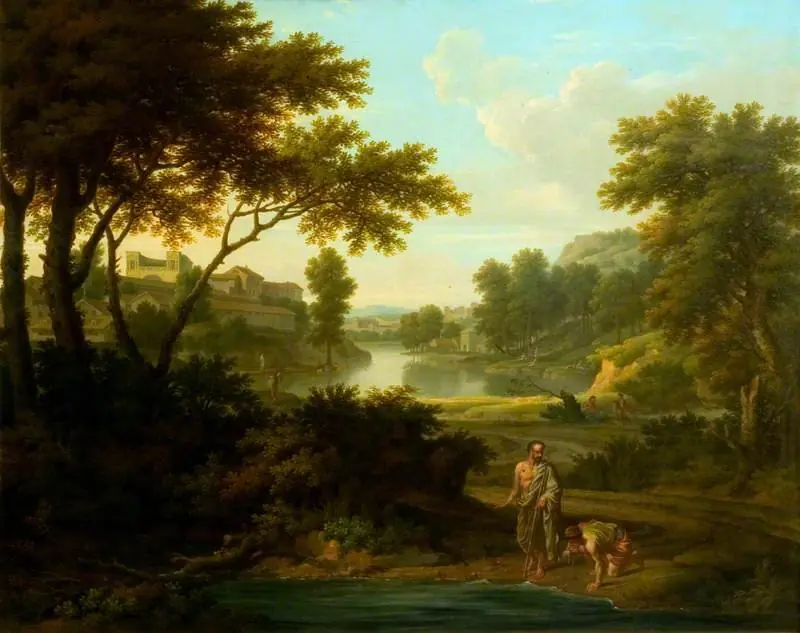 Diogenes Throwing away His Bowl (after Nicolas Poussin)
 Italian forest landscape with bathers
 Landscape