Artwork
Bathers Playing with a Crab
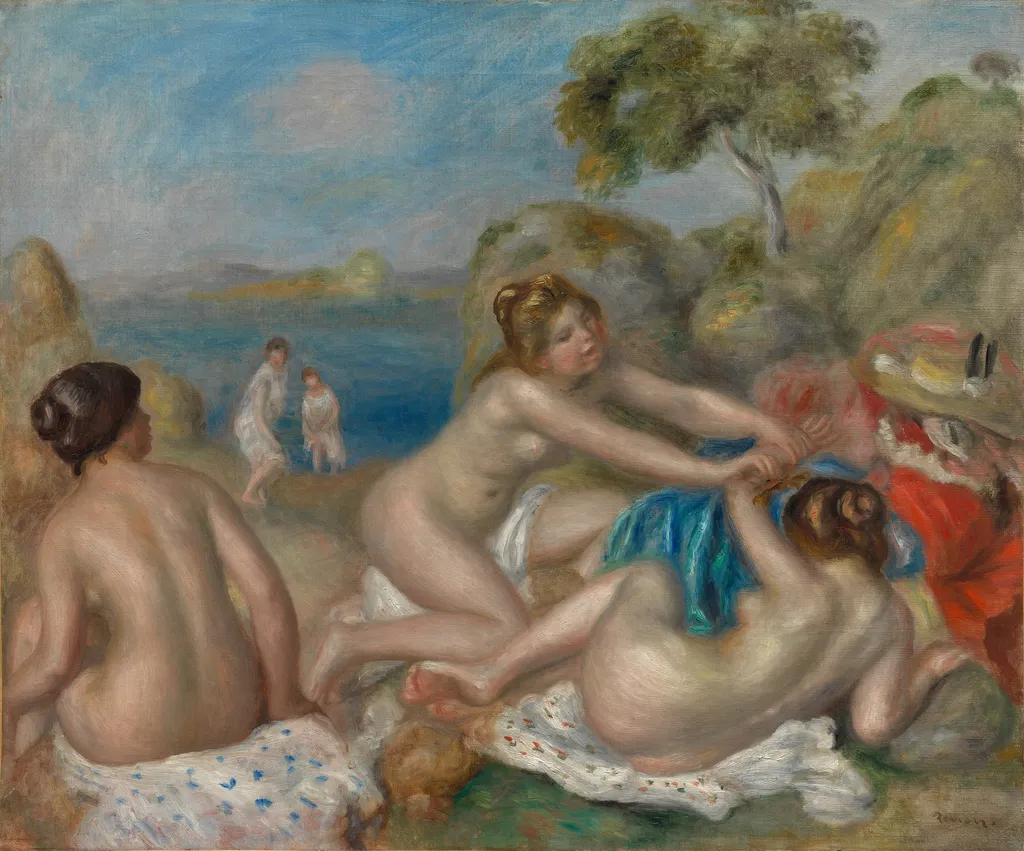
Bathers Playing with a Crab is an oil painting by the Impressionist artist Auguste Renoir. It dates from 1899 and is held in the collection of the Cleveland Museum of Art.
About this work
Overview
The painting captures a moment of leisure and play, emphasizing the tactile quality of the brushwork and the luminous atmosphere of the outdoor scene.
Pierre-Auguste Renoir's Bathers Playing with a Crab, executed in 1899, is a late-career oil painting that exemplifies the artist's enduring fascination with the female nude in a natural setting. The composition features a group of figures situated on a sun-dappled grassy bank near water, rendered with the soft, diffused light characteristic of Renoir's mature style. In the foreground, a reclining woman rests on a white cloth, her form defined by warm, rosy skin tones that contrast with the cool greens of the surrounding foliage and the pale blue of the sky. She holds a small blue object, identified by the title as a crab, which serves as a focal point for the interaction between the figures. Another seated figure engages with her, while additional bathers occupy the background, creating a sense of depth and casual intimacy. Painted during a period when Renoir was increasingly focused on the sensuous texture of flesh and the harmonious integration of figures with their environment, the work reflects his shift away from the sharper contours of his earlier Impressionist phase toward a more monumental, classical approach to the human form. The painting captures a moment of leisure and play, emphasizing the tactile quality of the brushwork and the luminous atmosphere of the outdoor scene.
Subject & Meaning
The composition captures a fleeting, everyday moment: a group of bathers engaged in light‑hearted activity. A woman reclines on a cloth, holding a small blue object that suggests a crab, while another figure turns her back, emphasizing the informal, spontaneous nature of the gathering.
Technique & Style
Renoir employs a loose, impasto application, allowing thick brushstrokes to remain visible and give the surface a tactile quality. The palette is muted, with pinkish flesh tones, green foliage, and a soft blue sky, reinforcing the gentle atmosphere of the outdoor setting.
History & Provenance
Created at the close of the 19th century, the painting reflects Renoir’s late‑period focus on leisure scenes. It entered the Cleveland Museum of Art’s holdings through acquisition, where it remains on display as an example of his mature oil work.
Own this work as a print
Artist & collection
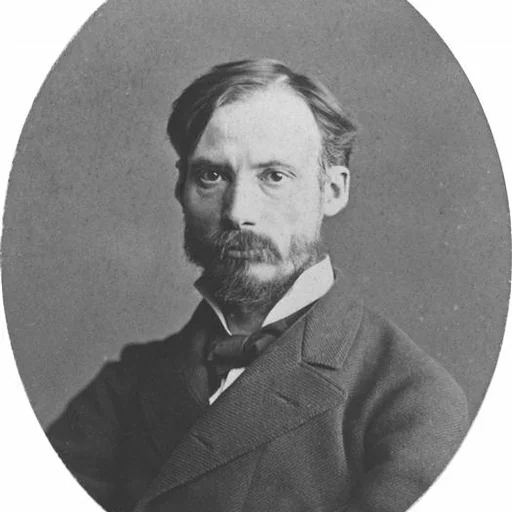
Artist
Pierre-Auguste Renoir was born on 25 February 1841 in Limoges, the son of a tailor and a seamstress.