Artwork
Girl Tatting
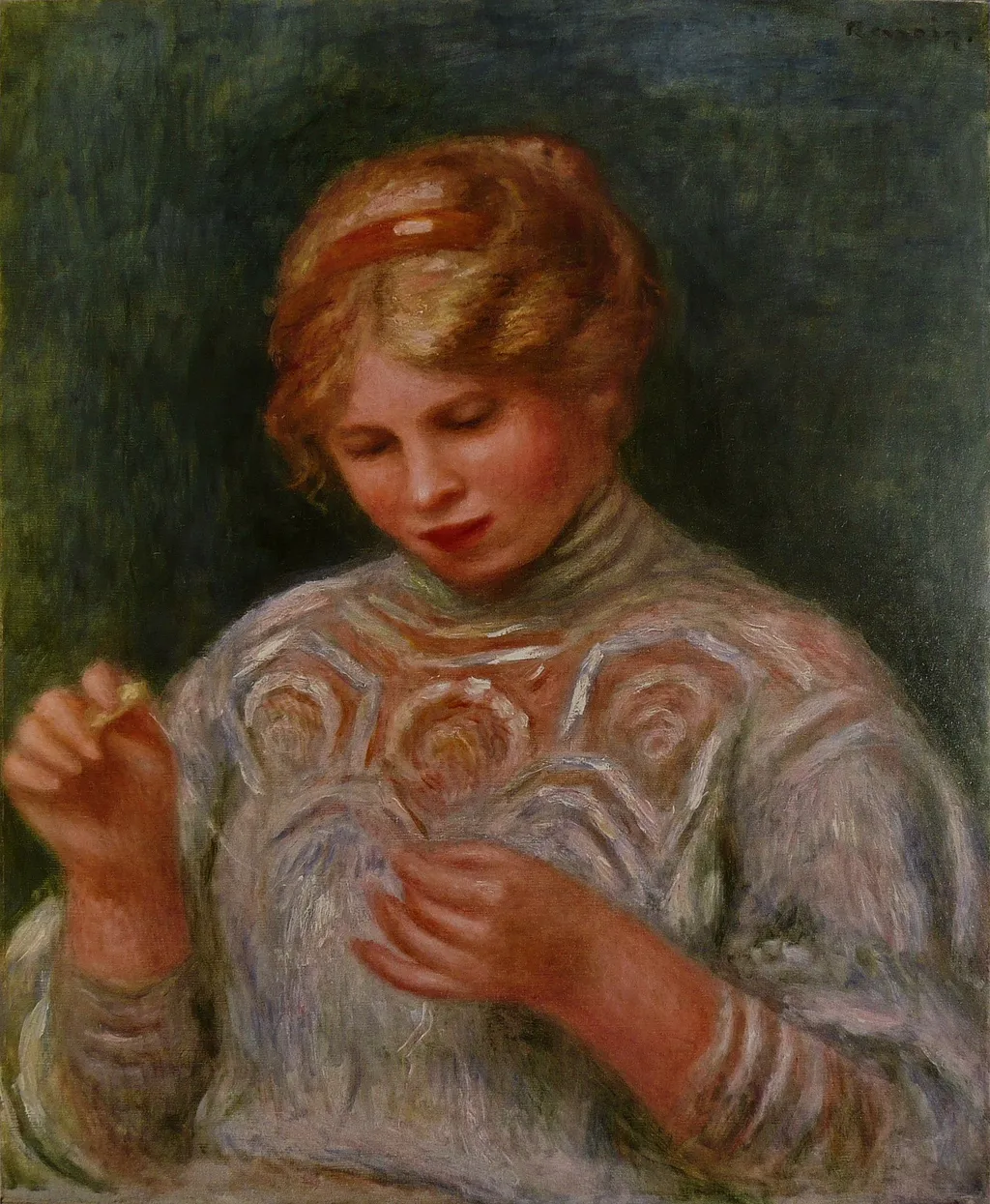
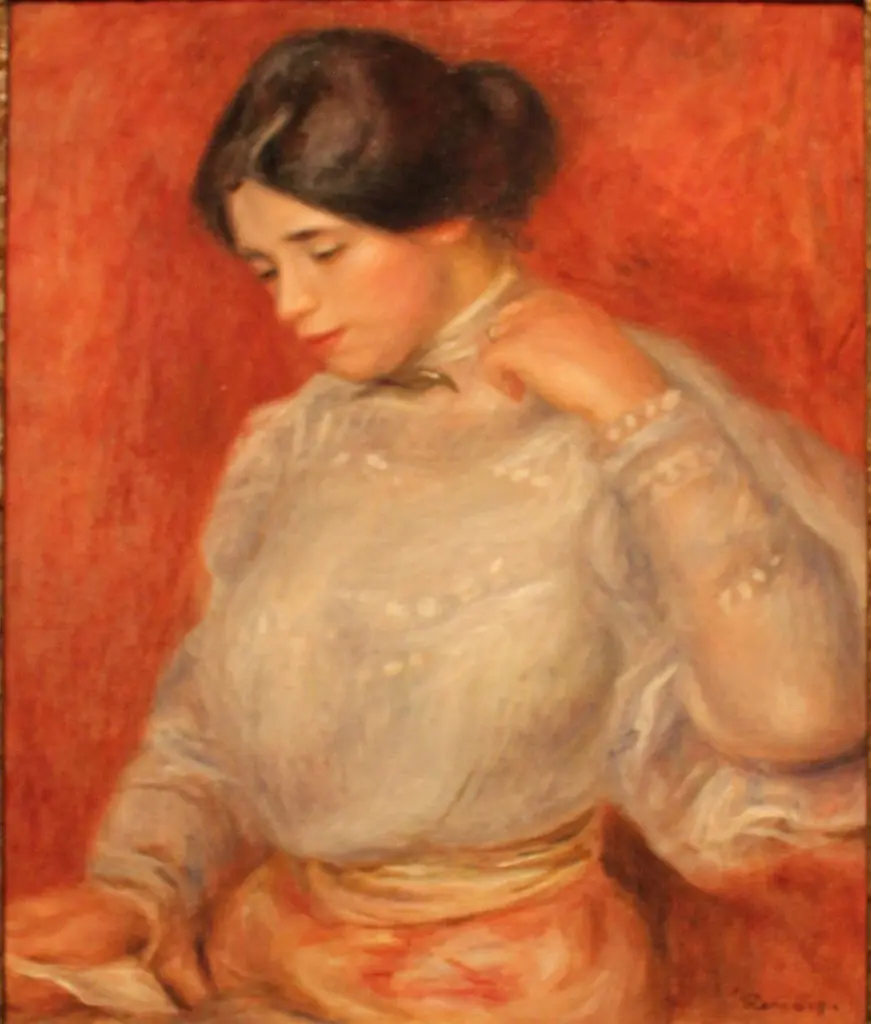
Girl Tatting is an oil painting by the Impressionist artist Auguste Renoir. It dates from 1906 and is held in the collection of the Philadelphia Museum of Art.
About this work
Overview
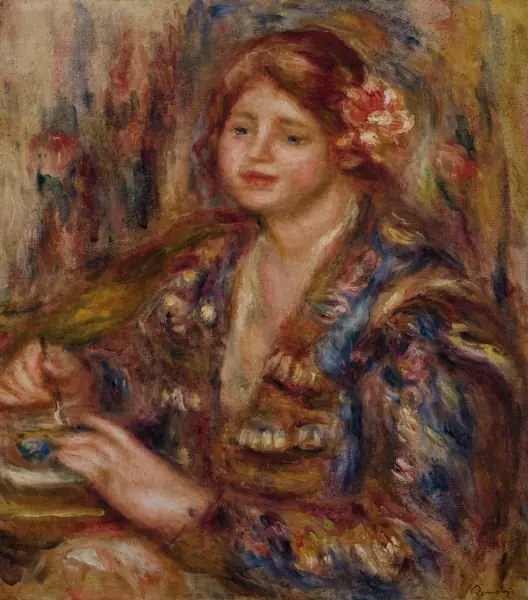
Painted in 1906, Girl Tatting is an oil on canvas work by Pierre-Auguste Renoir, depicting a young girl engaged in the delicate craft of tatting.
Painted in 1906, Girl Tatting is an oil on canvas work by Pierre-Auguste Renoir, depicting a young girl engaged in the delicate craft of tatting. The piece resides in the Philadelphia Museum of Art, where it exemplifies Renoir’s late-period focus on intimate, everyday moments. Its subdued palette and gentle lighting reflect a quietude characteristic of his later years, as he turned increasingly toward domestic scenes and tender human gestures.
Subject & Meaning
The subject is a girl absorbed in the meticulous act of tatting, a handcraft involving thread and a shuttle. Her downward gaze and slight smile suggest quiet concentration, not performance. The absence of narrative context or external disturbance emphasizes solitude and the dignity of routine labor. Renoir portrays the act not as laborious, but as a meditative ritual, aligning the girl’s focus with broader themes of stillness and inner life.
Technique & Style
Renoir employs soft brushwork and blended tones to render the girl’s white dress and luminous skin, avoiding sharp outlines. The muted green background recedes gently, directing attention to the figure’s form and expression. Light falls subtly across her face and hands, modeling volume without harsh contrast. The intricate patterns on her dress are suggested rather than precisely detailed, reinforcing the painting’s hushed, atmospheric quality.
History & Provenance
Completed in 1906, the painting was acquired by the Philadelphia Museum of Art in 1929 through the John G. Johnson Collection, a significant bequest of European art. It has remained in the museum’s permanent holdings since, largely undisturbed by public exhibitions or scholarly controversy. Its provenance reflects Renoir’s enduring appeal to American collectors in the early 20th century, particularly those drawn to his intimate genre scenes.
Context
In his final years, Renoir, suffering from arthritis, increasingly turned to domestic subjects and children as subjects of quiet contemplation. Girl Tatting aligns with a series of works from this period that emphasize stillness, tactile detail, and the rhythm of daily life. The painting reflects a shift away from the vibrancy of his Impressionist youth toward a more introspective, almost classical sensibility rooted in form and quietude.
Legacy
Though not among Renoir’s most widely reproduced works, Girl Tatting exemplifies his late artistic priorities: emotional restraint, tactile sensitivity, and the elevation of ordinary moments. It contributes to the understanding of his evolution from Impressionist innovator to a painter of enduring, quiet humanity. The work continues to be studied for its nuanced handling of light and its empathetic portrayal of youthful focus.
Own this work as a print
Artist & collection

Artist
Pierre-Auguste Renoir was born on 25 February 1841 in Limoges, the son of a tailor and a seamstress.