Artwork
The White Pierrot
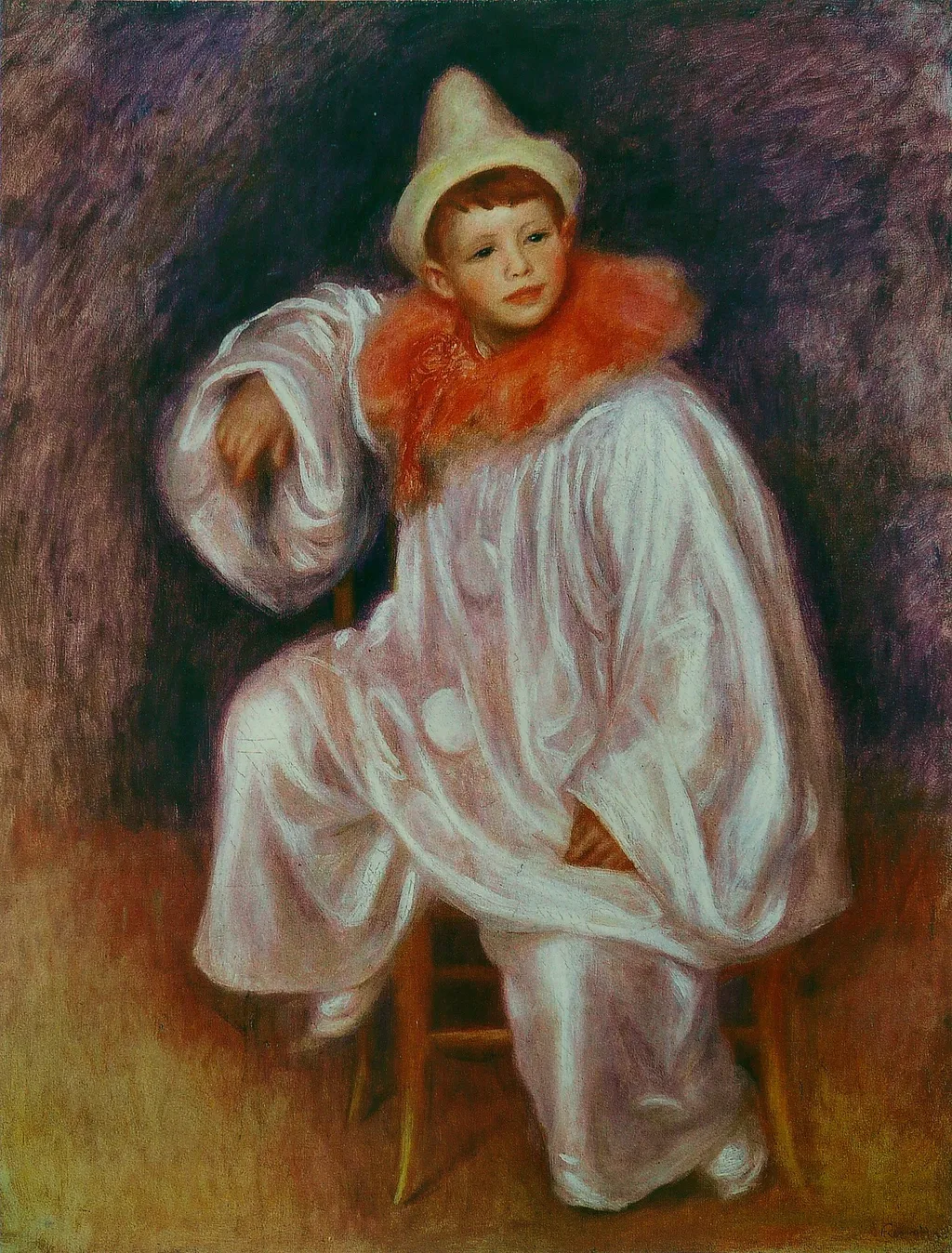
The White Pierrot is an oil painting by the Post-Impressionist artist Auguste Renoir. It dates from 1901 and is held in the collection of the Detroit Institute of Arts.
About this work
Overview
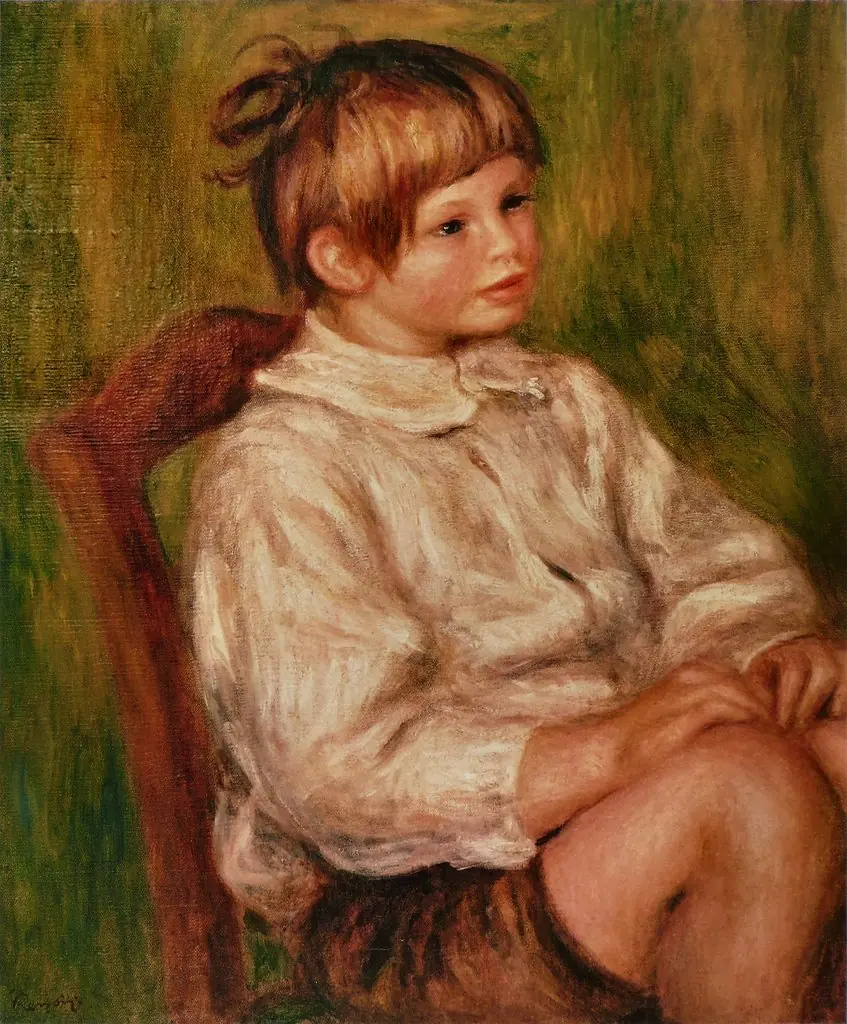
Pierre-Auguste Renoir painted The White Pierrot in 1901 using oil on canvas. The work depicts a young boy seated in a chair, his figure illuminated against a dark, unadorned background. The painting is part of the collection of the Detroit Institute of Arts.
Subject & Meaning
The sitter is presented as a pierrot, a theatrical figure traditionally dressed in white. He wears a white costume with a ruffled red collar and a light-colored hat, his right hand resting on his knee. The stark contrast between his pale attire and the dark backdrop draws attention to his youthful presence.
Technique & Style
Renoir employs soft, fluid brushwork, particularly evident in the rendering of the boy’s clothing, which appears almost sketch‑like. Warm hues of red, white and brown dominate the palette, while subtle shading beneath the chin adds depth. The overall effect is a loose, impressionistic treatment that emphasizes light and color over precise detail.
History & Provenance
Created at the turn of the twentieth century, The White Pierrot entered the Detroit Institute of Arts’ holdings at an unspecified date, where it remains on display. Its provenance traces directly to Renoir’s late period, reflecting his continued interest in portraiture and theatrical subjects.
Own this work as a print
Artist & collection
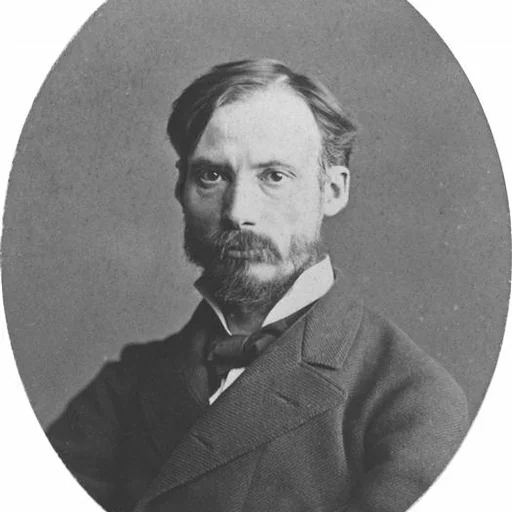
Artist
Pierre-Auguste Renoir was born on 25 February 1841 in Limoges, the son of a tailor and a seamstress.