Artwork
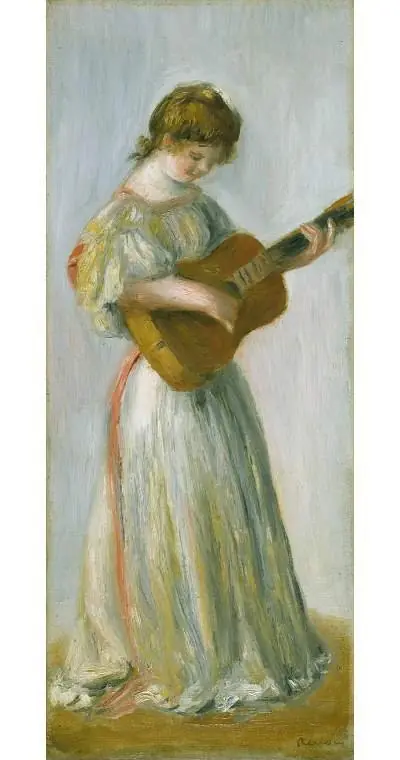
Woman with a Guitar
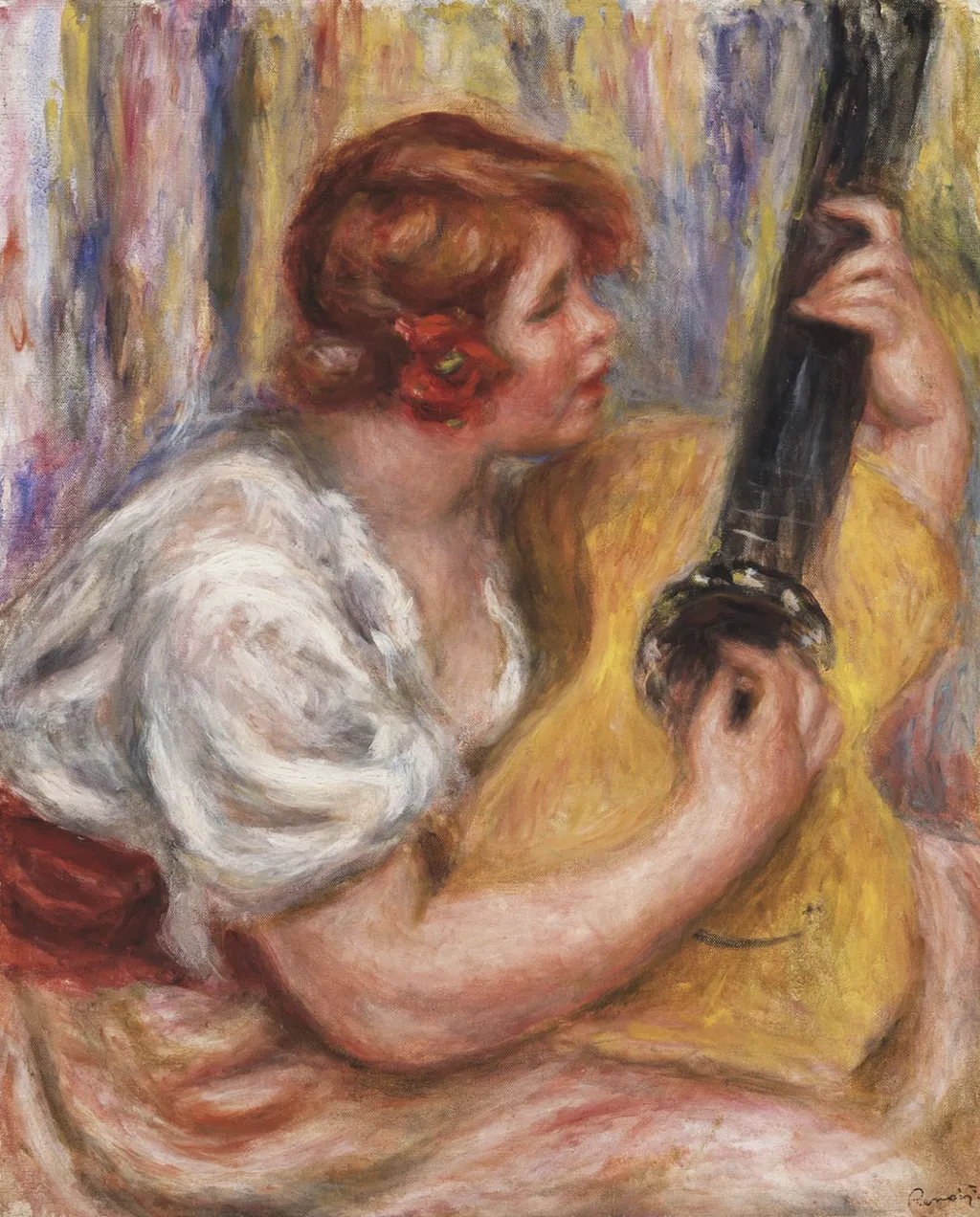
Woman with a Guitar is an oil painting by the Impressionist artist Auguste Renoir. It dates from 1918 and is held in the collection of the Philadelphia Museum of Art.
About this work
Overview
Painted in 1918, Woman with a Guitar is an oil on canvas work by Pierre-Auguste Renoir, reflecting his late style. It portrays a seated woman with a guitar, rendered in soft, blended tones. The painting resides in the Philadelphia Museum of Art, where it exemplifies Renoir’s enduring interest in intimate, domestic scenes during his final years.
Subject & Meaning
The figure, a woman with short curly red hair and a white blouse accented by a red sash, holds a guitar with quiet focus. Her downward gaze and blurred features suggest introspection rather than performance. The absence of narrative context invites contemplation of solitude and quietude, aligning with Renoir’s later preoccupation with inner calm and personal resonance.
Technique & Style
Renoir employs loose, fluid brushwork and muted chromatic harmonies of yellow, pink, and purple to envelop the figure in a hazy atmosphere. The face is intentionally softened, avoiding sharp definition, while the guitar’s form is suggested rather than meticulously detailed. This approach emphasizes mood over precision, extending his Impressionist concerns into a more tactile, tactile abstraction.
History & Provenance
Created during Renoir’s final decade, the painting was acquired by the Philadelphia Museum of Art in the 20th century. Its provenance traces directly to the artist’s estate, with no known public exhibitions prior to its institutional acquisition. It remains one of fewer than a dozen late works featuring musical subjects in his oeuvre.
Context
In 1918, Renoir was severely afflicted by arthritis, limiting his mobility yet not his productivity. He painted from memory and model studies, often revisiting themes of leisure and domesticity. Woman with a Guitar reflects this period’s shift toward lyrical simplification, where form is distilled into emotional suggestion rather than physical accuracy.
Legacy
Its presence in a major American collection underscores its role in bridging French Impressionism with 20th-century modern sensibilities.
The painting contributes to the understanding of Renoir’s late evolution, where technical constraints fostered a more poetic language. It stands as a quiet counterpoint to his earlier vibrant scenes, illustrating how physical limitation could deepen expressive focus. Its presence in a major American collection underscores its role in bridging French Impressionism with 20th-century modern sensibilities.
Own this work as a print
Artist & collection
Artist
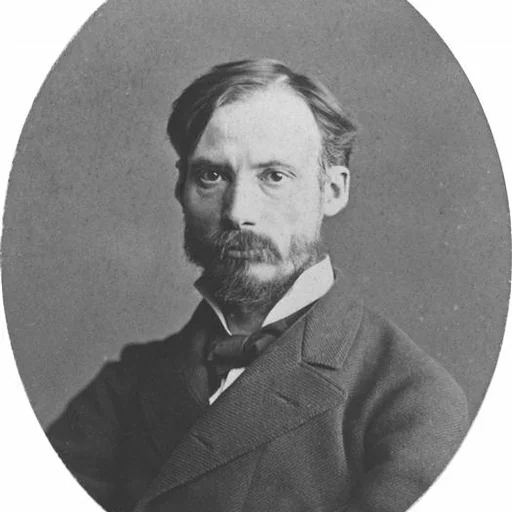
Pierre-Auguste Renoir was born on 25 February 1841 in Limoges, the son of a tailor and a seamstress.