Artwork
Boulevard
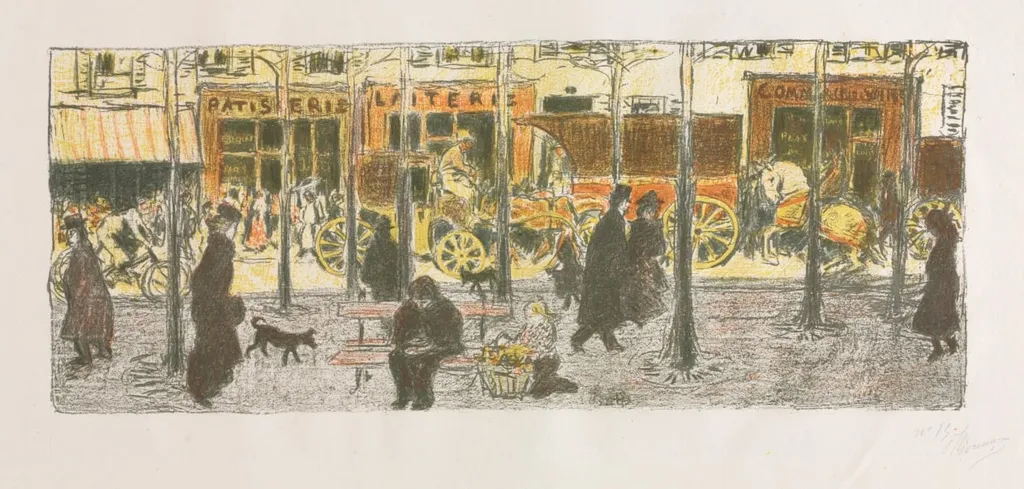
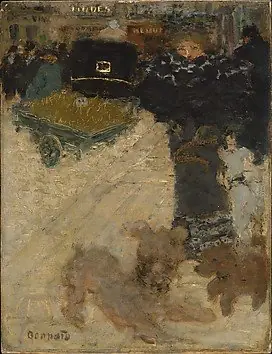
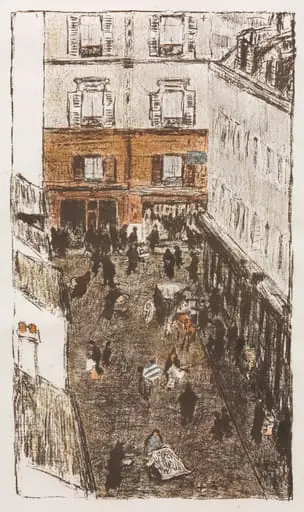
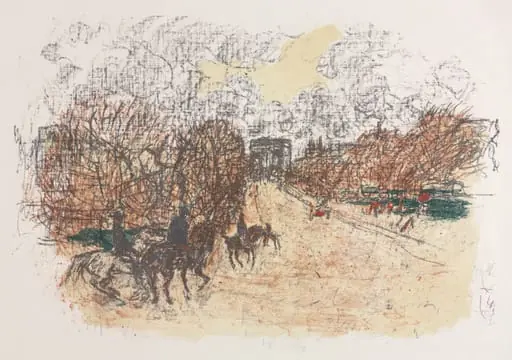
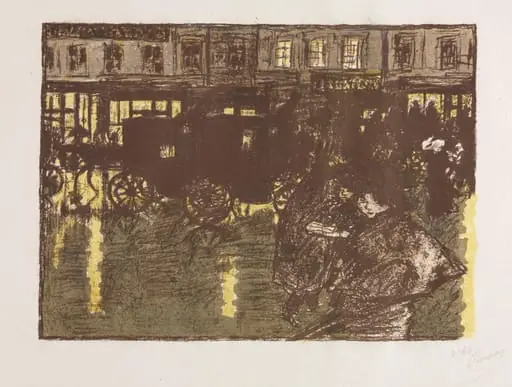
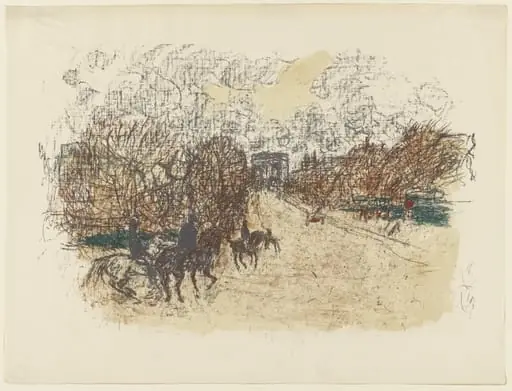
Boulevard is a print by the Impressionist artist Pierre Bonnard. It dates from 1899 and is held in the collection of the Cleveland Museum of Art.
About this work
He watched life from his window and recorded small, fleeting scenes — like this one in the Bois de Boulogne area.
You see a busy city street at night, lit by yellow lamps and filled with people walking, talking, and shopping. Cars and trees line the road, and bright signs glow above the crowd. The scene feels alive, buzzing with quiet energy.
This print is part of a series where Bonnard focused on ordinary moments in Paris, not grand landmarks. He watched life from his window and recorded small, fleeting scenes — like this one in the Bois de Boulogne area. His eye for daily detail makes the familiar feel fresh.
Look next at the work of Pierre Bonnard (French, 1867–1947).
Overview
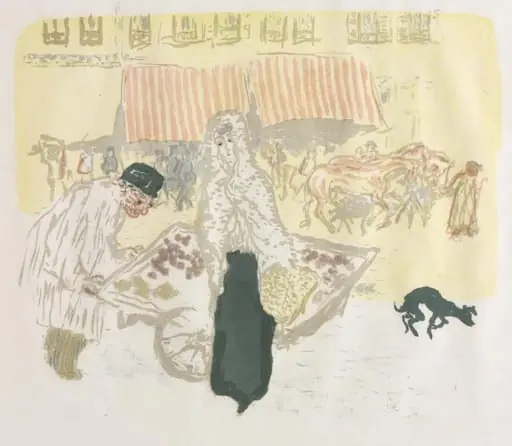
This suite of color lithographs captures everyday moments in early 20th-century Paris, drawn from Pierre Bonnard’s intimate observations rather than grand public spectacles. Executed between 1890 and 1910, the prints focus on quiet urban rhythms—pedestrians, vendors, and domestic outings—seen from his Montmartre studio or while walking through local neighborhoods. The series avoids iconic landmarks, instead privileging the subtle textures of ordinary life.
Subject & Meaning
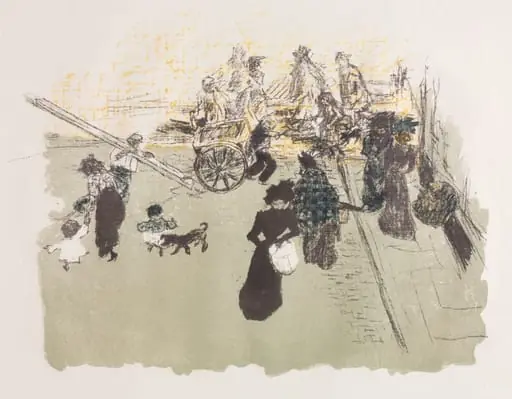
Bonnard’s subjects are unremarkable yet deeply human: women in fashionable attire, children at play, dogs on leashes, and shopkeepers at work. These figures populate parks, sidewalks, and residential streets, embodying the emerging modern Parisian identity. The absence of monumental architecture shifts attention to the private rituals of city dwellers, suggesting that meaning resides not in grandeur but in the fleeting, repeated gestures of daily existence.
Technique & Style
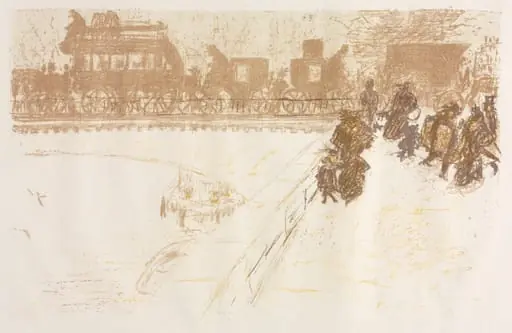
Bonnard employed layered color lithography to achieve subtle tonal harmonies and atmospheric effects. Nocturnal scenes feature gaslight glows reflected on wet pavement, rendered in luminous yellows against deep indigos and grays. His loose, sketch-like lines and flattened perspectives recall Japanese prints, while his use of color is intuitive, prioritizing mood over realism. The compositions often frame figures at the edge of the scene, as if caught unawares.
History & Provenance
The prints were produced during Bonnard’s early career, shortly after he joined the Nabis group and began experimenting with decorative printmaking. They were likely issued in small editions for private collectors and art societies, not mass distribution. Several were exhibited in Parisian galleries in the 1890s, gaining attention for their departure from traditional urban imagery. Most remain in private and institutional collections in Europe and North America.
Context
These works emerged amid rapid urbanization and the rise of the flâneur culture in Paris. While photographers and painters documented boulevards and cafés, Bonnard turned inward, observing from windows and side streets. His focus on domestic leisure—such as strolls in the Bois de Boulogne—reflected a broader cultural shift toward valuing private experience over public spectacle in the fin de siècle.
Legacy
Bonnard’s lithographs influenced later artists interested in intimate urban observation, including the Ashcan School and mid-century printmakers. Their quiet intimacy and emphasis on color over narrative prefigured aspects of modernist painting. Though less celebrated than his paintings, these prints remain significant for their quiet redefinition of what urban life could be in art—unheroic, unmonumental, and deeply personal.
Artist & collection
Artist
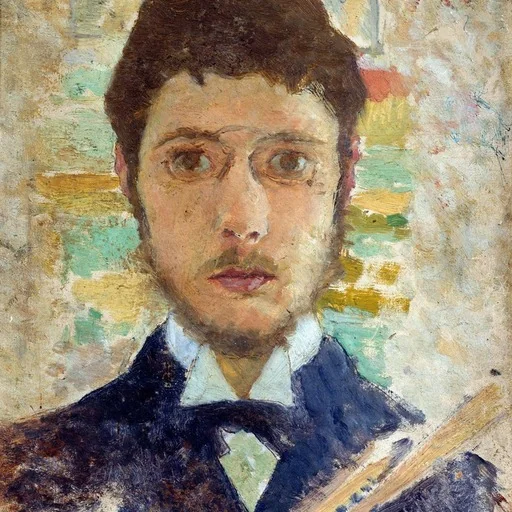
Pierre Bonnard was a French painter, illustrator and printmaker, known especially for the stylized decorative qualities of his paintings and his bold use of color.