Artwork
Portrait of Prince Alexander Bezborodko
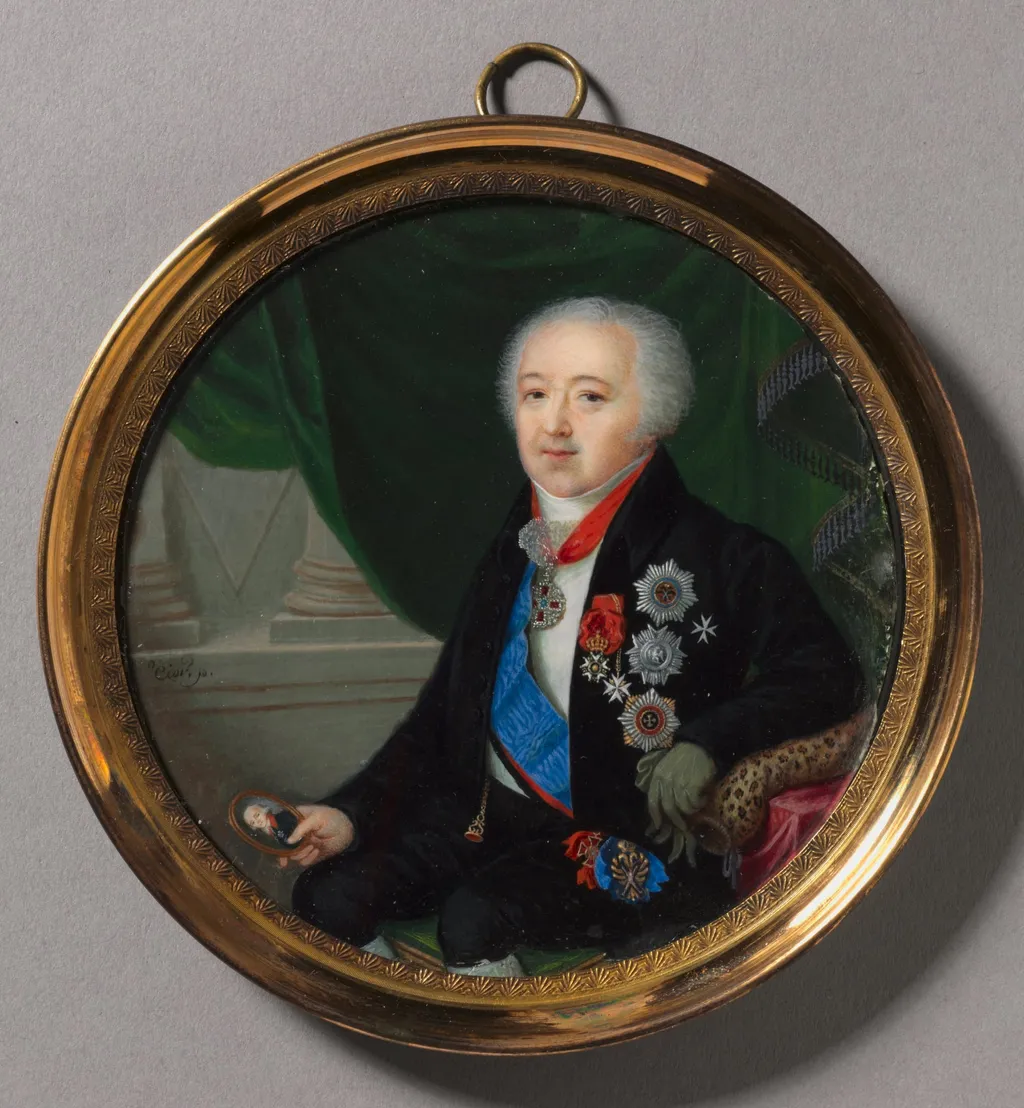
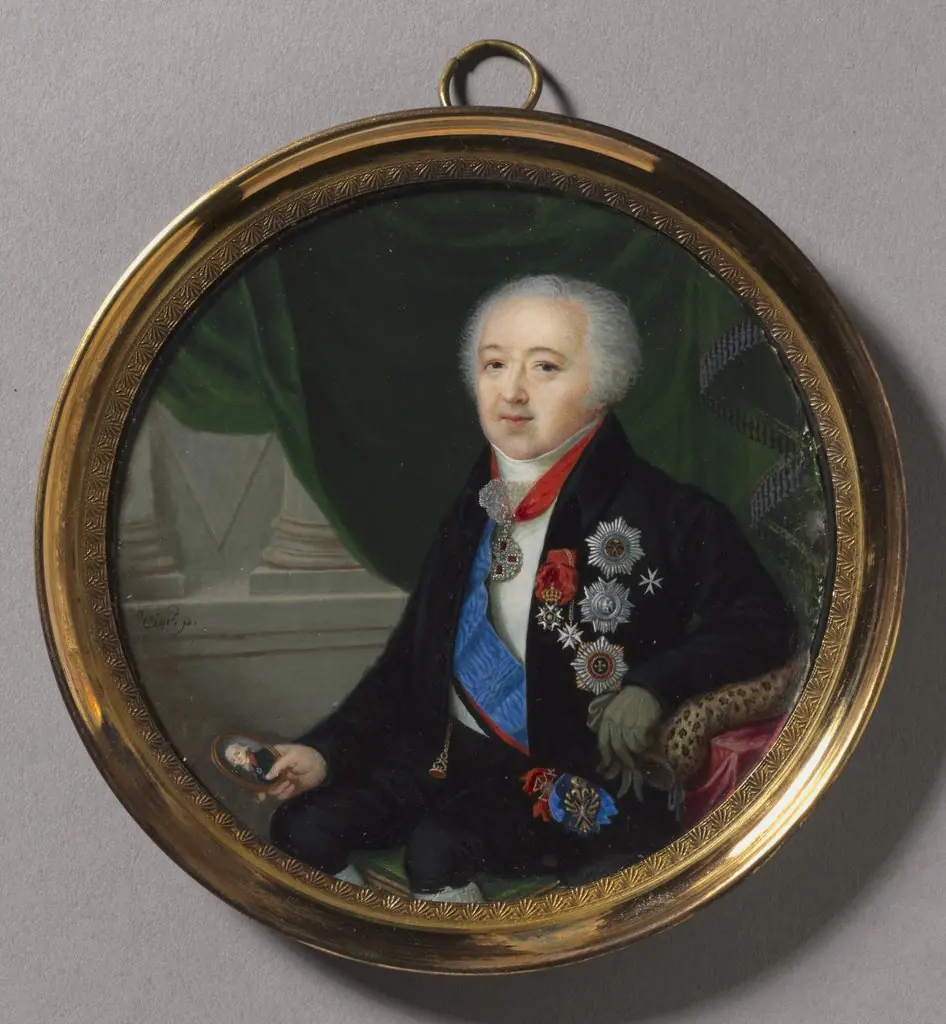
Portrait of Prince Alexander Bezborodko is an unspecified portrait miniature by the Rococo painting artist Pierre Charles Cior. It dates from 1704 and is held in the collection of the Cleveland Museum of Art.
About this work
This portrait shows Prince Alexander Bezborodko in a dark blue military coat with gold trim.
This portrait shows Prince Alexander Bezborodko in a dark blue military coat with gold trim. His white cravat and powdered wig look stiff and formal. The background is plain, so your eyes stay on his serious face.
Cior painted this in the 1790s, when Bezborodko ran Russia for Catherine the Great. The artist used soft light on the face to hide wrinkles. It’s not flashy—just a quiet record of a powerful man.
Look up Pierre-Charles Cior (French, 1769–1840) if you like this calm, real style.
Overview
This miniature portrait depicts Prince Alexander Bezborodko, a leading statesman of late 18th-century Russia, painted by French artist Pierre-Charles Cior around 1795–1798. Executed in watercolor on ivory, the work captures Bezborodko in formal court attire during his tenure as chancellor under Catherine the Great. The composition is restrained, emphasizing his demeanor over ornamental display, reflecting the quiet authority of his position.
Subject & Meaning
Bezborodko is portrayed as a disciplined administrator, not a flamboyant noble. His expression is composed, his posture upright, conveying gravitas. The inclusion of Paul I’s miniature in his hand signals loyalty to the incoming monarch, while the orders on his chest denote his status within the imperial hierarchy. The leopard pillow and classical backdrop suggest refined taste, but the focus remains on his role as a servant of the state, not personal glory.
Technique & Style
Cior employed delicate watercolor washes on ivory to render fine details with precision. Soft lighting models the face, minimizing age while preserving individuality. The uniform’s gold trim and sashes are rendered with subtle tonal shifts, avoiding gilding or exaggeration. The background is unadorned, directing attention to the sitter’s features. The proportions of the lower body appear compressed, possibly due to compositional constraints or early-career inexperience.
History & Provenance
Pierre-Charles Cior, trained in Spain and later active in Russia, created this work during his time at the Russian court in Saint Petersburg. It was likely commissioned by Bezborodko himself or a close associate during his peak influence. The portrait remained in Russian imperial collections until the 20th century, later entering a private collection. Its survival in good condition reflects its significance as a document of courtly portraiture in the late Enlightenment era.
Context
Painted during the transition from Catherine the Great’s reign to that of Paul I, the portrait captures a moment of political continuity. Bezborodko, instrumental in administrative reforms, represented the bureaucratic elite that stabilized the empire. Unlike theatrical court portraits, this miniature favors understatement, aligning with the Enlightenment ideal of reason over spectacle. Cior’s style, influenced by Spanish miniaturists, brought a quiet realism to Russian imperial imagery.
Legacy
This portrait stands as a rare example of intimate state portraiture in miniature form, distinguishing itself from larger, more ceremonial depictions of Russian nobility. Cior’s restrained technique influenced later court artists seeking authenticity over grandeur. The work remains a key reference for understanding how bureaucratic power was visually encoded in late imperial Russia, preserving the image of a statesman whose influence extended beyond the throne.
Artist & collection
Artist
Pierre Charles Cior (1769 – after 1838), a French painter of historical subjects, portraits, and miniatures, was born in Paris. He was a pupil of Bauzin, and became miniature painter to the king of Spain. He died in 1838.