Artwork
St. Nazaire
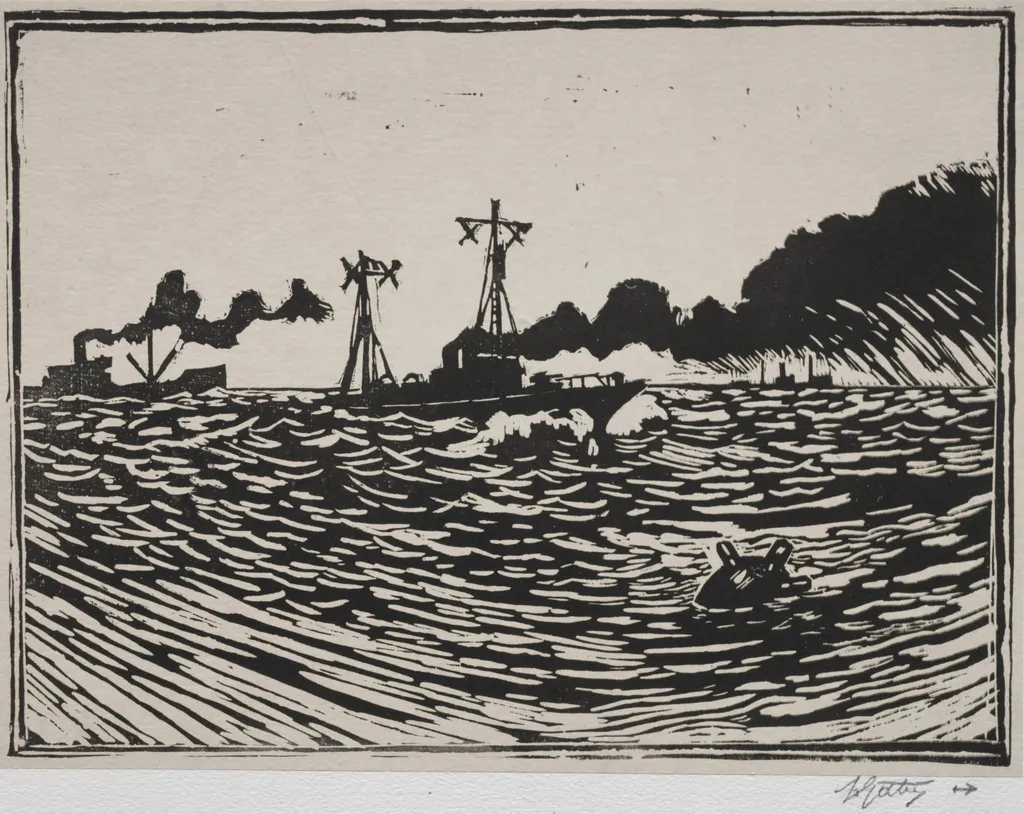
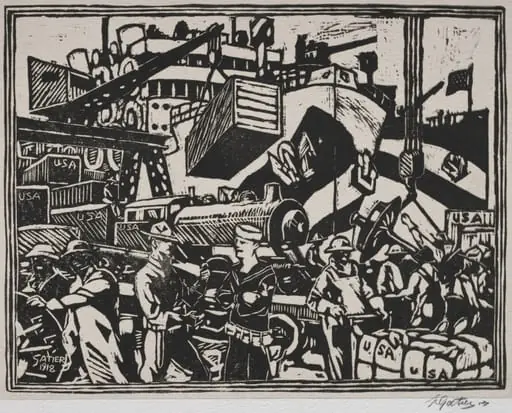
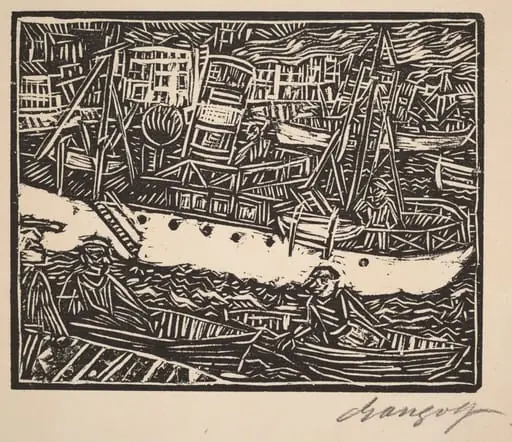
St. Nazaire is a print by Pierre Louis Gatier. It dates from 1912 and is held in the collection of the Cleveland Museum of Art. St.
About this work
Overview
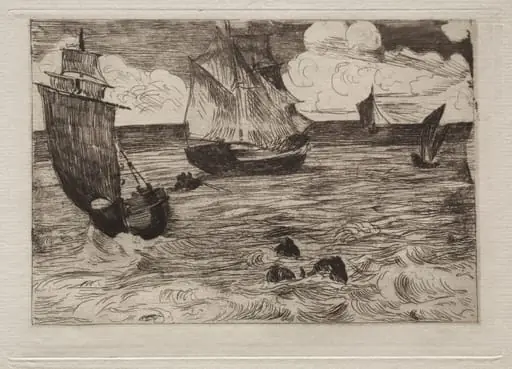
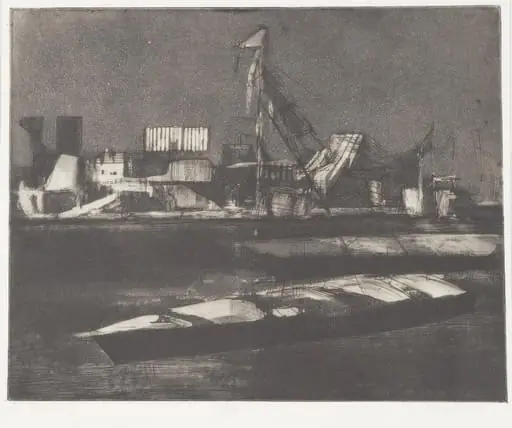
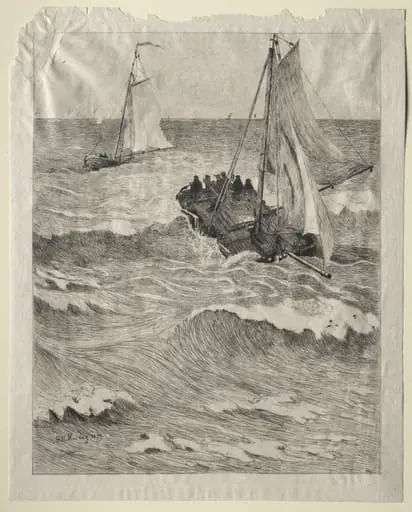
St. Nazaire is a black-and-white print made around 1912 by French artist Pierre Louis Gatier. It depicts a bustling harbor and is part of the collection at The Cleveland Museum of Art. The composition captures motion through dynamic lines and stark tonal contrasts, emphasizing the energy of the maritime environment without relying on color or fine detail.
Subject & Meaning
The scene portrays the French port of Saint-Nazaire, teeming with vessels of varying sizes navigating choppy waters. Windmills and coastal structures anchor the horizon, suggesting a working waterfront. The storm-laden sky and agitated waves imply a moment of tension or transition, reflecting the rhythm of daily labor and nature’s unpredictability in a port town.
Technique & Style
Gatier employed bold, simplified forms and expressive linework to convey movement. Waves and clouds are rendered with rapid, undulating strokes, creating a sense of flux. The high contrast between dark and light areas enhances depth and drama, while minimal detail invites the viewer to perceive the scene through abstraction rather than realism.
History & Provenance
The print entered The Cleveland Museum of Art’s collection as part of its broader engagement with early 20th-century European prints. Its origin traces to Gatier’s observations of coastal France during a period of industrial expansion. No record of prior ownership or exhibition history beyond institutional acquisition is publicly documented.
Context
Created during a time of rapid modernization in French coastal communities, the work aligns with broader artistic interests in capturing industrial and maritime life. While not part of a named movement, its stylistic economy echoes contemporaneous printmaking trends that favored expressive line over academic detail.
Legacy
St. Nazaire remains a representative example of early 20th-century French printmaking that prioritizes atmosphere and motion over literal representation. It contributes to the understanding of how artists interpreted everyday scenes with minimal means, influencing later generations focused on abstraction and emotional resonance in graphic art.
Own this work as a print
Artist & collection