Artwork
Study of Madame Marie Cantacuzène; Study of Standing Female Nude
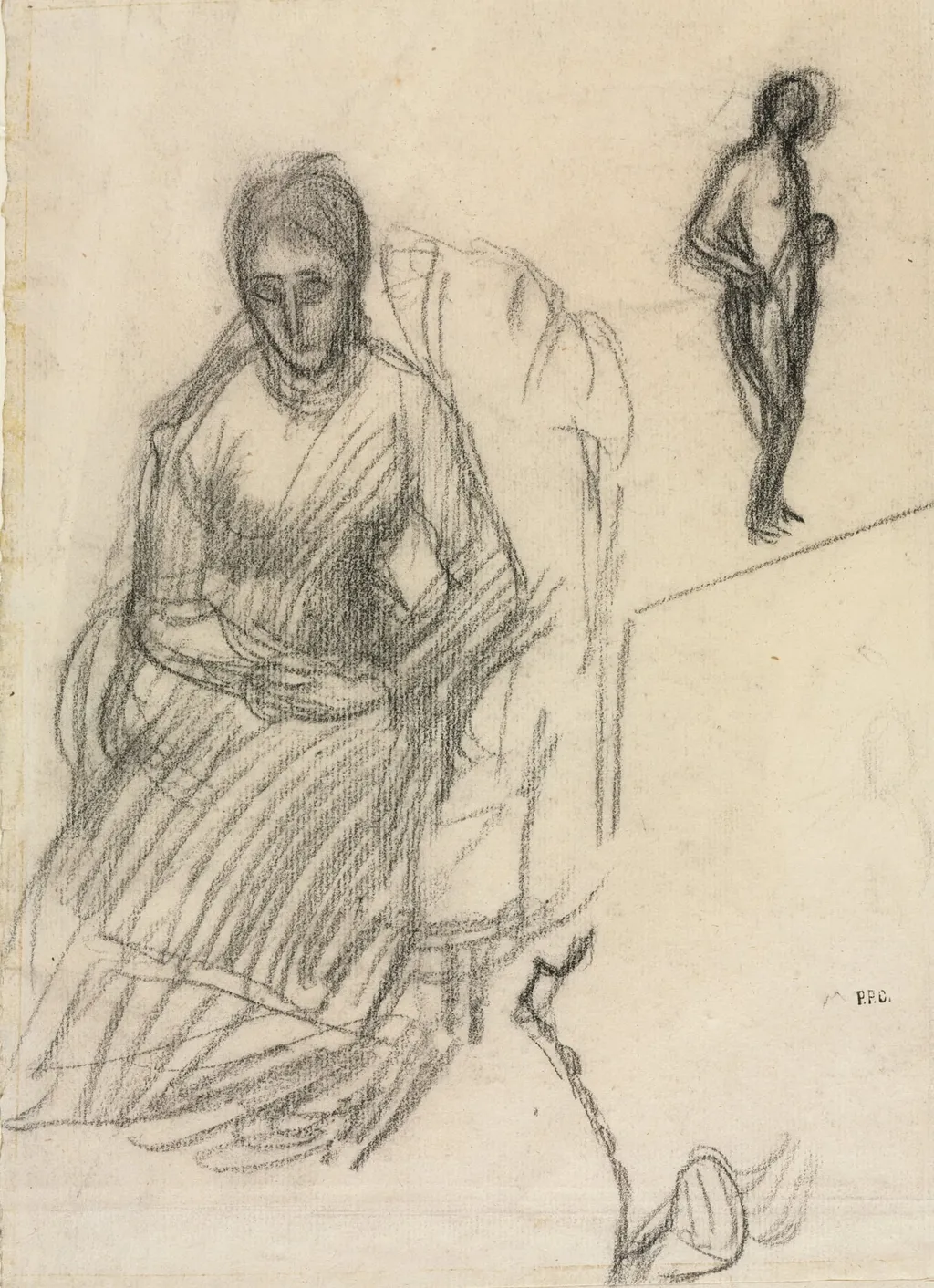
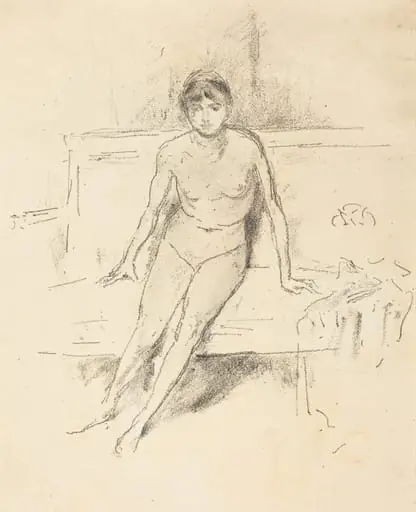
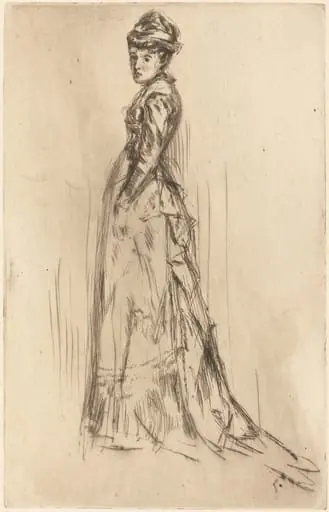
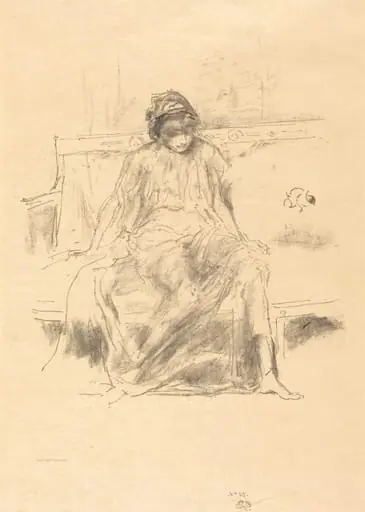
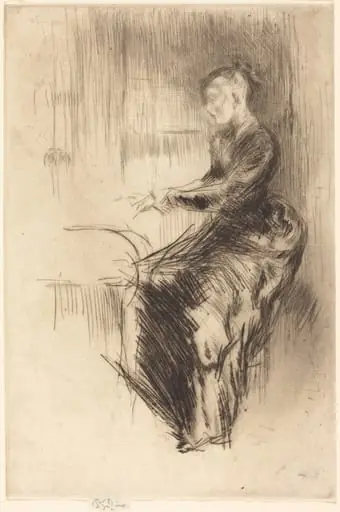
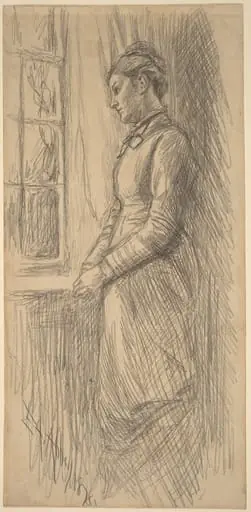
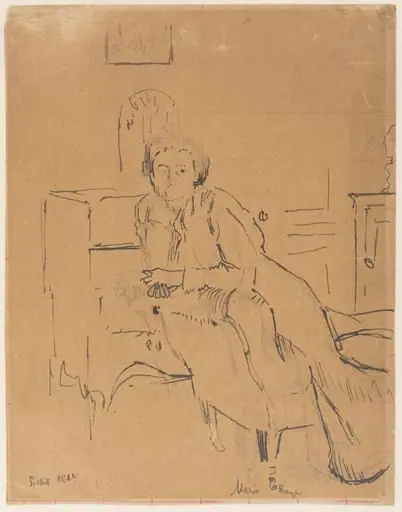
Study of Madame Marie Cantacuzène; Study of Standing Female Nude is a drawing by the Impressionist artist Pierre Puvis de Chavannes. It dates from 1883 and is held in the collection of the Cleveland Museum of Art.
About this work
Overview
The work reflects Puvis’s habit of exploring the human figure through economical draftsmanship, a practice central to his larger mural projects.
Created around 1883, this sheet by Pierre Puvis de Chavannes contains two rapid figure studies on a single support. One depicts a seated woman in loose drapery, the other a standing nude. Both are rendered with minimal detail, emphasizing form and gesture over refinement. The work reflects Puvis’s habit of exploring the human figure through economical draftsmanship, a practice central to his larger mural projects.
Subject & Meaning
The two figures—clothed and unclothed—suggest a comparative study of posture and volume. The seated woman, partially veiled, evokes quiet introspection; the standing nude, rendered in swift lines, embodies idealized presence. Neither is a portrait nor a narrative scene, but rather an investigation of the body in space, aligning with Puvis’s broader interest in timeless, symbolic forms over individual identity.
Technique & Style
Puvis employed a restrained, almost monochromatic line, using light pencil strokes to suggest volume without shading or contour. The seated figure’s robe flows in soft, unbroken curves, while the nude is defined by a few decisive gestures. The lack of detail and the visible revisions indicate spontaneity, characteristic of his preparatory process. The two studies, though on the same page, appear temporally distinct, revealing his iterative approach to form.
History & Provenance
The drawing originates from Puvis’s personal sketchbook, likely used during his time in Paris as he developed compositions for public murals. It remained in private hands after his death, passed through collectors who valued his preparatory work. Its survival offers insight into his working method, though its exact provenance before the 20th century remains undocumented in public records.
Context
In the 1880s, Puvis was a central figure in French academic circles, advocating for restrained, poetic imagery amid rising modernist experimentation. His figure studies, though private, informed his large-scale murals that emphasized harmony and stillness. This drawing reflects a broader trend among his peers: using sketching not for realism, but to distill essential forms for symbolic composition.
Legacy
Though not widely exhibited, such studies reveal Puvis’s influence on later generations who valued simplicity and emotional restraint in figural art. His approach to the nude as a structural, rather than sensual, subject resonated with Symbolists and early modernists. These sketches, unpolished yet deliberate, continue to inform discussions on the role of drawing in artistic development.
Artist & collection
Artist
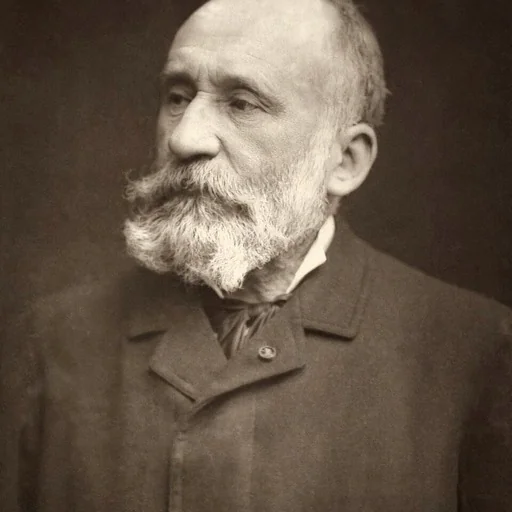
Pierre Puvis de Chavannes (French pronunciation: ; 14 December 1824 – 24 October 1898) was a French painter known for his mural painting, who came to be known as "the painter for France".


![The Fitting [recto], by Mary Cassatt](https://artifactworldgallery.com/img/mary-cassatt--the-fitting-recto--bdf1c75791eec1a5-w320.webp)