Artwork
Le Bois sacré cher aux arts et aux Muses
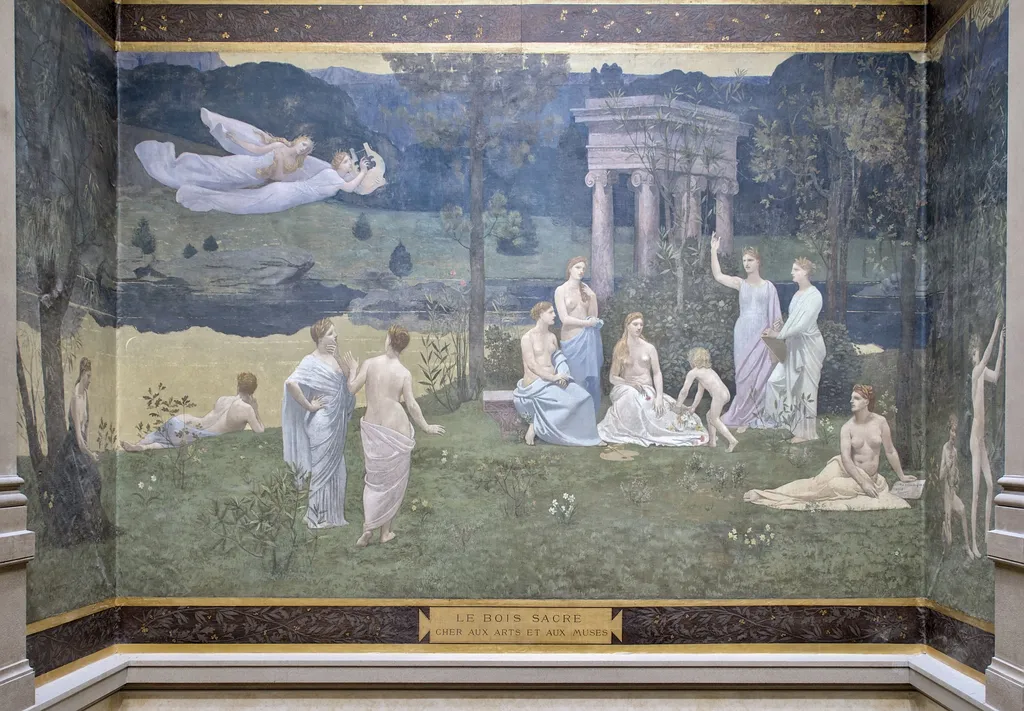
Le Bois sacré cher aux arts et aux Muses is an oil painting by the Symbolist artist Pierre Puvis de Chavannes. It dates from 1892 and is held in the collection of the Museum of Fine Arts of Lyon.
About this work
Overview
The painting reflects his preference for allegorical themes and quiet, contemplative compositions.
Painted in 1892, *Le Bois sacré cher aux arts et aux Muses* is an oil-on-canvas work by Pierre Puvis de Chavannes, a central figure in French muralism during the early Third Republic. The painting reflects his preference for allegorical themes and quiet, contemplative compositions. Though not a large-scale mural, it embodies the same restrained elegance and symbolic intent that defined his public works, earning him recognition as a key voice in late 19th-century French art.
Subject & Meaning
The painting presents an allegorical grove dedicated to the arts and the Muses, populated by figures in flowing white garments, suggesting idealized muses or poetic spirits. Their poses—reclining, standing, gazing—convey stillness and introspection rather than narrative action. The setting, neither specific nor realistic, functions as a symbolic sanctuary where creativity and contemplation coexist, reflecting Symbolist ideals that favored inner meaning over literal representation.
Technique & Style
Puvis employed muted, harmonious tones and soft, blended brushwork to evoke a hushed, timeless atmosphere. Forms are simplified, contours gentle, and spatial depth subtly suggested through layered planes rather than perspective. The composition is deliberately static, guiding the viewer’s eye slowly across the scene with rhythmic groupings of figures and landscape elements. This approach prioritizes mood over detail, aligning with Symbolist aesthetics that valued suggestion over clarity.
History & Provenance
Created in 1892, the painting emerged during a period when Puvis was deeply engaged in public commissions and institutional influence. He co-founded the Société Nationale des Beaux-Arts in 1890 as a counter to the official Salon, positioning himself as a reformer of French artistic standards. While the painting’s early ownership is not widely documented, its existence reflects his broader project to elevate art as a vehicle for spiritual and cultural reflection beyond commercial or academic norms.
Context
In the 1890s, French art was shifting between academic traditions and emerging modernist movements. Puvis stood apart, rejecting both naturalism and Impressionist immediacy in favor of timeless, mythic subjects. His work resonated with Symbolist poets and writers like Mallarmé and Zola, who saw in his imagery a refuge from industrial modernity. *Le Bois sacré* fits within this cultural moment—a quiet counterpoint to the dynamism of the age, offering an idealized space for artistic contemplation.
Legacy
Puvis de Chavannes influenced a generation of artists, including Gauguin and the Nabis, who admired his flattened forms and symbolic language. Though less celebrated today than his contemporaries, his emphasis on mood, restraint, and allegory helped bridge 19th-century academic art and early modernism. *Le Bois sacré* remains a quiet testament to his vision: art as a meditative space, where beauty resides not in spectacle, but in stillness and suggestion.
Artist & collection
Artist
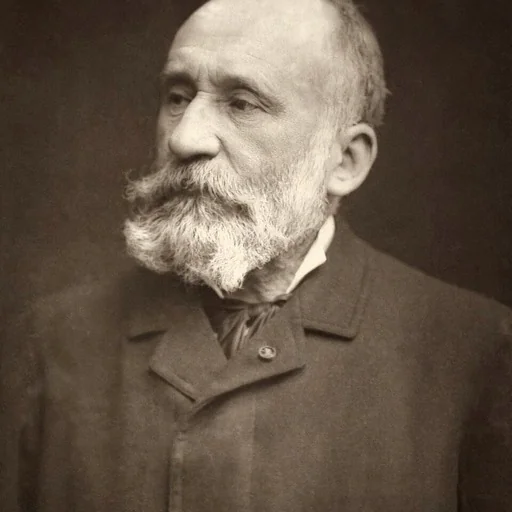
Pierre Puvis de Chavannes (French pronunciation: ; 14 December 1824 – 24 October 1898) was a French painter known for his mural painting, who came to be known as "the painter for France".


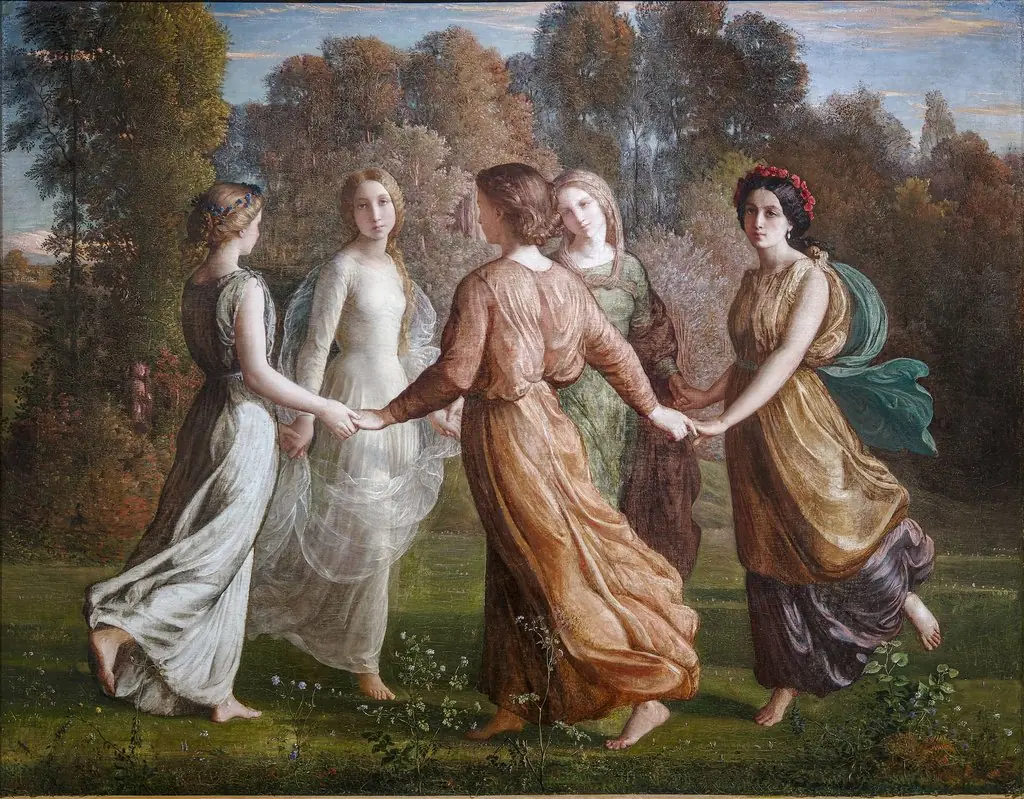 Poem of the Soul - Sunrays
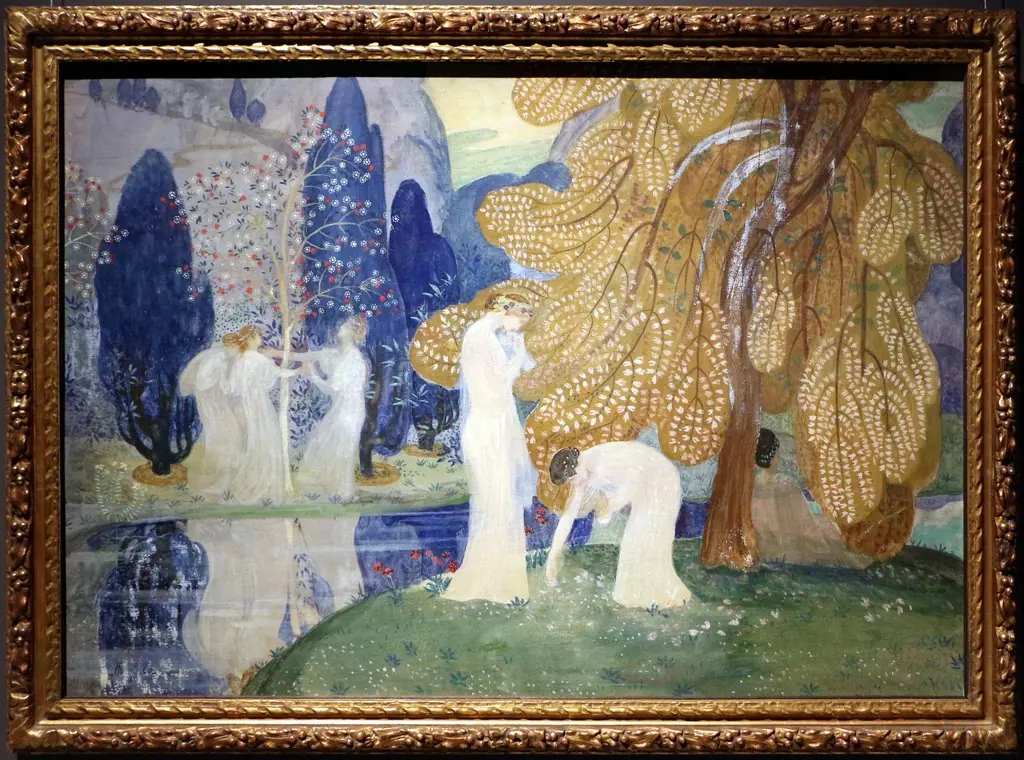 Dancing Nymphs
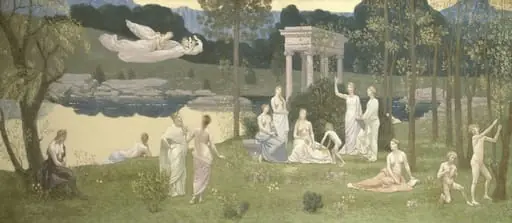 The Sacred Grove, Beloved of the Arts and the Muses
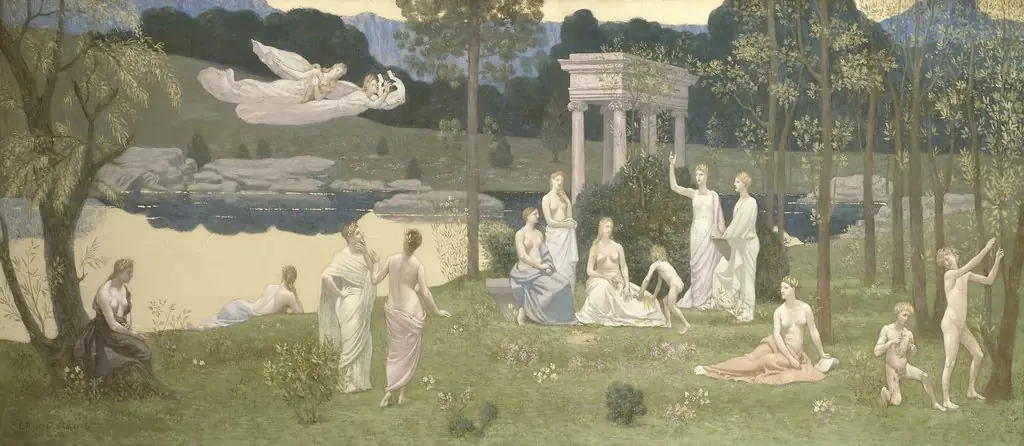 The Sacred Grove, Beloved of the Arts and the Muses
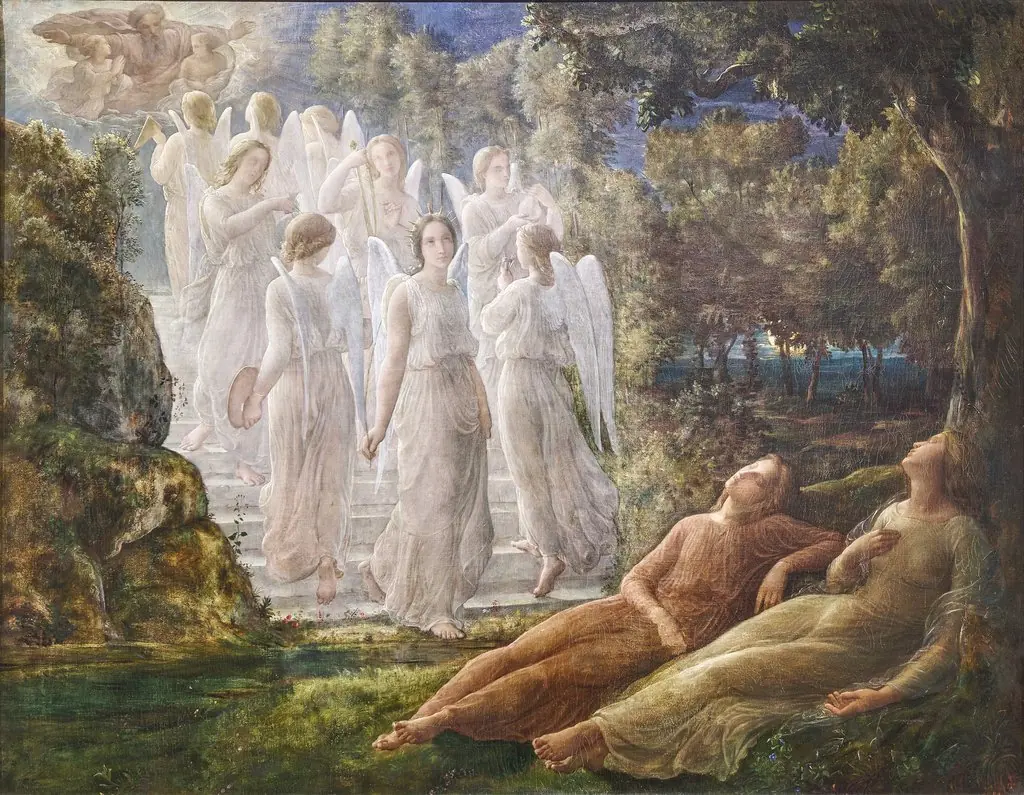 Poem of the Soul - The golden stairs
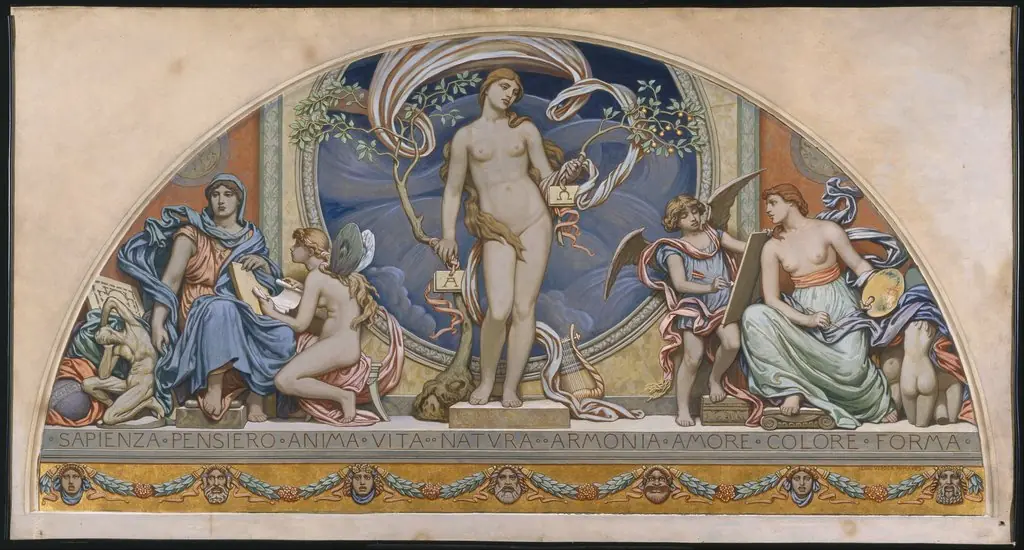 Rome Representative of the Arts
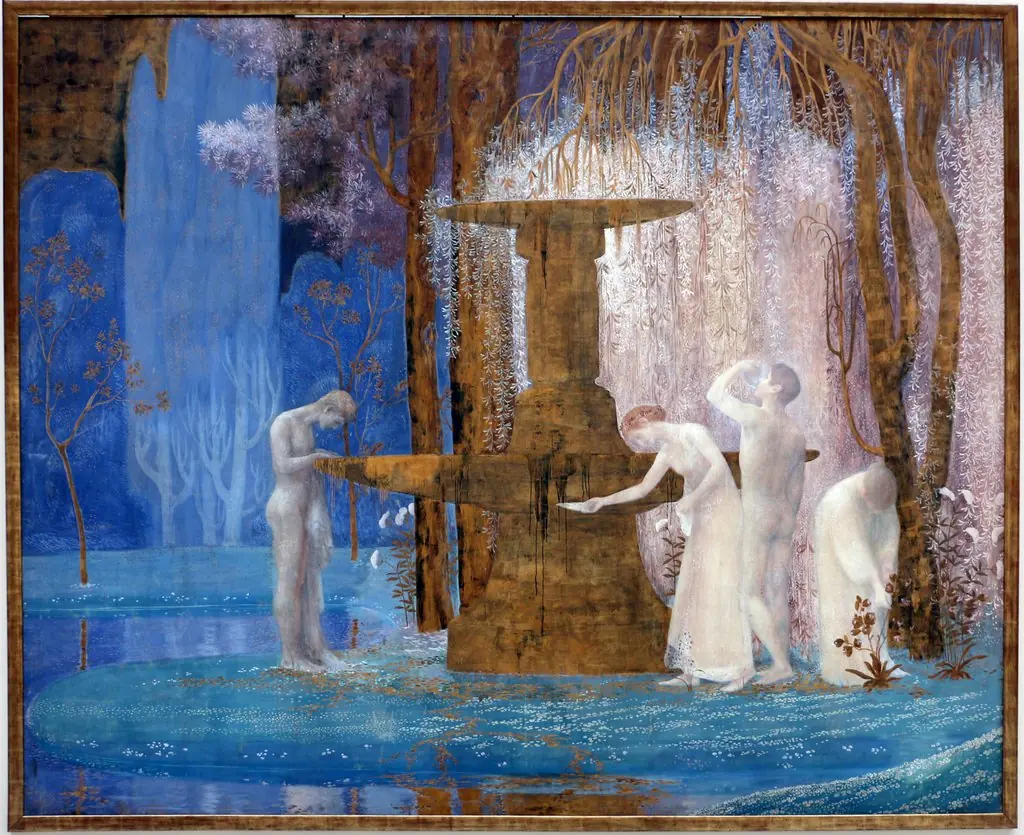 Fountain of Inspiration
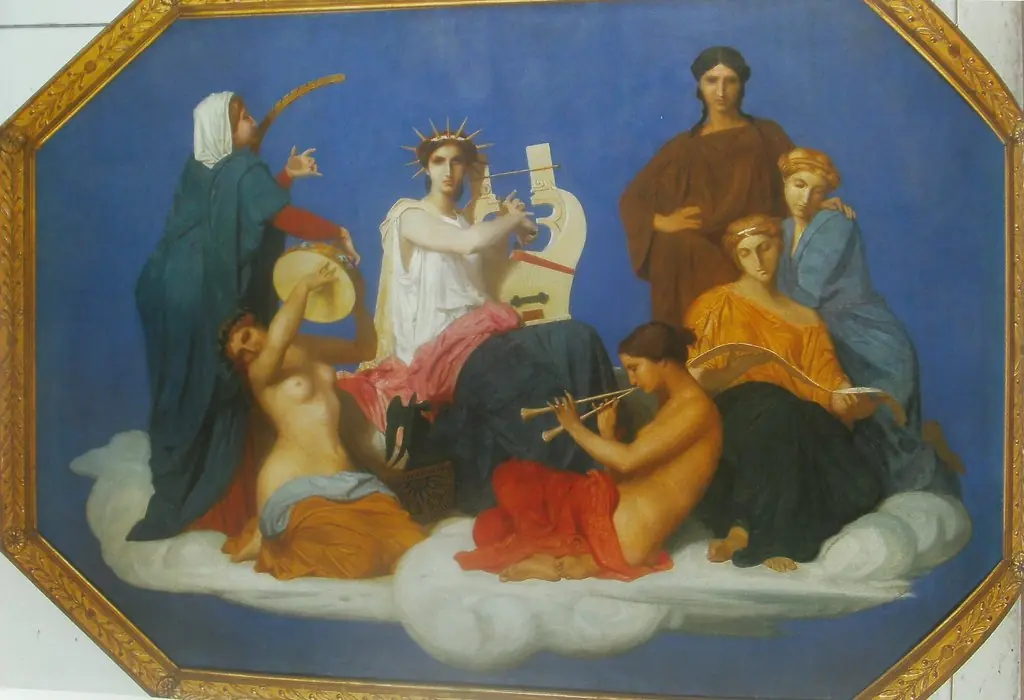 The music
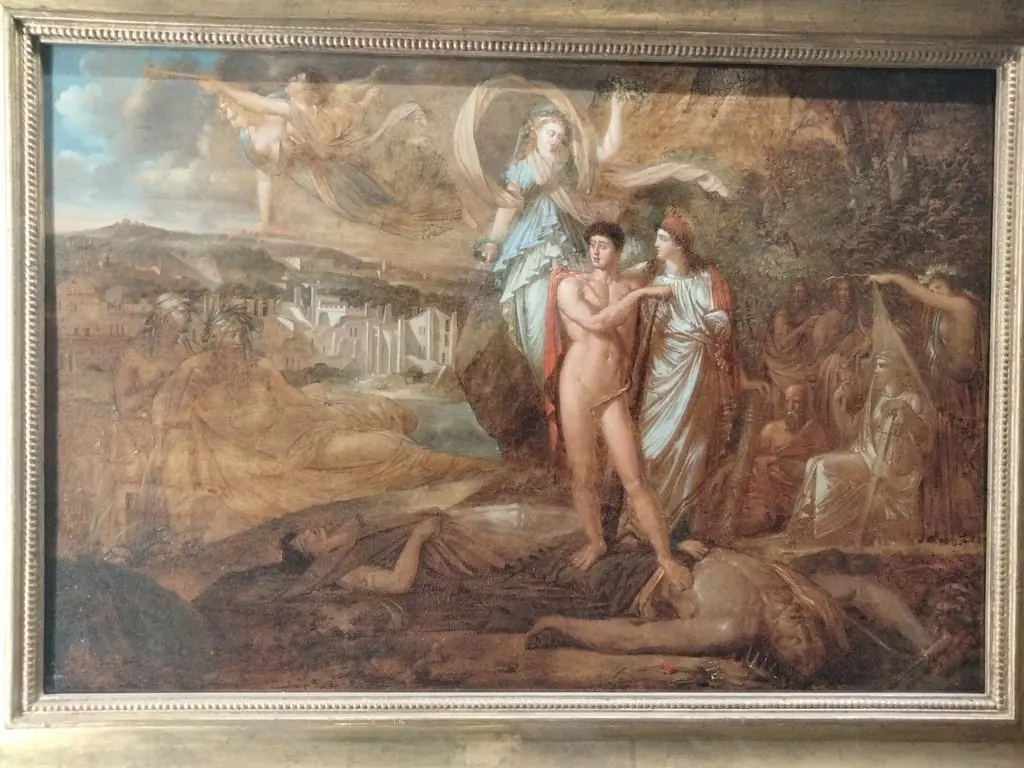 La Rébellion lyonnaise terrassée par le génie de la Liberté
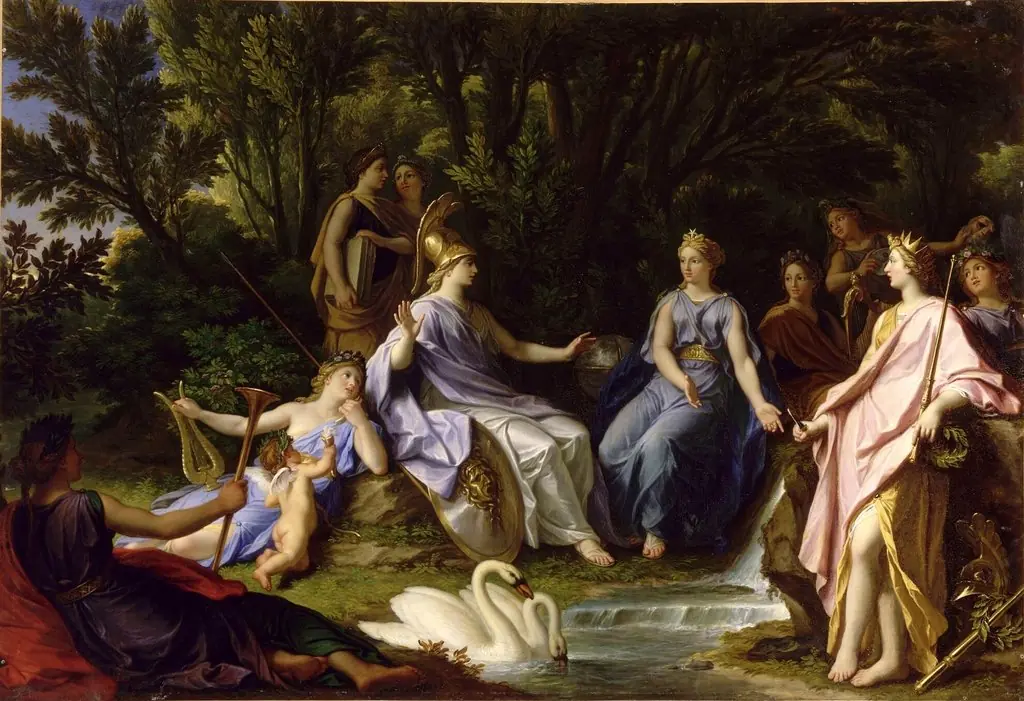 Story of Minerva - The Muses Showing Minerva Hippocrene Waters of the River that Brings Out Pegasus
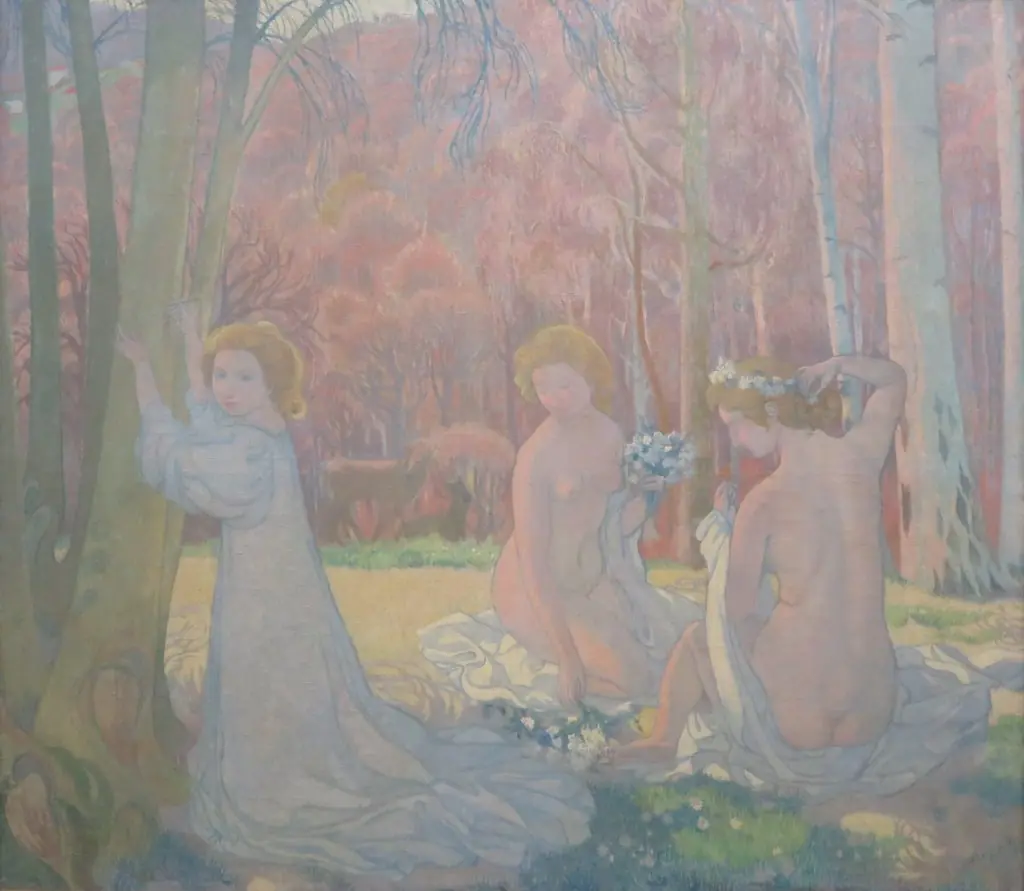 Figures in a Spring Landscape (Sacred Grove)