Artwork
The Coach of Mangkoe Nagoro IV
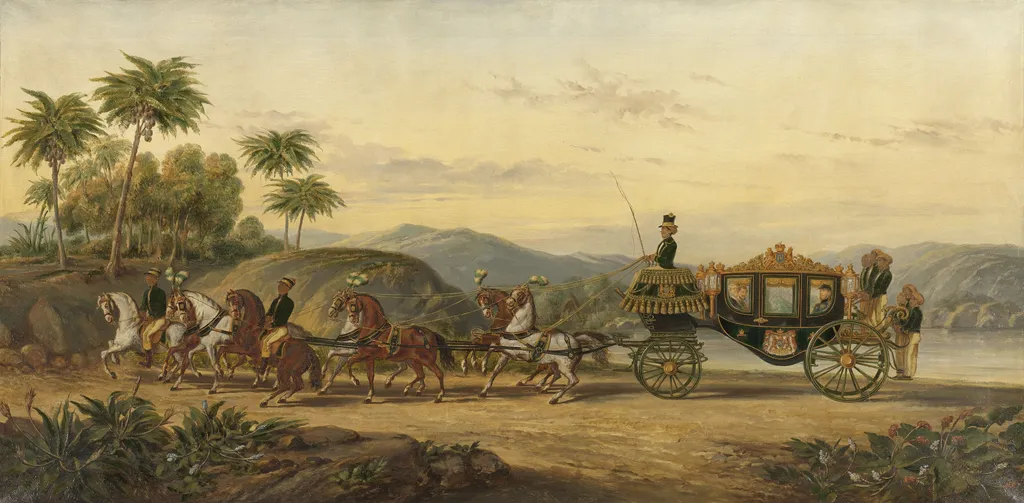
The Coach of Mangkoe Nagoro IV is an oil painting by the Realist artist Pieter Alardus Haaxman. It dates from 1870 and is held in the collection of the Rijksmuseum.
About this work
Overview
Pieter Alardus Haaxman's 1870 oil on canvas, titled The Coach of Mangkoe Nagoro IV, presents a ceremonial carriage traversing a rural landscape. The work is part of the Rijksmuseum collection and records a moment of Javanese aristocratic transport, emphasizing the vehicle's ornate design and the surrounding environment.
Subject & Meaning
The central focus is the Golden Coach of Surakarta, associated with the reign of Mangkunegara IV, accompanied by a pair of horses and attendants. The composition suggests a dignified procession, highlighting the social status of the rider and the ceremonial role of the carriage within Javanese court culture.
Technique & Style
Executed in oil, Haaxman employs a restrained palette of muted earth tones for the landscape, contrasted with the bright gold trim and crest of the coach. The brushwork delineates the horses in paired brown and white tones, while the figures are rendered with modest detail, creating a balanced, tranquil scene.
History & Provenance
Created in 1870, the painting entered the Rijksmuseum's holdings as part of its 19th‑century European collection. Its provenance traces back to Dutch interest in the Dutch East Indies, reflecting contemporary curiosity about colonial subjects and their material culture.
Context
The Golden Coach was a symbol of royal authority in Surakarta, used for official ceremonies. Haaxman's depiction aligns with a broader European fascination with exotic locales during the late 19th century, offering a visual record of Javanese regal transport for a Western audience.
Own this work as a print
Artist & collection