Artwork
The way station
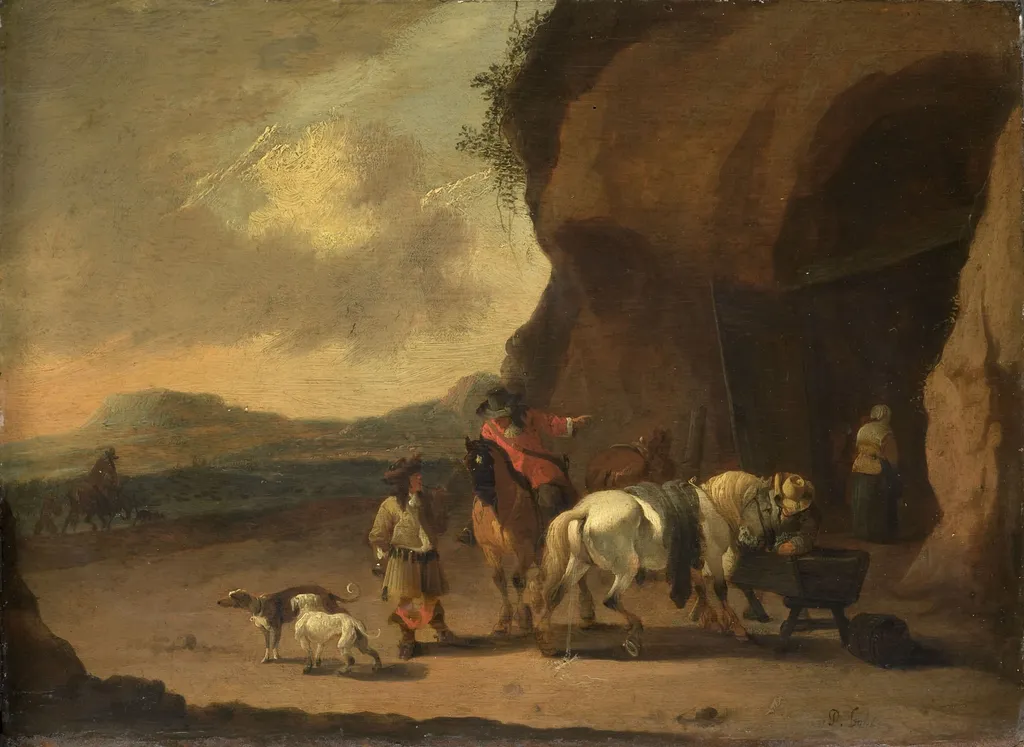
The way station is an oil painting by the Dutch Golden Age artist Pieter Bout. It is held in the collection of the Rijksmuseum.
About this work
Overview
The Way Station is a 1698 oil painting by Pieter Bout, a Flemish artist associated with the Dutch Golden Age landscape tradition. The work showcases a serene scene of a horse, rider, and dog at a resting point in front of a cave, set against a expansive landscape.
Subject & Meaning
The painting's central motif—a horse and rider at a way station—is a common theme in Bout's oeuvre, symbolizing rest and transition within a natural setting. The rider's gesture, pointing into the distance, may imply a narrative of journey or contemplation.
Technique & Style
Bout executes the scene with a softer, clearer palette, distinguishing his work from earlier Flemish masters while presaging 18th-century artistic trends. The muted sky and detailed, yet serene, landscape elements characterize the piece.
History & Provenance
Created in 1698, The Way Station is now part of the Rijksmuseum's collection, reflecting its significance within the Dutch Golden Age's landscape painting heritage.
Context
The painting reflects the late 17th-century Flemish landscape tradition, blending architectural and rural elements. Its style bridges the gap between the preceding Flemish masters and the forthcoming 18th-century artistic movements.
Own this work as a print
Artist & collection
Artist
Pieter Bout (between 1640 and 1645 – between 17 June 1689 and 1719) was a Flemish painter, draughtsman and printmaker.
