Artwork
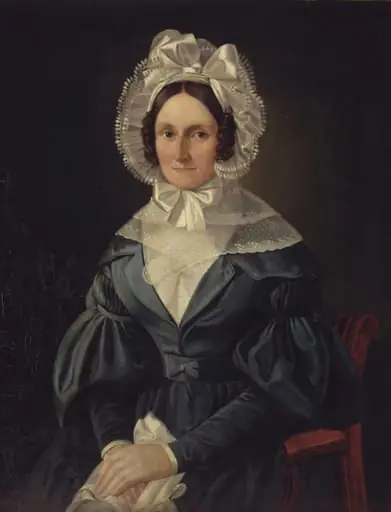
Mrs. Pearson [possibly Sarah Thompson Pearson]
![Mrs. Pearson [possibly Sarah Thompson Pearson], by Pieter Christoffel Wonder, unspecified, 1837](https://artifactworldgallery.com/img/pieter-christoffel-wonder--mrs-pearson-possibly-sarah-thompson-pearson--0006ffde77661f8c-w1024.webp)
Mrs. Pearson [possibly Sarah Thompson Pearson] is an unspecified painting by the Biedermeier artist Pieter Christoffel Wonder. It dates from 1837 and is held in the collection of the Cleveland Museum of Art.
About this work
Overview
Painted around 1837 by Dutch artist Pieter Christoffel Wonder, this portrait depicts a woman identified possibly as Sarah Thompson Pearson. The work resides in The Cleveland Museum of Art, where it is noted for its vivid coloration and focused composition. The subject is rendered against a dark, unadorned background, emphasizing her attire and facial presence without distraction.
Subject & Meaning
The sitter, likely a woman of means, is portrayed with quiet dignity.
The sitter, likely a woman of means, is portrayed with quiet dignity. Her attire—particularly the bold yellow hat and scarf—suggests fashion-consciousness and social standing, though no explicit narrative or symbolic elements are present. The portrait functions primarily as a personal record, capturing an individual’s appearance and demeanor rather than conveying allegory or status through conventional emblems.
Technique & Style
Wonder employed thick, deliberate brushwork to model the woman’s face and hat, enhancing the tactile quality of fabric and skin. The application of paint creates pronounced highlights and shadows, particularly along the curve of the hat and the contours of her cheek. This textured approach, combined with a dark background, heightens the three-dimensionality of the figure through strong chiaroscuro effects.
History & Provenance
The painting entered The Cleveland Museum of Art’s collection in the 20th century, though its earlier ownership remains undocumented. Its attribution to Wonder is based on stylistic comparison with his other known portraits from the 1830s. The identity of the sitter as Sarah Thompson Pearson is a plausible but unconfirmed hypothesis, derived from family records and regional connections.
Context
Created during Wonder’s later years in the Netherlands, the portrait reflects his continued engagement with Dutch and British portraiture traditions. While European academic styles dominated formal commissions, this work reveals a more intimate, almost domestic sensibility. The emphasis on texture and color over idealization aligns with broader trends in early 19th-century portraiture seeking psychological presence over grandeur.
Legacy
Though not widely exhibited or studied, the portrait stands as a representative example of Wonder’s skill in capturing individual character through painterly technique. Its preservation in a major American museum underscores its value as a document of transatlantic artistic exchange and the quiet persistence of portraiture as a personal, rather than public, art form in the 1830s.
Own this work as a print
Artist & collection
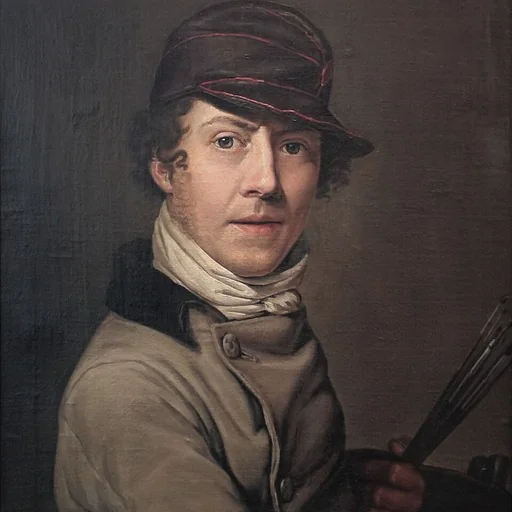
Artist
Pieter Christoffel Wonder (1780–1852) was a Dutch artist, born in Utrecht.

 Portrait of Mrs McCarthy, Grandmother of J.H. McCarthy
 Madam Powel (Elizabeth Willing)
 Oberstinde Cathrine Lundbye, f. Bonnevie, kunstnerens moder
 Portrait of a lady in a cap
 Marie Raffenberg, the Artist's Betrothed
 Mrs. Ann Williams, Tŷ Newydd
 Lydia Coit Terry (Mrs. Eliphalet Terry)
 Mrs. William Ware (Mary Waterhouse)
 Portrait of a Woman
 Portrait of Jacoba Vetter, Wife of Pieter Meijer Warnars, Bookseller in Amsterdam
 Anna Theodora Barbara Regenburg, f. Wetche
 Sarah Blake Sturgis