Artwork
Die thronende Maria mit dem Kind und den Heiligen Jacobus d.Ä. und Jacobus d.J.
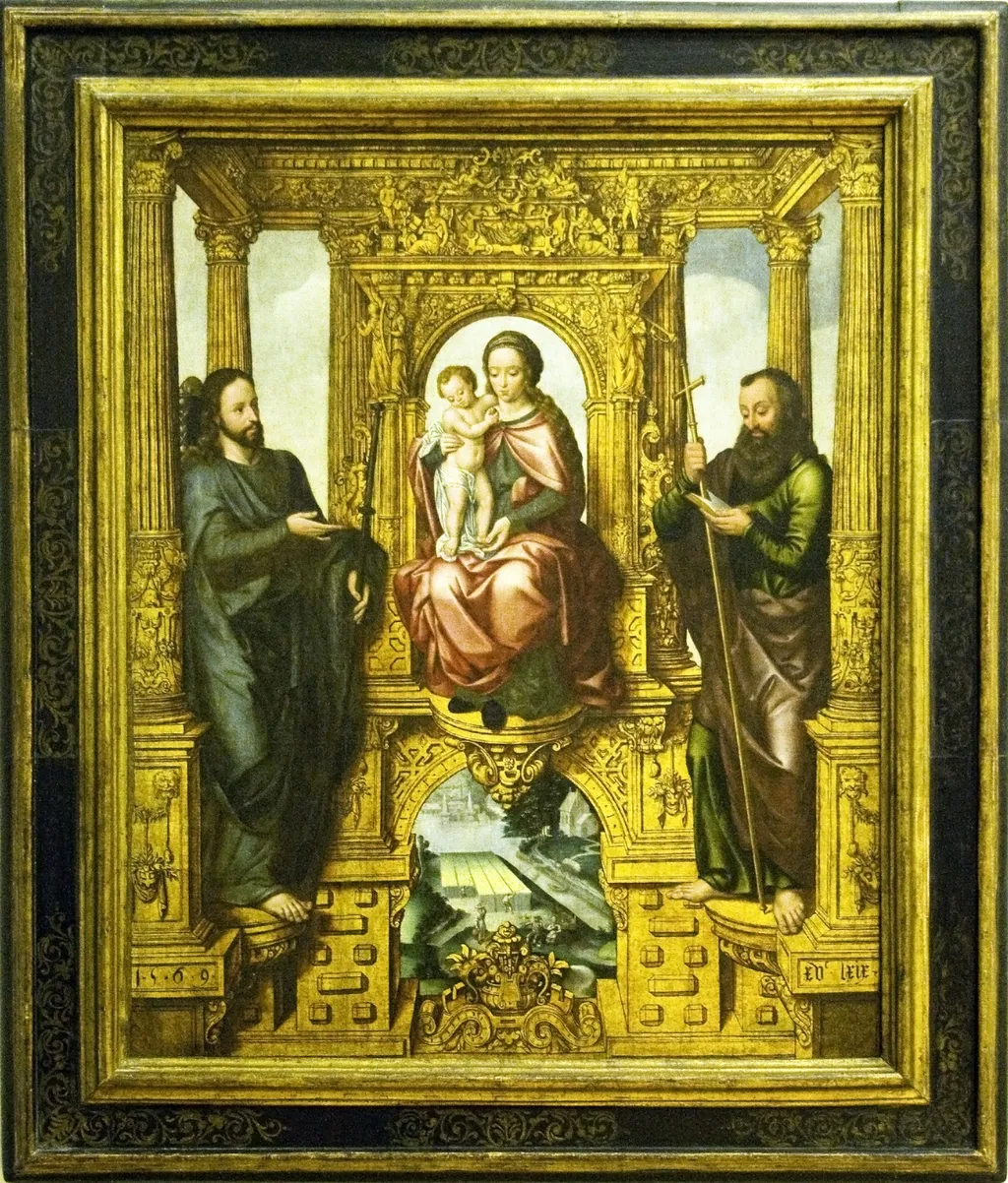
Die thronende Maria mit dem Kind und den Heiligen Jacobus d.Ä. und Jacobus d.J. is a paint painting by the Early Baroque Italian artist Pieter Claeissens the Elder. It dates from 1569 and is held in the collection of the Gemäldegalerie Berlin.
About this work
Overview
The work portrays the Virgin Mary seated on a throne with the infant Christ, flanked by the two saints named James—James the Less and James the Greater.
Pieter Claeissens the Elder, a Flemish painter active in Bruges, completed this oil painting in 1569. The work portrays the Virgin Mary seated on a throne with the infant Christ, flanked by the two saints named James—James the Less and James the Greater. Executed in a richly ornamented gold setting, the composition balances figures with a modest landscape visible through an architectural backdrop. The painting is part of the collection of the Gemäldegalerie in Berlin.
Subject & Meaning
The central figure, Mary, is shown in a deep red mantle, embodying her role as the queen of heaven. The Christ Child rests peacefully on her lap, symbolizing divine innocence. To her right, James the Greater holds a staff and a book, attributes of pilgrimage and learning, while James the Less gestures with open hands, suggesting humility and openness. Together the trio reflects intercessory themes common in Counter‑Reformation devotional art.
Technique & Style
Claeissens employs a restrained chiaroscuro, using light to model the figures against a darkened interior while the gilded architectural elements catch highlights. The gold carvings, foliage scrolls, and pilasters create a sumptuous frame that enhances the sense of sacred space. The painter’s handling of drapery and facial expression shows a transition toward early Baroque sensibilities, merging Flemish detail with Italianate compositional balance.
History & Provenance
Created in the late sixteenth century, the painting remained in private collections before entering the German national holdings in the early twentieth century. It was acquired by the Gemäldegalerie, Berlin, where it has been displayed as part of the museum’s Flemish Baroque holdings. Documentation traces its provenance through inventories of Bruges patrons, confirming its attribution to Claeissens the Elder.
Artist & collection
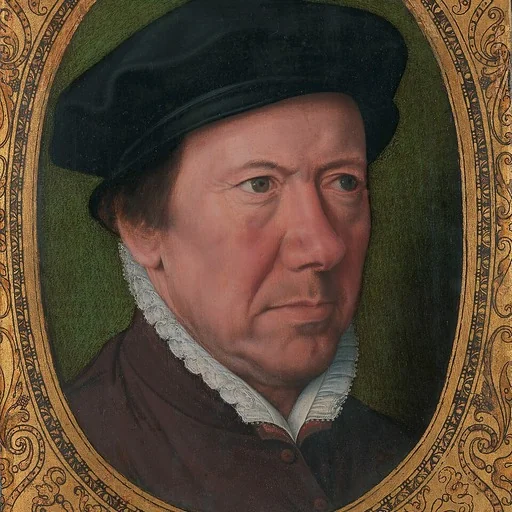
Artist
Pieter Claeissens the Elder or Pieter Claeissens (I) (1500–1576) was a Flemish painter of history paintings, portraits and allegorical scenes. He was the first prominent artist in an extended family of artists from Bruges.
