Artwork
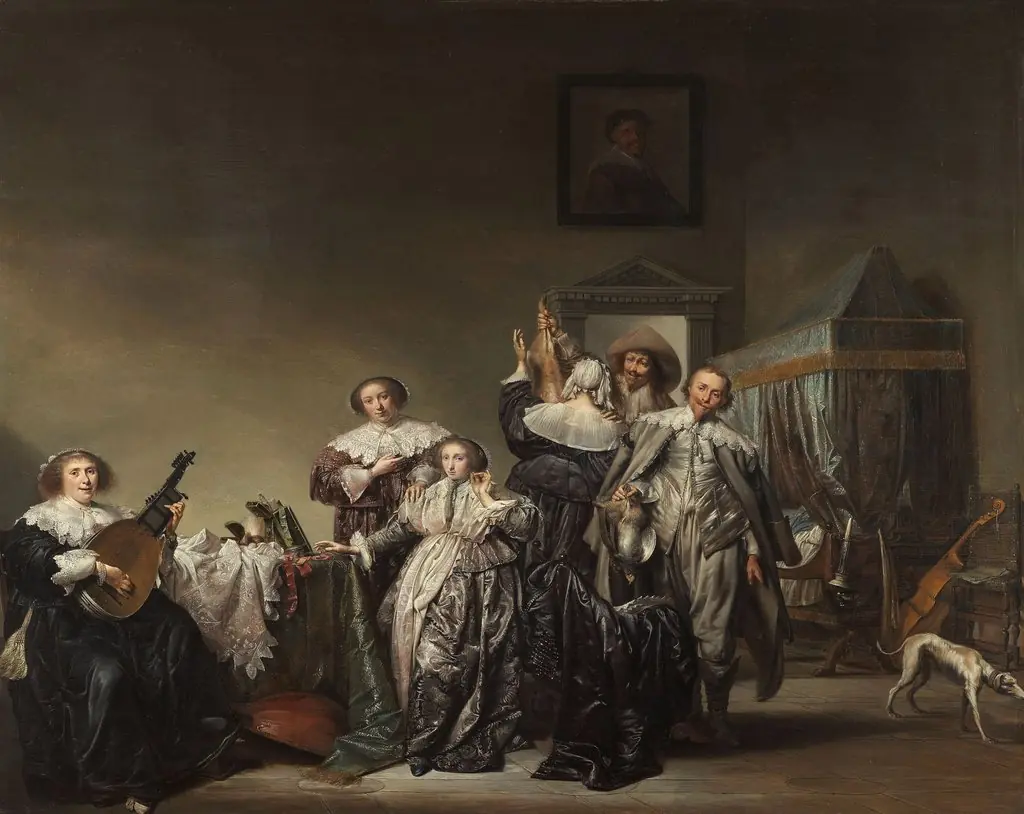
An Elegant Company
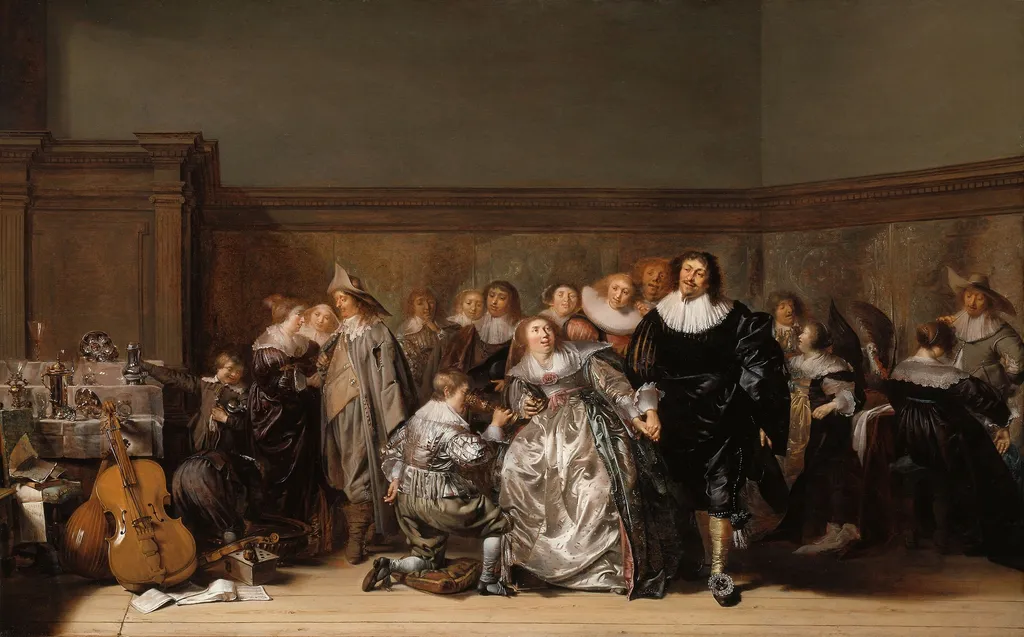
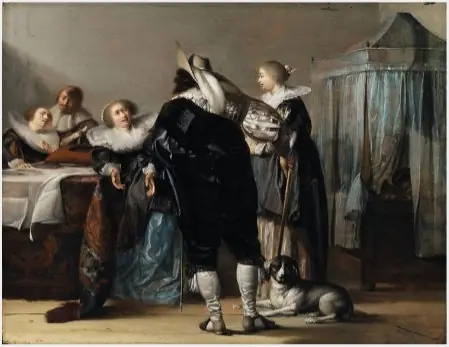
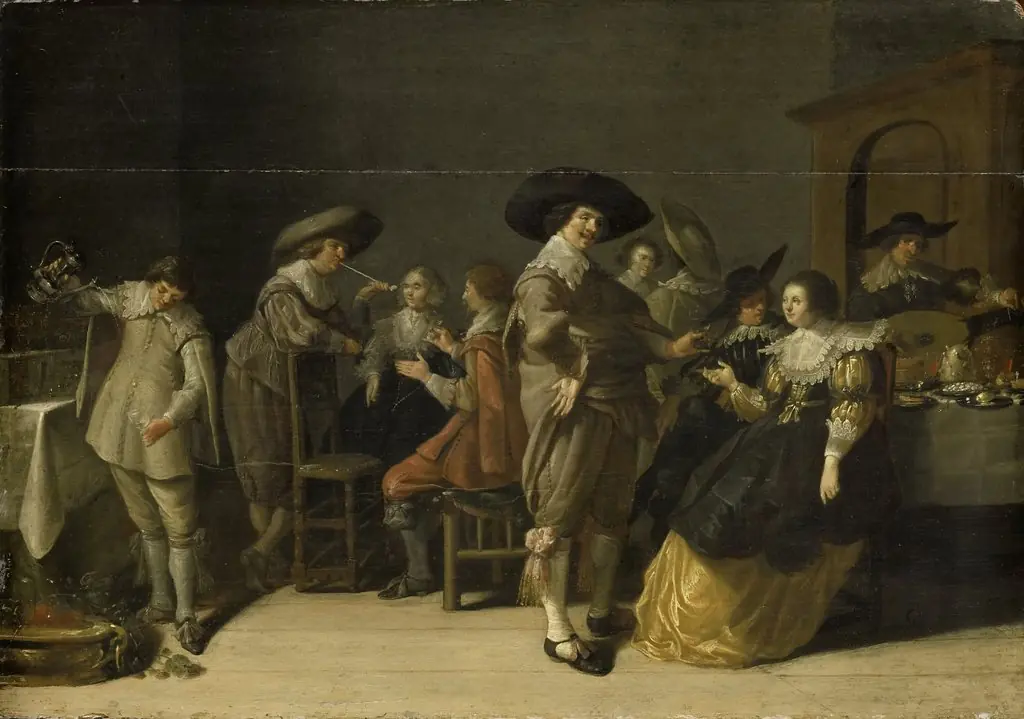
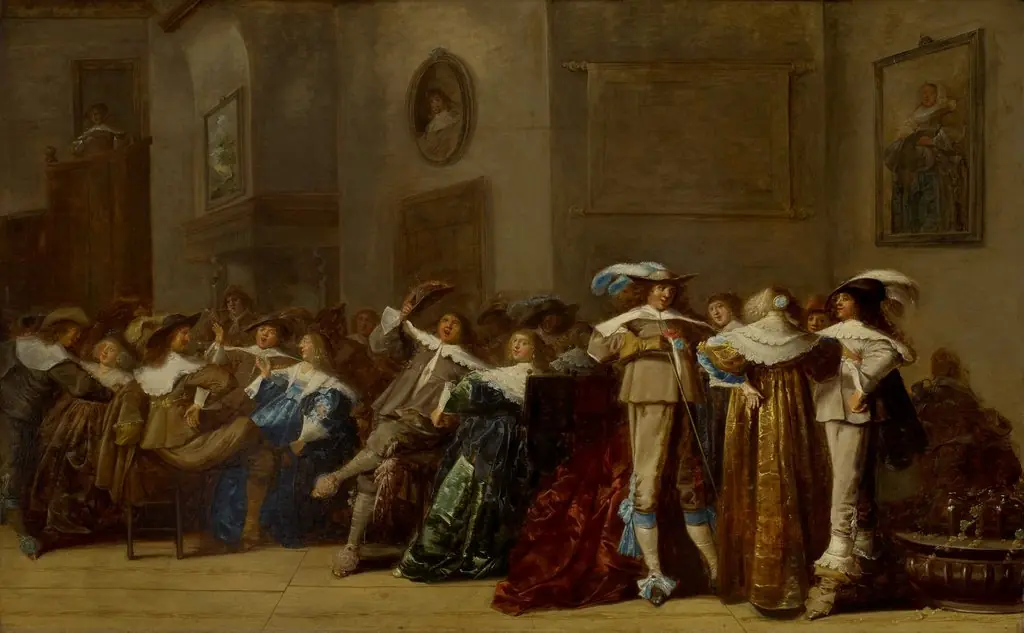
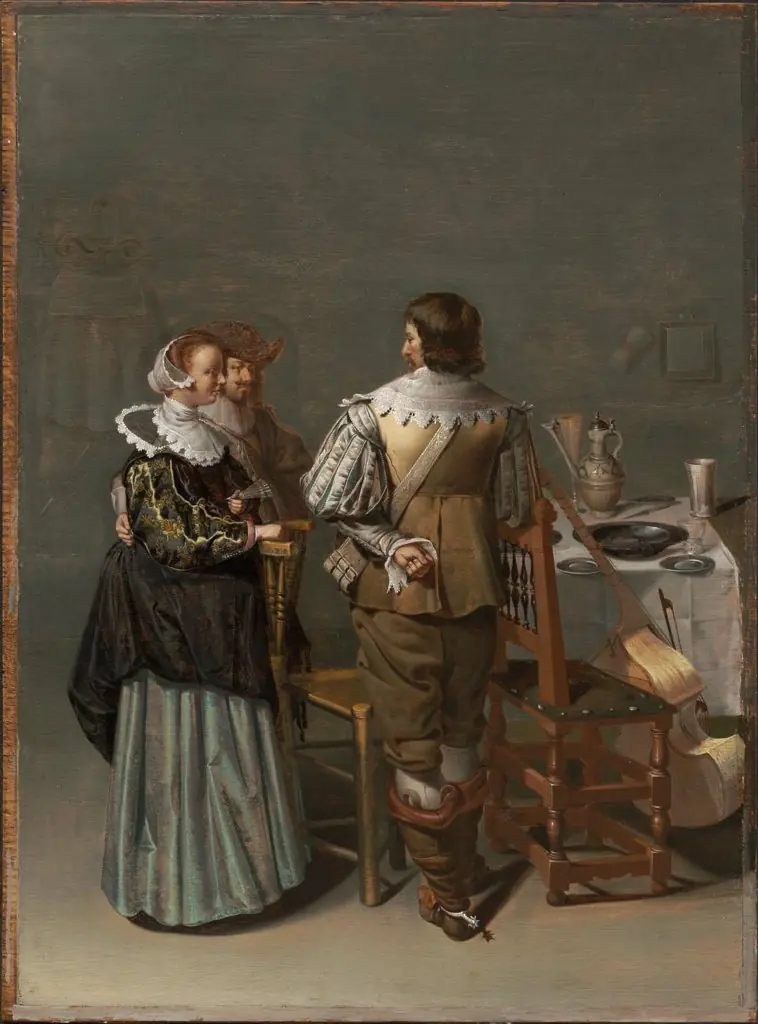
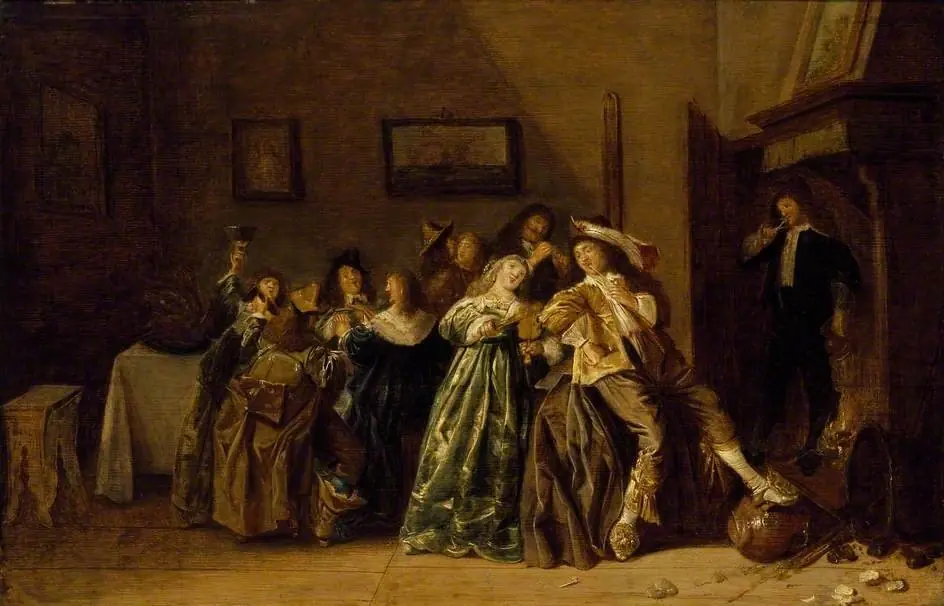
An Elegant Company is an unspecified painting by the Dutch Golden Age artist Pieter Codde. It dates from 1632 and is held in the collection of the Art Institute of Chicago.
About this work
Overview
The lighting is soft and diffuse, modeling the faces and costumes with a clarity that highlights the social hierarchy and interaction among the participants.
Pieter Codde's An Elegant Company, executed in 1632, is a quintessential example of Dutch Golden Age genre painting depicting a refined social gathering within an interior setting. The composition features a group of well-dressed figures engaged in conversation and musical entertainment, characteristic of the artist's focus on the leisure activities of the urban bourgeoisie. Codde arranges the figures in a shallow, stage-like space, utilizing a restrained palette of earth tones, blacks, and whites to emphasize the textures of silk, lace, and fur. The lighting is soft and diffuse, modeling the faces and costumes with a clarity that highlights the social hierarchy and interaction among the participants. Painted during the height of Codde's career, this work demonstrates his mastery of the 'fine style' (fijnschilder), where meticulous detail and psychological nuance take precedence over dramatic action. The painting reflects the cultural values of 17th-century Amsterdam, celebrating civility, music, and the display of wealth through attire. It stands as a significant contribution to the development of the merry company genre, bridging the gap between earlier, more boisterous scenes and the more intimate, psychologically complex interiors that would define later Dutch art.
Subject & Meaning
The figures are attired in fashionable attire: men in broad‑brimmed hats and doublets, women in long, flowing gowns with modest accessories. Their gestures suggest conversation and casual observation, offering a glimpse into the manners of affluent urban society. While no explicit narrative is provided, the painting functions as a visual record of contemporary dress and the leisurely pursuits of the well‑to‑do.
Technique & Style
Codde employs a subtle chiaroscuro, allowing light to illuminate the faces and fabrics while leaving the surrounding space in softer shadow. This handling of illumination creates a sense of depth and three‑dimensionality. Fine brushwork renders the textures of silk, lace, and metal, highlighting the artist’s attention to material detail and his skill in portraying reflective surfaces within an intimate setting.
History & Provenance
Created in 1632, the painting entered the Art Institute of Chicago’s holdings in the twentieth century, though earlier ownership details remain limited. Its presence in a major American museum reflects the broader appreciation for Dutch genre painting and Codde’s role within the Haarlem school, where he was known for refined interior scenes.
Own this work as a print
Artist & collection

Artist
Pieter Jacobsz Codde was a Dutch painter of genre works, guardroom scenes and portraits.