Artwork
Breaking of the Ice on the Karnemelksloot near Naarden, January 1814
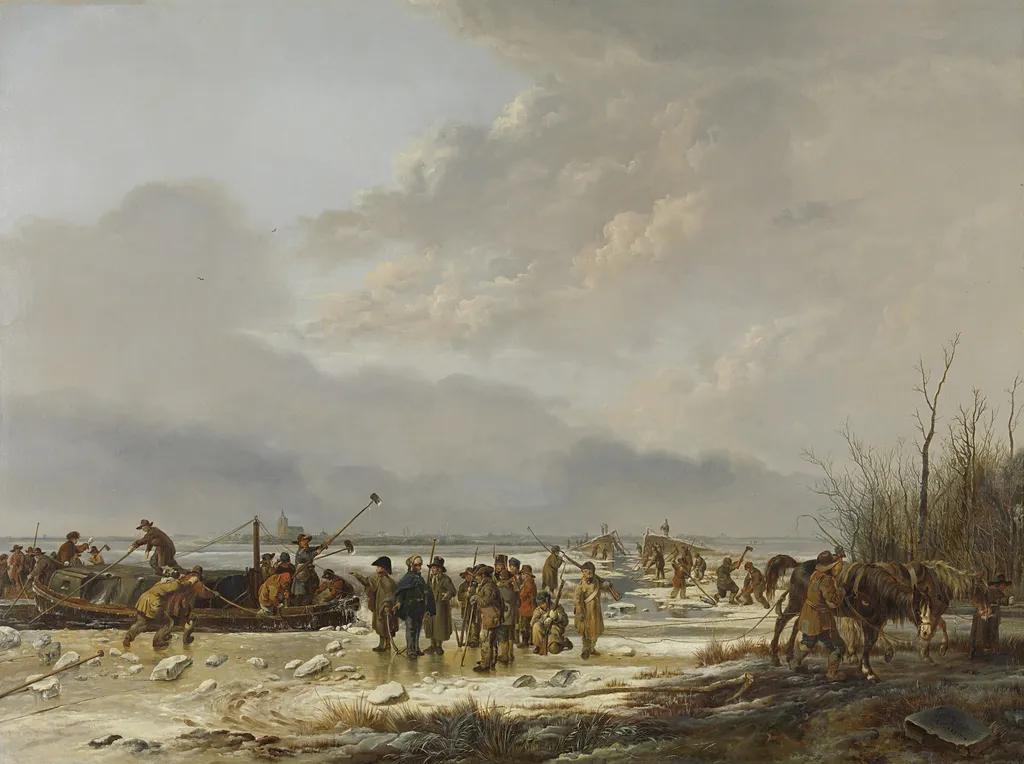
Breaking of the Ice on the Karnemelksloot near Naarden, January 1814 is an oil painting by Pieter Gerardus van Os. It dates from 1814 and is held in the collection of the Rijksmuseum.
About this work
Overview
Pieter Gerardus van Os painted *Breaking of the Ice on the Karnemelksloot near Naarden* in early 1814. Executed in oil on canvas, the work records a winter scene on a Dutch waterway where locals labor to clear ice. The composition is now part of the Rijksmuseum’s collection.
Subject & Meaning
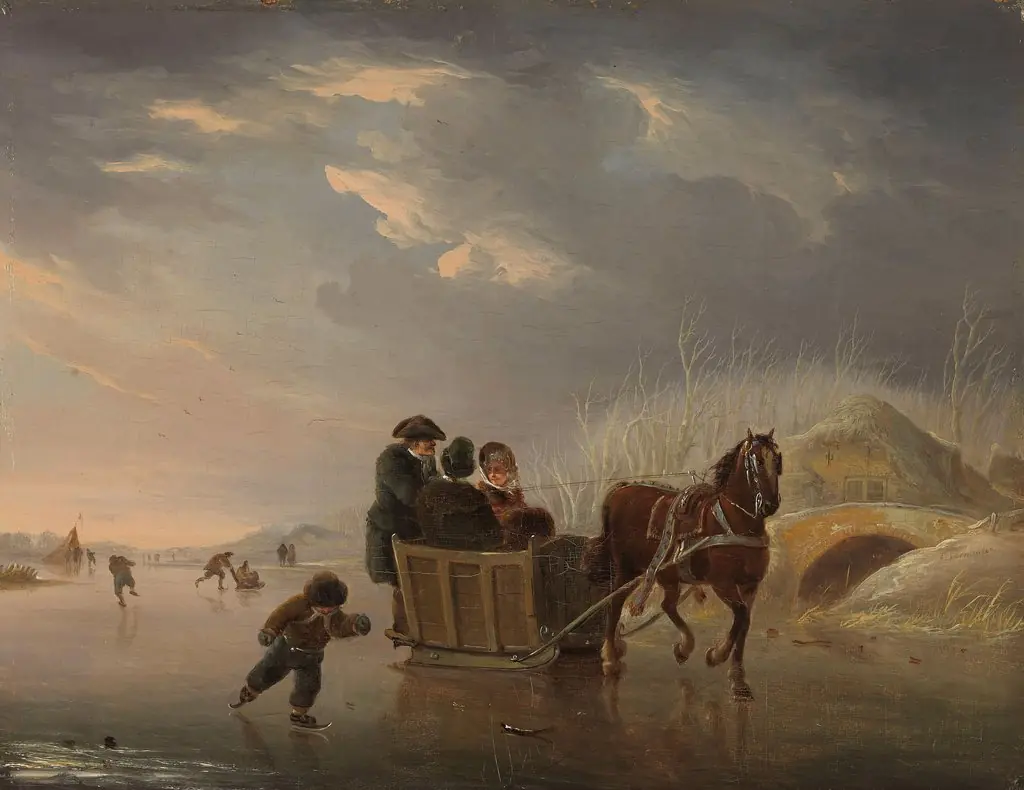
The canvas captures a communal effort to open a frozen canal: a small boat is being forced forward, a horse pulls a sled, and a soldier stands among men wielding long poles. The figures are engaged in a shared, utilitarian task, suggesting themes of cooperation and resilience against harsh weather.
Technique & Style
Van Os employs a muted palette of grays and earth tones, allowing the thick, swirling clouds to dominate the sky. Light falls across the muddy banks and icy patches, creating a subtle chiaroscuro that models the forms of horse, man, and vessel while emphasizing the cold atmosphere.
History & Provenance
Born into the Van Os artistic dynasty, the painter trained under his father and at The Hague’s Tekenakademie, where he studied the animal-focused works of Paulus Potter and Charles Dujardin. After its creation, the painting entered the Rijksmuseum’s holdings, where it remains on display.
Own this work as a print
Artist & collection
Artist
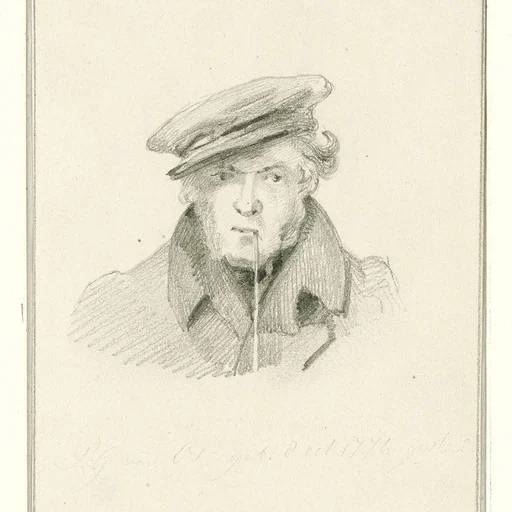
Pieter Gerardus van Os (8 October 1776 – 28 March 1839) was a Dutch painter and engraver and a member of the renowned Van Os family of artists.