Artwork
Wooded landscape
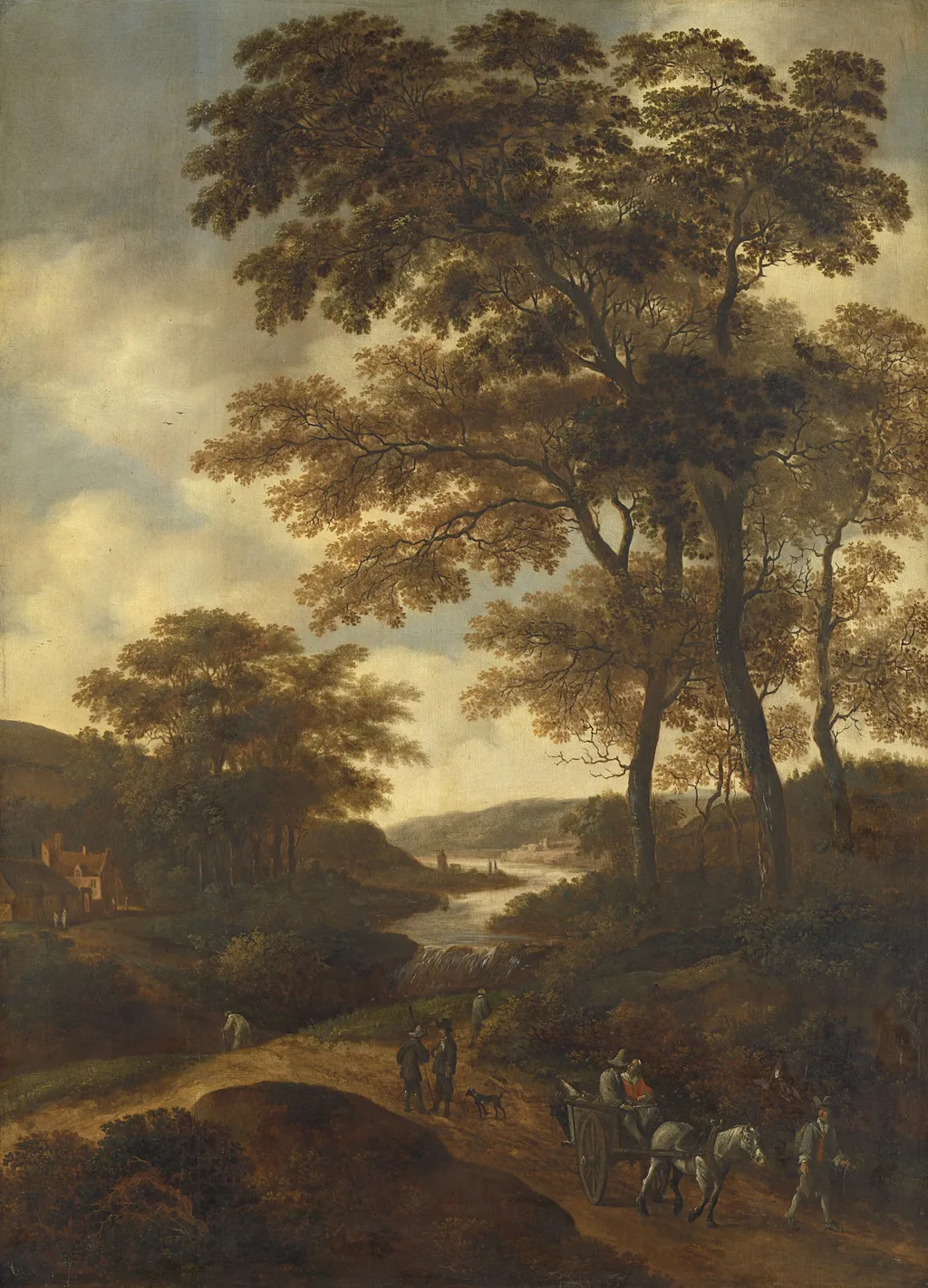
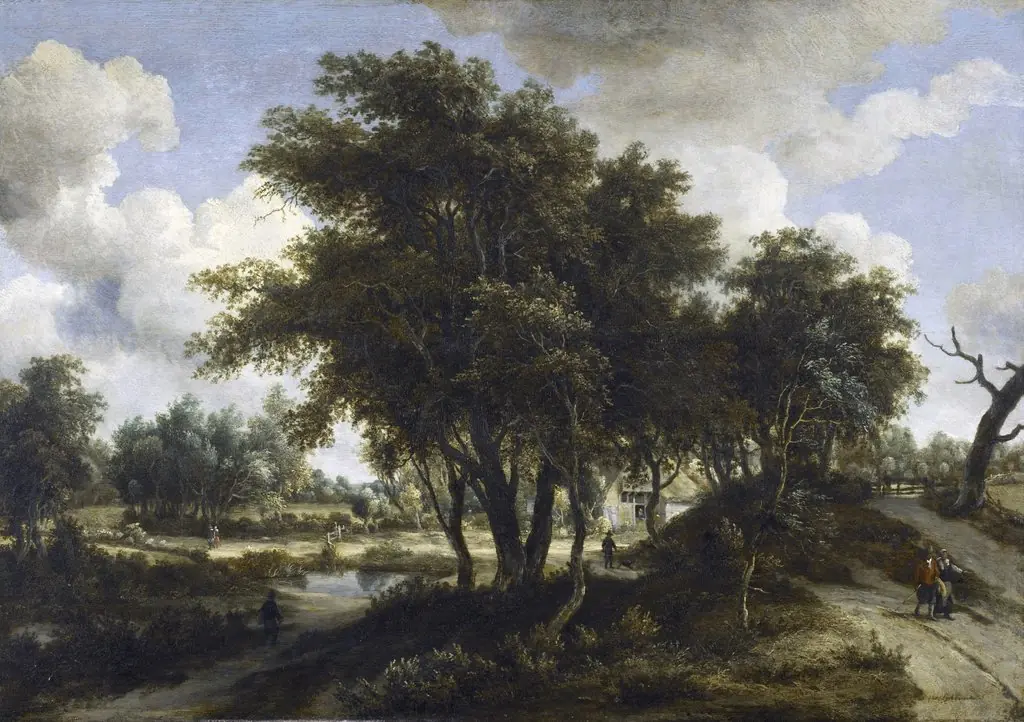
Wooded landscape is an oil painting by the Dutch Golden Age artist Pieter van Asch. It dates from 1650 and is held in the collection of the Rijksmuseum.
About this work
Overview
A narrow, winding track cuts through a valley where a horse‑drawn cart laden with hay moves alongside two pedestrians.
Pieter van Asch’s Wooded Landscape, executed in oil around 1650, presents a tranquil rural vista. A narrow, winding track cuts through a valley where a horse‑drawn cart laden with hay moves alongside two pedestrians. The composition is framed by a dense stand of trees, their twisted trunks and leafy crowns dominating the sky, while a modest stream meanders below and a few dwellings glimpse through the foliage.
Subject & Meaning
The work captures everyday agrarian life, emphasizing the harmonious relationship between humans, animals, and the natural environment. The presence of the cart and walkers suggests routine labor, while the expansive, almost untouched woodland conveys a sense of continuity and the enduring cycles of the countryside.
Technique & Style
Van Asch employs a restrained palette and careful modulation of light to render the foliage and grass, allowing patches of illumination to emerge from the shadowed canopy. The handling of oil paint creates a subtle chiaroscuro effect, giving depth to the gnarled branches and enhancing the atmospheric softness of the sky and distant horizon.
History & Provenance
Created in the mid‑17th century, the painting entered the collection of the Rijksmuseum, where it remains on display. Its attribution to van Asch aligns with his known oeuvre of Dutch landscape scenes that blend detailed observation with a calm, balanced composition.
Own this work as a print
Artist & collection