Artwork
Rhodes Memorial
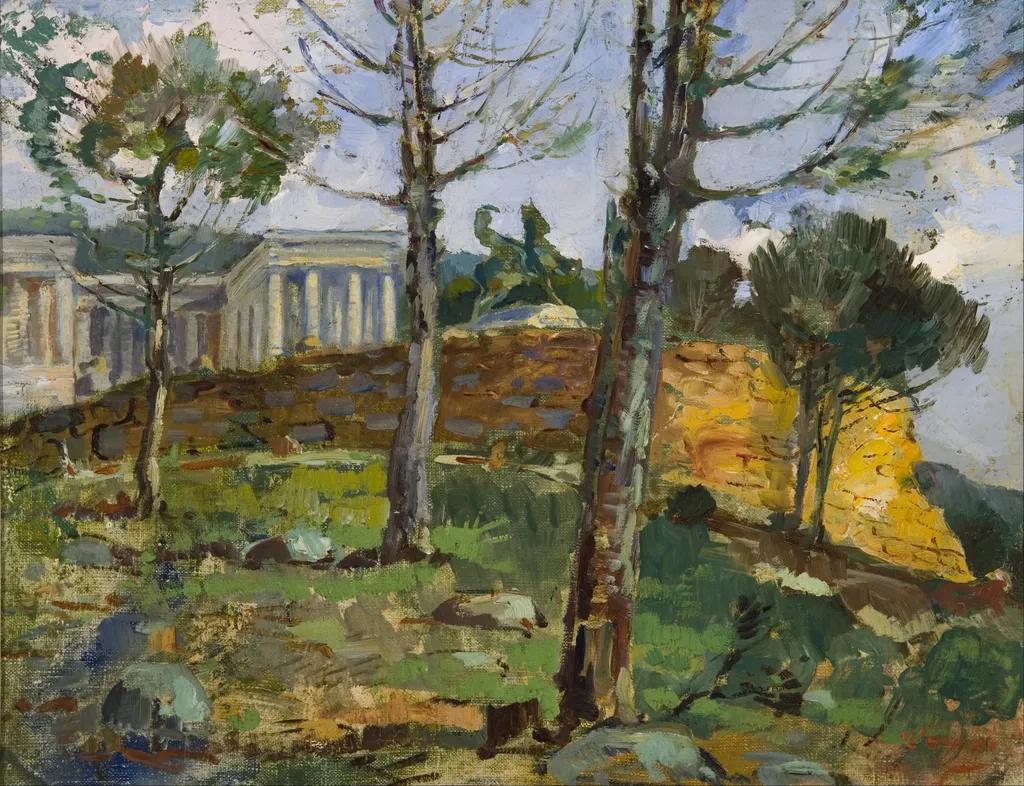
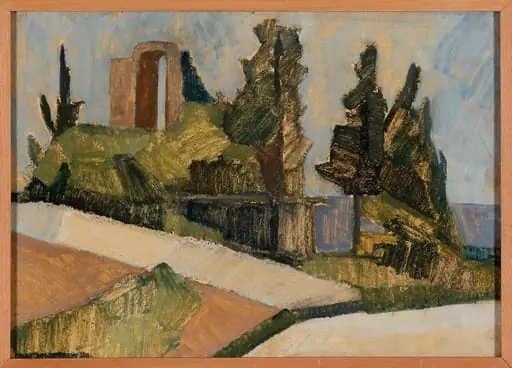
Rhodes Memorial is an oil painting by the Biedermeier artist Pieter Wenning. It dates from 1916 and is held in the collection of the South African National Gallery.
About this work
Overview
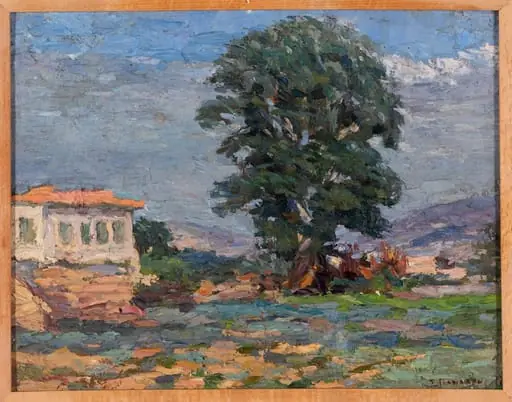
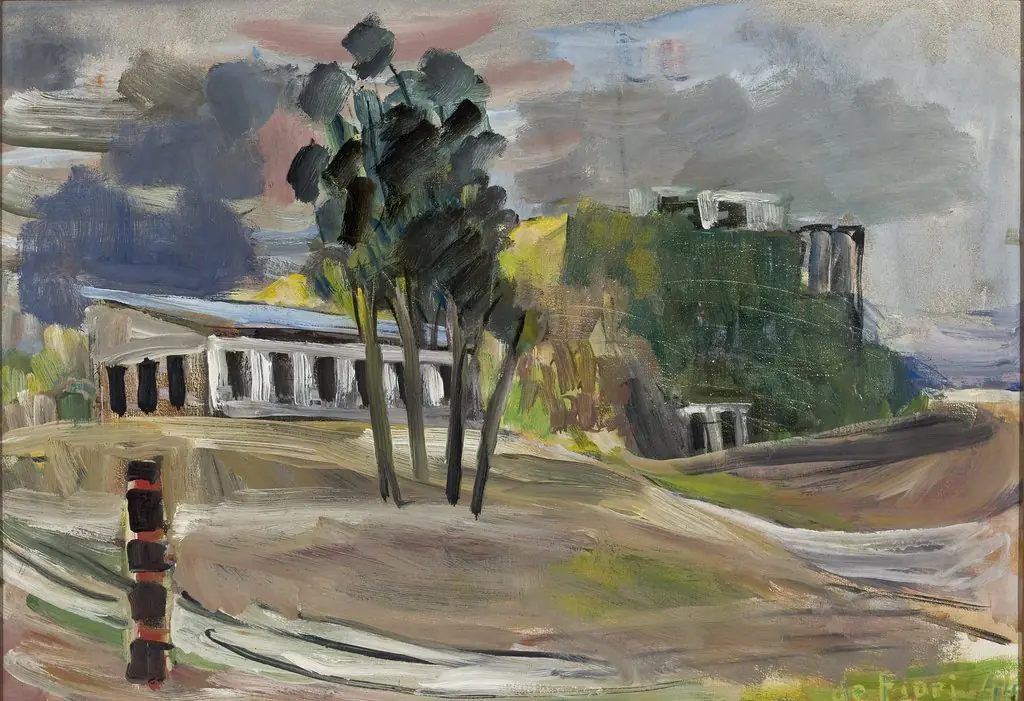
Created in 1916, this oil painting portrays the Rhodes Memorial set within a tranquil South African landscape. The composition centers on the monument, a domed, columned structure, framed by rolling hills, trees and a clear sky dotted with white clouds. The work belongs to the collection of the Iziko South African National Gallery.
Subject & Meaning
The canvas records the Rhodes Memorial, a commemorative edifice honoring Cecil Rhodes, placed in a natural setting that emphasizes its integration with the surrounding environment. By situating the monument amid gentle hills and foliage, the artist suggests a dialogue between human achievement and the landscape.
Technique & Style
Executed with vigorous brushwork, the artist employs a palette of vivid greens for the trees and a bright azure for the sky, creating depth through contrasting tones. The handling of light and shadow reflects a chiaroscuro approach, while the overall treatment aligns with the intimate, detailed sensibilities of the Biedermeier tradition.
History & Provenance
Painted by South African artist Pieter Wenning, a leading figure in Cape Impressionism, the piece entered the Iziko South African National Gallery’s holdings after its creation. Wenning, also known for his etchings, produced the work during a period of heightened national artistic activity.
Context
The early twentieth‑century South African art scene saw the emergence of a regional impressionist style that blended European influences with local scenery. Wenning’s painting reflects this synthesis, marrying the Biedermeier focus on intimate detail with the broader impressionist interest in atmospheric effects.
Own this work as a print
Artist & collection

Artist
Pieter Willem Frederick Wenning (9 September 1873 – 24 January 1921) was a South African painter and etcher, considered to be the progenitor of the style of Cape Impressionism.