Artwork
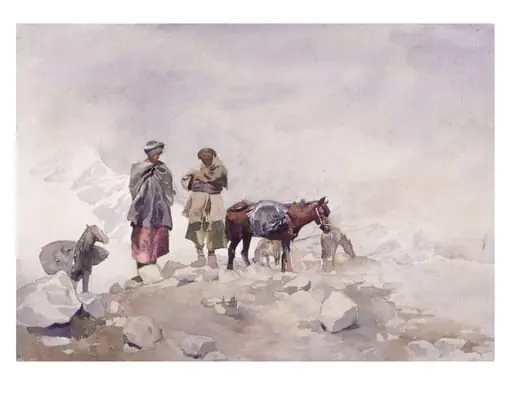
Kamri Pass, Kashmir
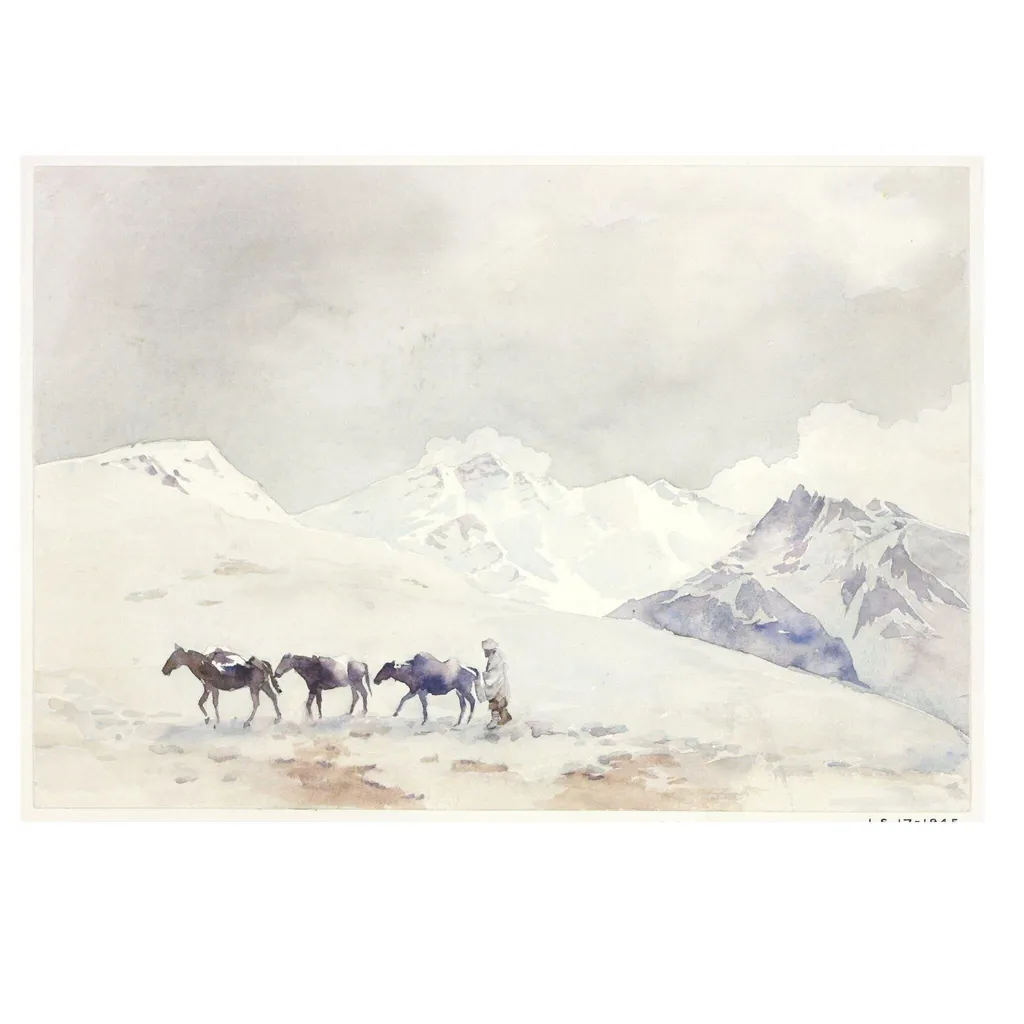
Kamri Pass, Kashmir is a paint painting by Helen R. Pirie. It is held in the collection of the Victoria and Albert Museum.
About this work
Overview
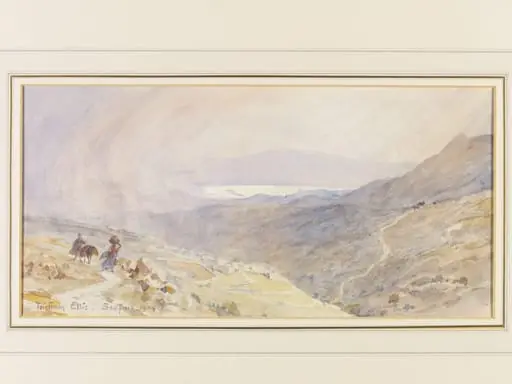
The palette is restrained, emphasizing quietude and isolation, while the transparency of the medium enhances the sense of atmospheric distance and stillness.
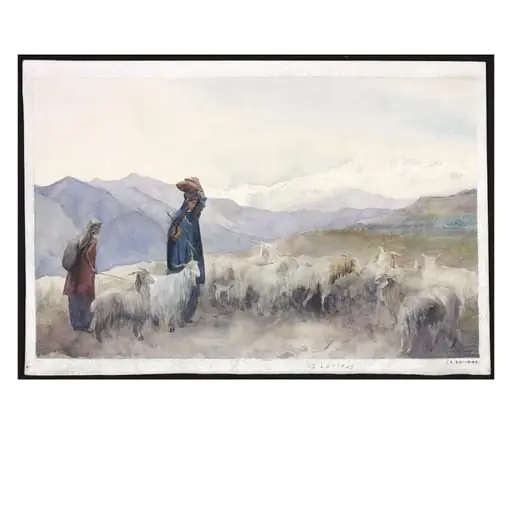
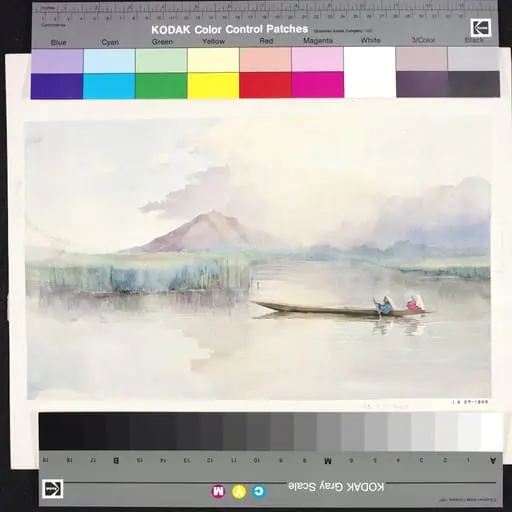
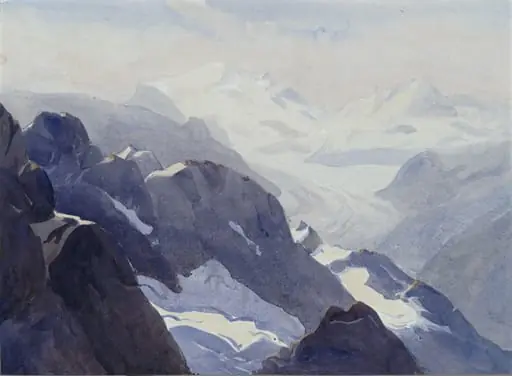
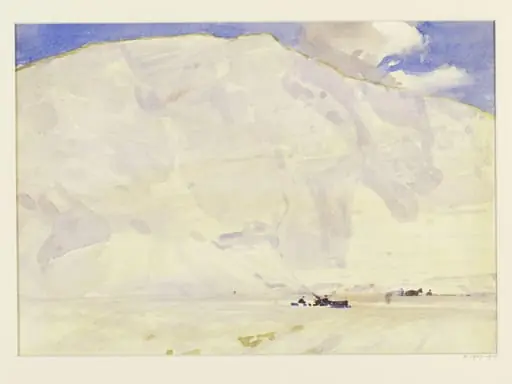
This watercolor painting depicts a solitary traveler guiding three pack animals—two horses and a cow—across a barren, rocky expanse in the Kamri Pass region of Kashmir. The landscape is dominated by distant, snow-laden mountains rendered in pale washes of blue, gray, and white. The palette is restrained, emphasizing quietude and isolation, while the transparency of the medium enhances the sense of atmospheric distance and stillness.
Subject & Meaning
The lone figure and burdened animals suggest a journey through a remote, high-altitude corridor, likely tied to trade or seasonal migration. The absence of other human presence and the minimal detail focus attention on endurance and solitude. The scene evokes the quiet rhythm of mountain life, where movement is slow, purposeful, and shaped by the harshness of the terrain and climate.
Technique & Style
The artist employed delicate watercolor washes, allowing the paper to show through in places, creating a luminous, ethereal effect. Soft edges and minimal detail in the mountains and sky reinforce a sense of vastness and detachment. The muted tones and restrained brushwork reflect a tradition of Indian landscape painting that prioritizes mood over realism, favoring emotional resonance over topographical precision.
History & Provenance
The painting is held in the collection of the Victoria and Albert Museum, where it is cataloged as part of a group of 19th-century Indian watercolors documenting Himalayan routes. Its origins are likely linked to regional artists working under colonial patronage or for European travelers interested in the region’s topography. The work’s modest scale and technique suggest it was made for private contemplation rather than public display.
Context
During the 19th century, British administrators and travelers commissioned artworks of the Himalayas to document unfamiliar landscapes. These images often blended local artistic conventions with European sensibilities, emphasizing serenity and grandeur. Kamri Pass, a known route between Kashmir and Ladakh, was a subject of interest for its strategic and scenic value, captured here with quiet reverence rather than imperial assertion.
Legacy
This painting contributes to a body of work that preserves visual records of Himalayan travel routes before modern infrastructure. Its understated aesthetic distinguishes it from more ornate or dramatic depictions of the region, offering instead a contemplative view of human presence within vast natural spaces. It remains a quiet testament to the endurance of mountain livelihoods and the subtlety of regional watercolor traditions.
Artist & collection
Artist
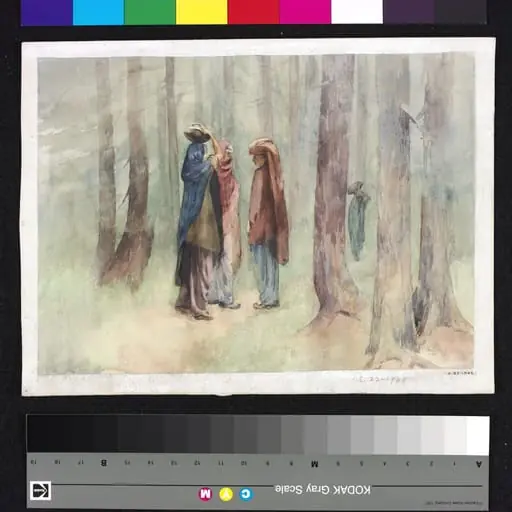
Helen R. Pirie painted scenes from Kashmir around 1900, focusing on its people and landscapes. She captured travelers on the road between Torshing and Rupal, shepherds on hillsides, and village women in forests like the…