Artwork
Factory on the Oise at Pontoise
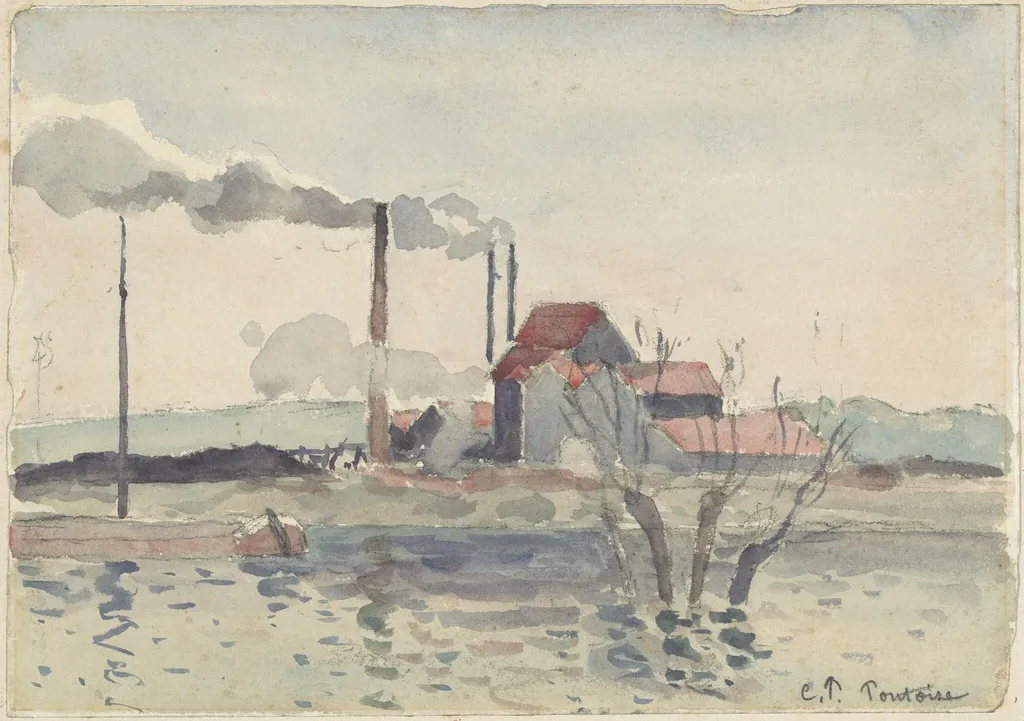
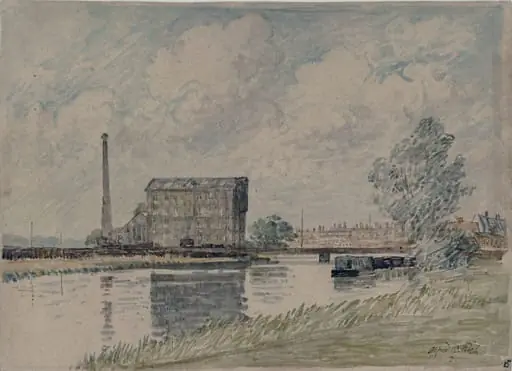
Factory on the Oise at Pontoise is a graphite drawing by the Impressionist artist Camille Pissarro. It dates from 1873 and is held in the collection of the National Gallery of Art.
About this work
Overview
Camille Pissarro’s 1873 work, titled Factory on the Oise at Pontoise, is a drawing executed in watercolor and graphite on wove paper that has been mounted onto a second sheet of the same material. The piece measures a modest size typical of Pissarro’s field studies and presents a tranquil riverside scene.
Subject & Meaning
Bare trees line the left edge of the view, while the river’s surface remains largely smooth, interrupted only by faint ripples near the shore.
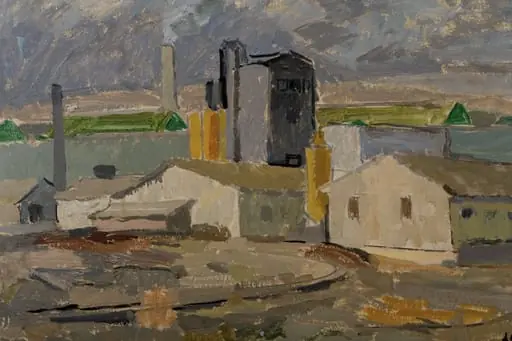
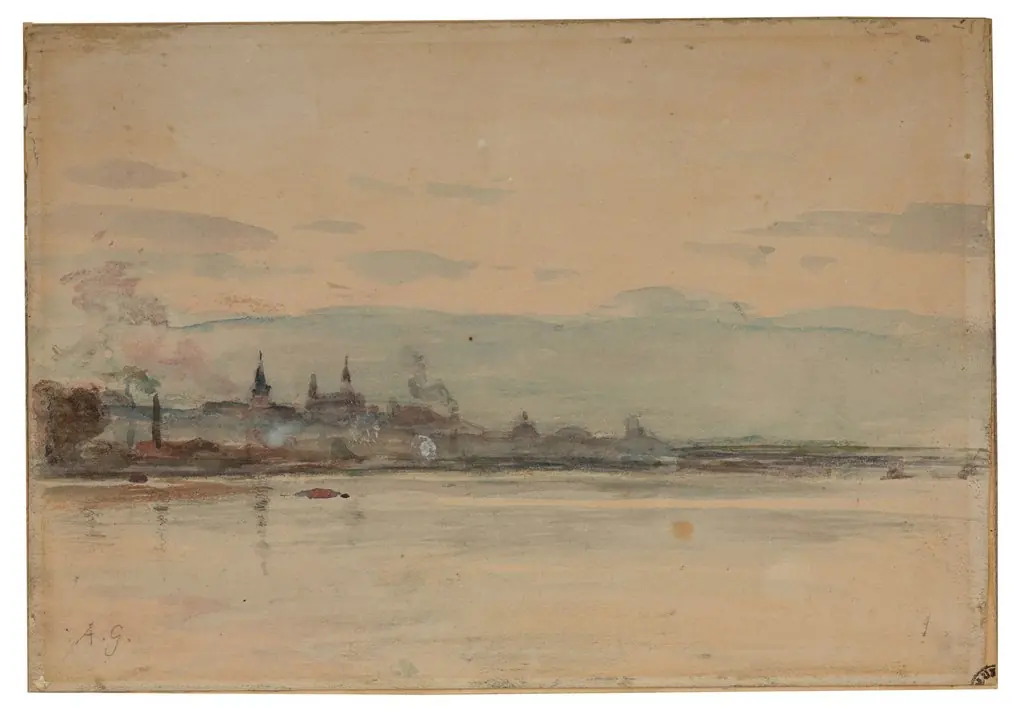
The composition depicts the banks of the Oise River near the town of Pontoise, where a modest industrial complex can be seen in the distance. Bare trees line the left edge of the view, while the river’s surface remains largely smooth, interrupted only by faint ripples near the shore. The juxtaposition of natural and manufactured elements suggests a quiet coexistence of rural landscape and early industry.
Technique & Style
Pissarro employs a light, atmospheric approach, using loose watercolor washes and delicate graphite lines to convey the fleeting effects of light on water and sky. The palette is muted, with soft greens, grays, and blues that emphasize mood over precise detail. This handling aligns with the emerging Impressionist interest in capturing a specific moment’s visual impression rather than rendering exhaustive realism.
History & Provenance
Created in 1873, the drawing belongs to the period when Pissarro was intensively exploring the outskirts of Paris and its surrounding countryside. It reflects his practice of making on‑site sketches that would later inform larger studio paintings. The work has remained in the artist’s estate before entering public collections, where it serves as a representative example of his early impressionist investigations of industrial subjects.
Own this work as a print
Artist & collection