Artwork
Market at Pontoise (Marché a Pontoise)
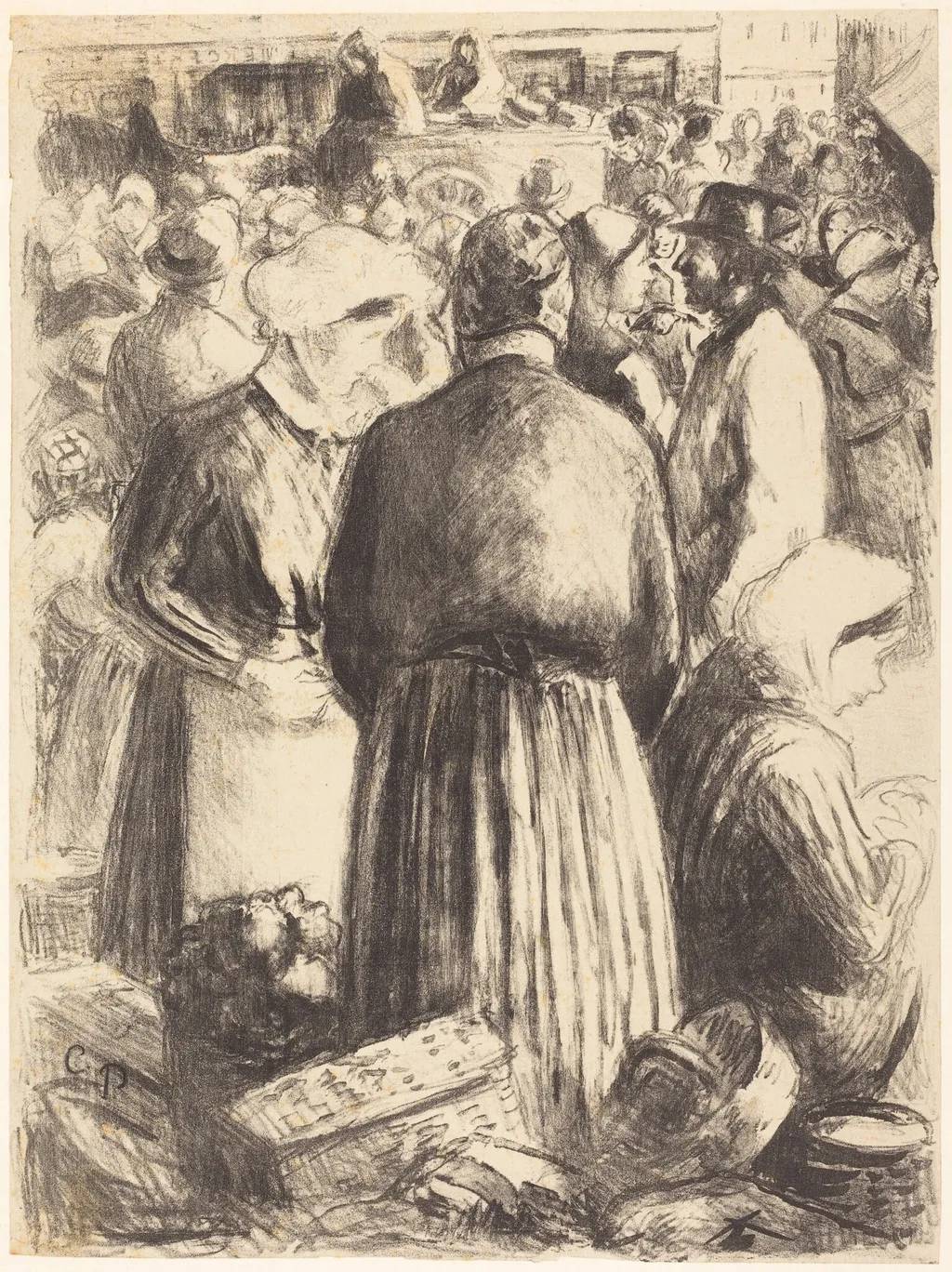
Market at Pontoise (Marché a Pontoise) is an ink print by the Impressionist artist Camille Pissarro. It dates from 1895 and is held in the collection of the National Gallery of Art.
About this work
Overview
The print reflects Pissarro’s sustained interest in rural commerce and public life, rendered through the direct, tactile process of lithography.
Created around 1895, Market at Pontoise is a lithograph on zinc by Camille Pissarro, capturing a weekday market in the northern French town. The print reflects Pissarro’s sustained interest in rural commerce and public life, rendered through the direct, tactile process of lithography. Its informal composition and rapid execution align with his broader commitment to depicting ordinary scenes without idealization.
Subject & Meaning
The scene centers on a woman in a long dress, her back turned, standing amid a cluster of market stalls laden with produce and goods. Figures surround her in loose, indistinct forms, suggesting fleeting interactions rather than individual identities. The composition emphasizes collective activity over narrative, conveying the rhythm of daily trade without sentimentality or dramatic emphasis.
Technique & Style
Pissarro employed rough, energetic lines to suggest motion and texture, avoiding fine detail in favor of suggestive marks. The lithographic medium allowed him to work swiftly, mimicking the spontaneity of a sketch. Surface texture is deliberately uneven, with areas of dense ink and sparse washes enhancing the sense of bustling, unposed activity characteristic of his late work.
History & Provenance
The print was made during Pissarro’s later years, when he increasingly turned to printmaking as a means of exploring composition outside oil painting. Few impressions were likely pulled, and the work remained within private collections, rarely exhibited publicly. Its survival reflects Pissarro’s continued experimentation with print media despite declining health and shifting artistic trends.
Context
In the 1890s, Pissarro was engaged with both Impressionist ideals and emerging modernist approaches to form. While lithography was not his primary medium, he used it to investigate light, movement, and social observation in ways parallel to his paintings. The Pontoise market, a recurring subject, symbolized his enduring focus on the lives of working-class communities in the French countryside.
Legacy
Though less known than his paintings, this lithograph exemplifies Pissarro’s dedication to recording everyday life with honesty and economy. It influenced later printmakers who valued directness over polish, and remains a quiet testament to his belief that art could find significance in the unremarkable rhythms of ordinary existence.
Artist & collection


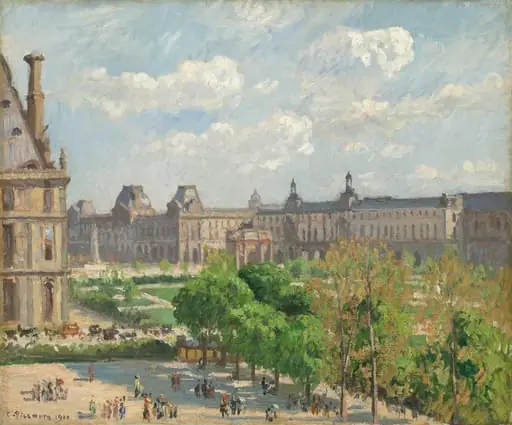
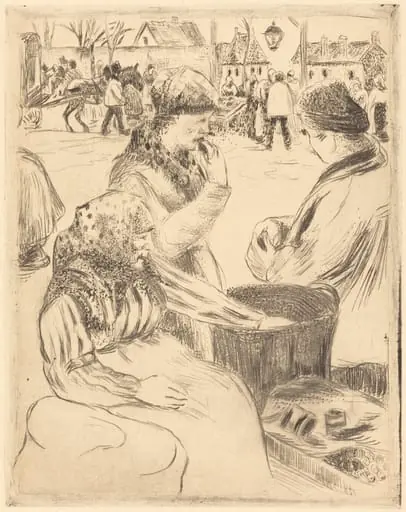 Chestnut Vendors (Marchands de marrons)
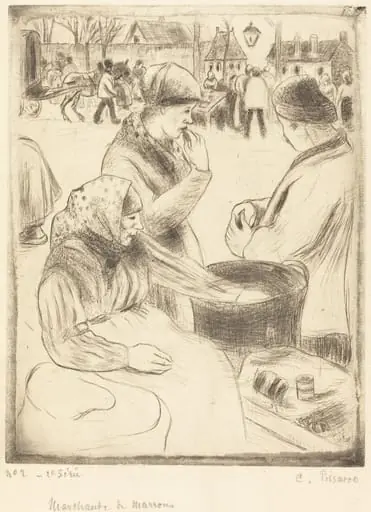 Chestnut Vendors (Marchands de marrons)
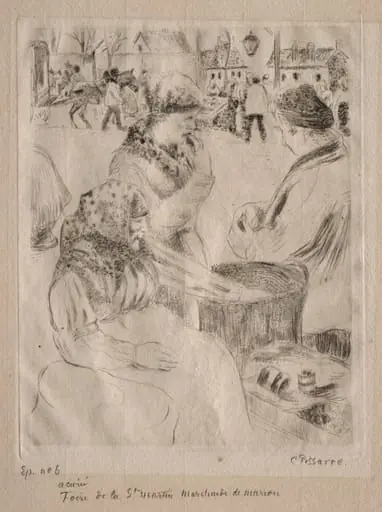 Chestnut Vendor, St. Martin's Day Fair (Pontoise)
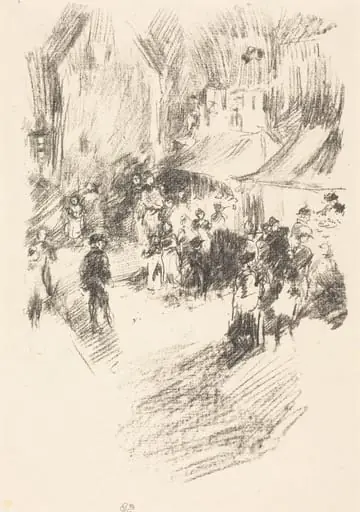 The Fair
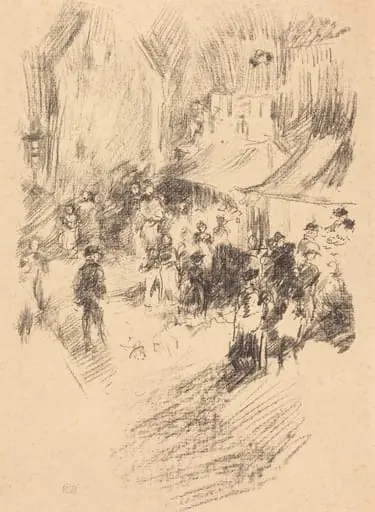 The Fair
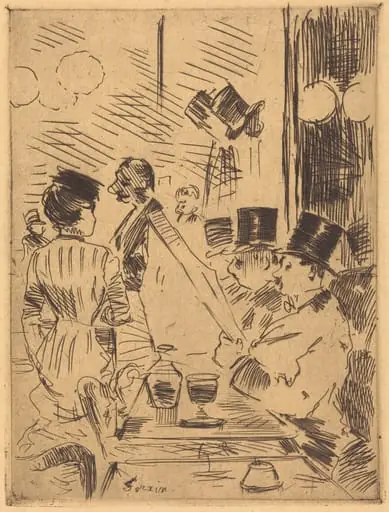 Le café de la Nouvelle Athènes (The Cafe of the New Athens)
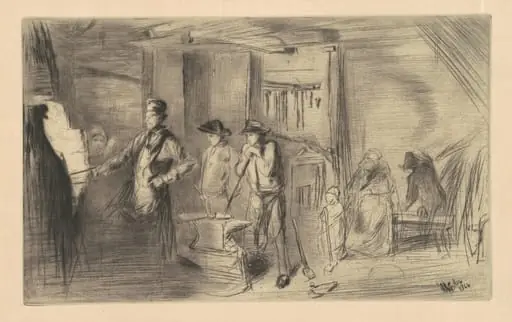 The Forge
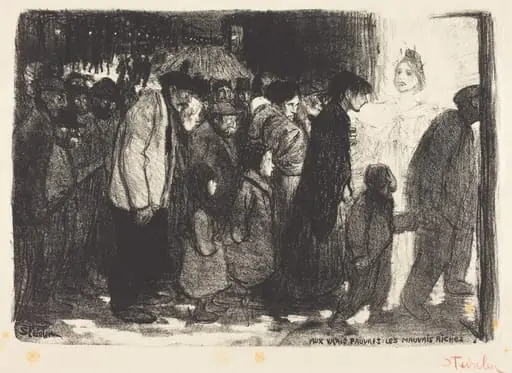 To the True Poor: The Wicked Rich (Aux vrais pauvres: Les mauvais riches)
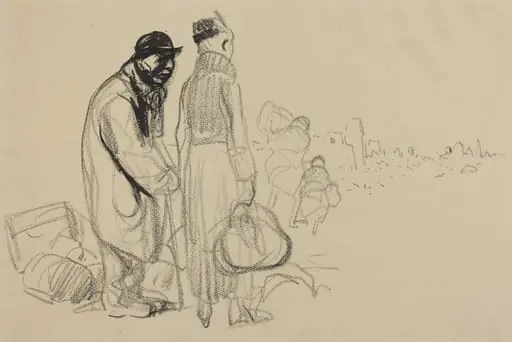 La retour (The Return)
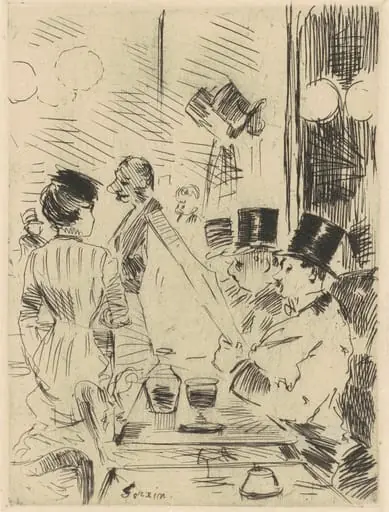 Le Cafe